0211
Pre-treatment multiparametric MRI for prediction of chemo‑immunotherapy response in advanced non-small cell lung cancer1Lanzhou University Second Hospital, Lanzhou, China
Synopsis
Keywords: Lung, Cancer
Motivation: Early detection in poor responders to chemo‑immunotherapy for non-small cell lung cancer (NSCLC) facilitates timely adjustment of treatment strategies.
Goal(s): To explore the value of histogram analysis based on intravoxel incoherent motion (IVIM) and difusion kurtosis imaging (DKI) in predicting chemo‑immunotherapy response in advanced NSCLC.
Approach: 72 NSCLC patients underwent pre-treatment MRI examination. Histogram parameters of IVIM and DKI were calculated and compared.
Results: Compared with non-responders, ADC, D, Dapp were significantly lower and f was higher in responders (all p <0.05). The multivariate logistic regression model performed the best with an AUC of 0.954.
Impact: IVIM and DKI imaging would predict chemo-immunotherapy response in advanced NSCLC at initial state, which could help make clinical individualized treatment strategies.
Introduction
Chemo‑immunotherapy is a treatment modality for advanced NSCLC, however, the therapeutic effect is usually not satisfactory owing to the presence of drug resistance1. Functional changes in the tumor microenvironment appear before morphological size changes. Therefore, early identification of the patients who are resistant to chemo‑immunotherapy agents facilitates timely adjustment of treatment regimens. IVIM can independently assess the diffusion of water molecules and tissue microcirculation, and DKI is a model that reflects the non-Gaussian distribution of water molecules and the complexity of tissue microstructure2. There are few studies using IVIM and DKI to evaluate the treatment efficacy of lung cancer3-5, and the results are inconsistent. Moreover, these previous studies measured parameters on a representative section of tumor tends to underestimate the heterogeneity of the tumor, whicn can be avoided by histogram analysis of the whole tumor. In this study, we explore the value of histogram analysis based on IVIM and DKI in predicting chemo-immunotherapy response in advanced NSCLC.Methods
This prospective study was approved by our institutional review board, and written informed consent was obtained. 72 patients were underwent pre-treatment examination with IVIM and DKI. The lung images obtained included coronal T2WI, axial IVIM (repetition time/echo time, 7500/63ms; slice thickness, 4.0mm; interslice gap, 1mm; field of view, 512 × 512mm; matrix, 256 × 256; b values, 0, 20, 60, 100, 150, 200, 400, 600, 800, and 1000s/mm2) and axial DKI (repetition time/echo time, 7200/70.8ms; slice thickness, 4.0mm; interslice gap, 1mm; field of view, 512 × 512mm; matrix, 256 × 256; b values, 0, 1000, and 2000s/mm2). All the original images were saved in DICOM format, and an in-house software (FireVoxel, https://firevoxel.org/) was used to calculate the DWI parameters. Intraclass correlation coefficient (ICC) was used to evaluate interobserver agreement. Quantitative data were compared using Student’s t-test or Mann–Whitney U test. Parameters with statistical differences were used to establish multivariate logistic regression model. Receiver operating characteristic (ROC) curve analyses were performed to evaluate the diagnostic efficacy. p < 0.05 indicated statistical significance. Statistical analyses were performed using SPSS 22.0 (IBM SPSS Statistics, USA) and MedCalc 19.0.4 (MedCalc, Ostend, Belgium).Results
Intraobserver agreement was from good to excellent (0.791-0.931). All IVIM and DKI histogram parameter values are shown in Table 1 and 2. Compared with non-responders , mean, median, and 75th percentiles of ADC, mean , median, 10th, 25th, 75th and 90th percentiles of D, and 75th of Dapp were significantly lower in responders (p < 0.05). And mean, median, 25th, 75th and 90th percentiles of f were significantly higher in responders group than in non-responders group (p < 0.05). ROC curve analysis results are presented in Table 3 and Figure 1, among all single parameters, the median f value had the highest area under the curve (AUC = 0.856), followed by the mean value of f (AUC = 0.854). Furthermore, the diagnostic performance of multivariate logistic regression model was significantly better than all individual parameters (AUC = 0.954).Discussion
Whole tumor histogram analysis based on IVIM and DKI yields more information than the parameters derived from a single slice. We found that histogram-derived parameters for ADC, D,f, and Dapp were useful for the assessment of tumor response to chemo‑immunotherapy. The baseline values of diffusion parameters(ADC, D, Dapp) in the responders group were signifcantly lower than those in the non-responders group. It has been demonstrated that regions with a high cell density within a tumor may be associated with greater tissue perfusion, thereby resulting in better delivery and retention of drugs in these areas and a higher response to chemo‑immunotherapy6.Correspondingly, in this study, responders also had significantly higher f, which is related to tumor tissue perfusion. In addition, since the bi-exponential IVIM model can separate molecular diffusion and capillary perfusion components, which performed better compared with the mono-exponential model and DKI model derived from the whole lesion in terms of predicting the tumor response.Conclusion
Pre-treatment histogram analysis based on IVIM and DKI is useful to predict chemo-immunotherapy response in advanced NSCLC, and the performance of multivariate logistic regression model is better than that of optimal single parameter. These findings are expected to provide references for clinical decision-making and prognostic evaluation of NSCLC patients.Acknowledgements
No acknowledgement found.References
1. B BWW, J JHH, S SLL, et al. The combinatorial effect of cisplatin and moxibustion on tumor growth inhibition with special reference to modulation of the immune microenvironment in lewis lung cancer mice. Evidence-based complementary and alternative medicine : eCAM. 2020:3170803.
2. Rosenkrantz AB, Padhani AR, Chenevert TL, et al. Body diffusion kurtosis imaging: Basic principles, applications, and considerations for clinical practice. J Magn Reson Imaging. 2015;42:1190-202.
3. Wan Q, Bao Y, Xia X, et al. Intravoxel incoherent motion diffusion-weighted imaging for predicting and monitoring the response of anti-angiogenic treatment in the orthotopic nude mouse model of lung adenocarcinoma. J Magn Reson Imaging. 2022;55:1202-10.
4. Karayama M, Yoshizawa N, Sugiyama M, et al. Intravoxel incoherent motion magnetic resonance imaging for predicting the long-term efficacy of immune checkpoint inhibitors in patients with non-small-cell lung cancer. Lung Cancer. 2020;143:47-54.
5. Huang C, Liang J, Ma M, et al. Evaluating the treatment efficacy of nano-drug in a lung cancer model using advanced functional magnetic resonance imaging. Front Oncol. 2020;10:563932.
6. Liang CY, Chen MD, Zhao XX, et al. Multiple mathematical models of diffusion-weighted magnetic resonance imaging combined with prognostic factors for assessing the response to neoadjuvant chemotherapy and radiation therapy in locally advanced rectal cancer. Eur J Radiol. 2019;110:249-55.
Figures
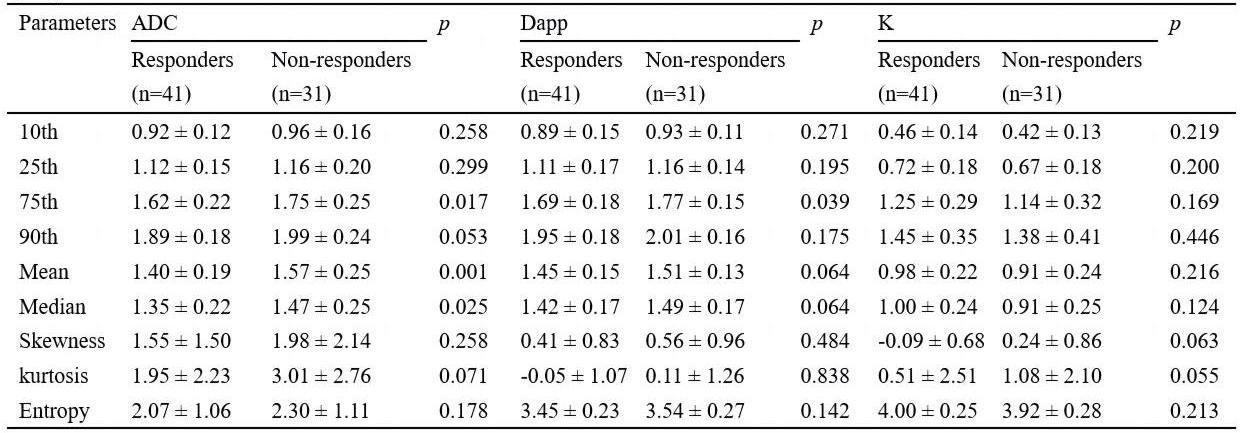
Table 1. Differences in histogram analyses of apparent diffusion (ADC) and DKI maps between the responders and non- responders groups.
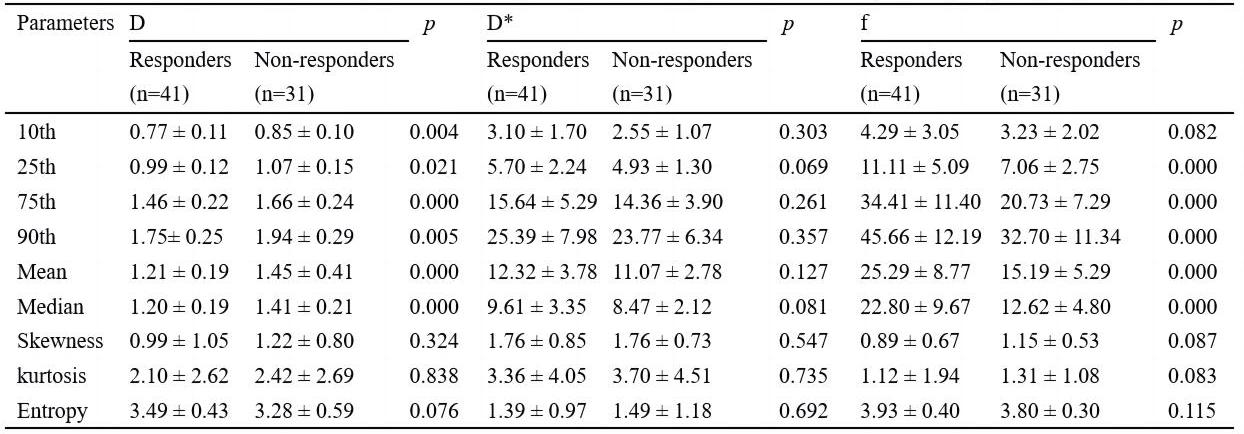
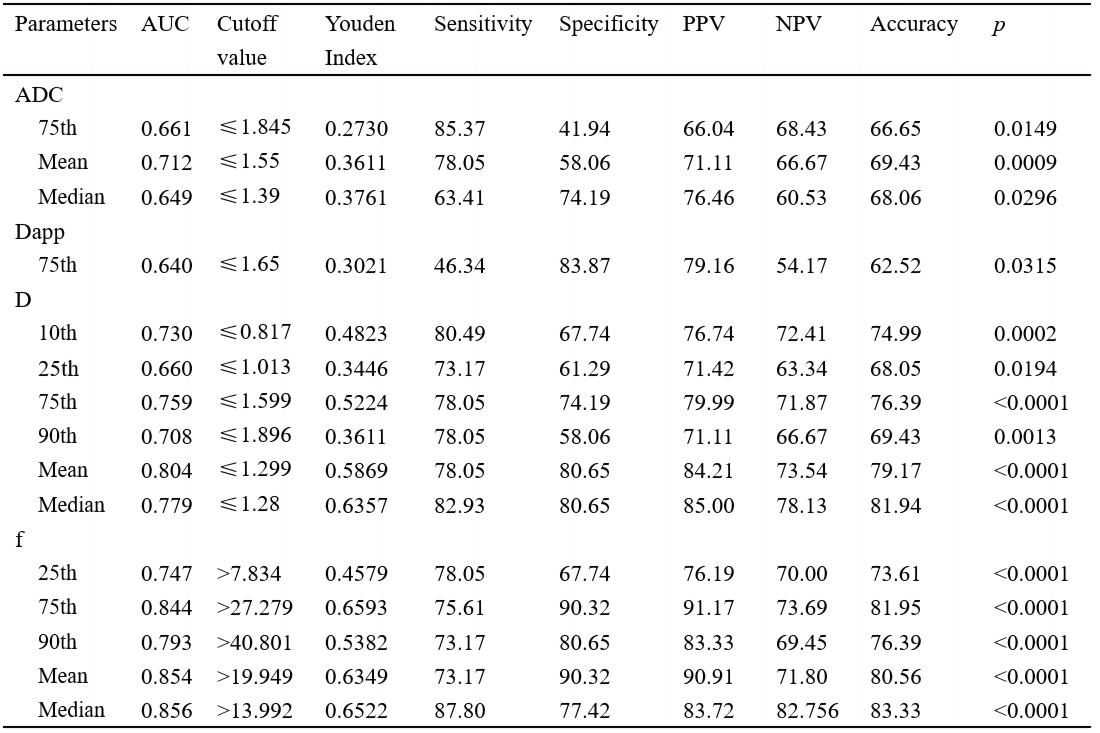
Table 3. Diagnostic performance of MRI histogram parameters.
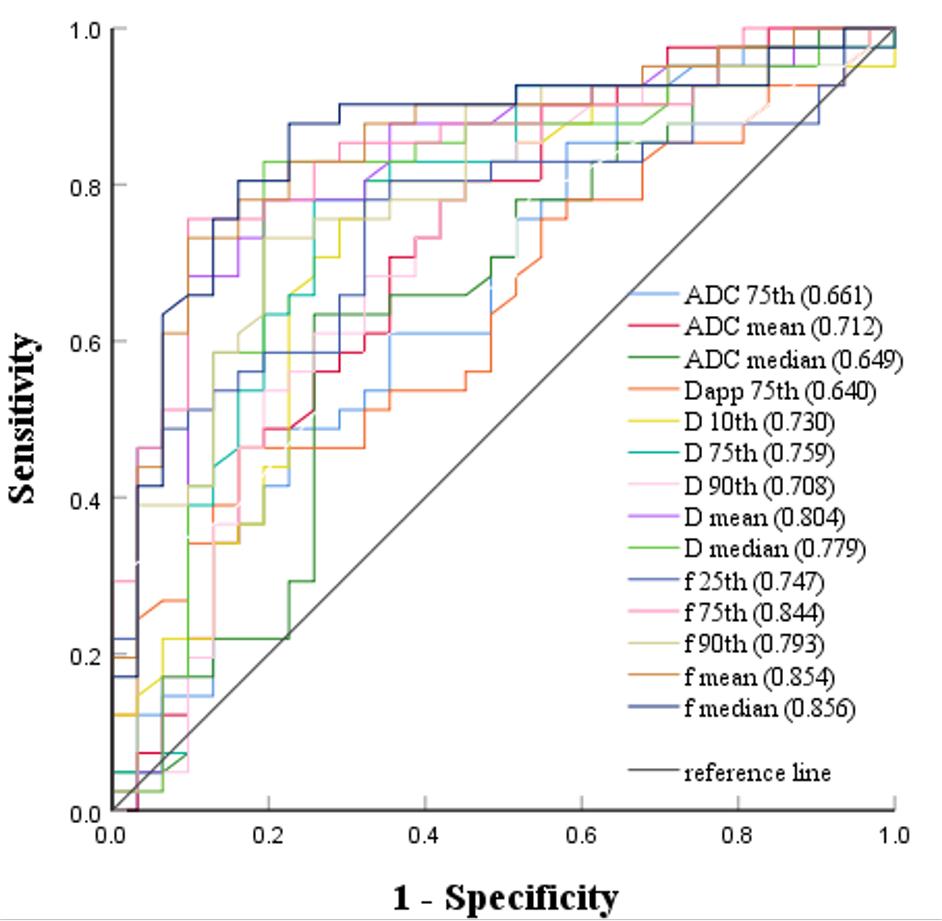
Figure 1.ROC of IVIM and DKI histogram parameters in predicting the treatment response.