0202
Predicting Disease-Free Survival by DWI and DCE MRI Scores for Breast Cancer Patients with Neoadjuvant Systemic Treatment1Department of Radiology, Tenri Hospital, Nara, Japan, 2Department of Diagnostic Imaging and Nuclear Medicine, Kyoto University graduate school of medicine, Kyoto, Japan, 3Department of Diagnostic Radiology, Kansai Electric Power Hospital, Osaka, Japan, 4Department of Diagnostic Pathology, Kyoto University Hospital, Kyoto, Japan, 5Department of Breast Surgery, Kyoto University Hospital, Kyoto, Japan
Synopsis
Keywords: Breast, Breast
Motivation: MRI is expected to be a new surrogate marker of prognosis that can replace pathological complete response (pCR) for breast cancer patients who underwent neoadjuvant systemic treatment (NST).
Goal(s): MRI is expected to be a new surrogate marker of prognosis that can replace pathological complete response (pCR) for breast cancer patients who underwent neoadjuvant systemic treatment (NST)
Approach: Survival analysis was performed for disease-free survival using Kaplan-Meier method.
Results: DWI score after NST of breast cancer was associated with DFS, in particular triple-negative, HER2-positive, and luminal-HER2 subtype.
Impact: The DWI / kinetic score obtained from MRI after neoadjuvant systemic treatment (NST) were associated with disease-free survival (DFS), especially among triple-negative, HER2-positive, and luminal/HER2 subtype. The DWI score may be a biomarker for prognosis of breast cancer patients.
Purpose:
Neoadjuvant systemic treatment (NST) is increasingly used for women with locally advanced breast cancer. Pathological complete response (pCR) or residual cancer burden after NST is linked to the long-term prognosis [1]. While non-surgical therapy is becoming an option for breast cancer patients after neoadjuvant systemic treatment (NST), MRI is expected to be a new surrogate marker of prognosis. We have previously developed a visual score based on diffusion-weighted image (DWI score) for evaluating residual tumors after NST [2]. In particular, cancers with triple-negative (TN) subtype with low DWI and kinetic scores are associated with pCR. Based on the above-mentioned evidence, we hypothesized that the score might also be linked to the long-term prognosis of the patients. Therefore, we aimed to investigate if the DWI score and dynamic contrast-enhanced (DCE)-based kinetic score of the post-NST breast cancer was associated with disease-free survival (DFS). Per-subtype analyses were also performed.Materials&Methods:
Study population: All breast cancer patients who received NST, who underwent breast MRI including DWI after completion of the treatment, followed by surgery between October 2014 and December 2020 were included.MRI protocol: MRI was acquired using a 3T MRI scanner (Prisma/Trio; Siemens Healthineers, Erlangen, Germany) and a 16 or 18-channel dedicated breast coil. MR images were obtained using routine protocols sequence: T1WI, T2WI, DWI (axial single-shot EPI; TR/TE, 6300-7000/50-62ms; pixel size 2x2x3 mm; NEX, 3; b=0, 1000sec/mm2), and DCE-MRI (pre, 1-2, 5-6 min post-contrast; axial VIBE with fat suppression; TR/TE, 3.8/1.4ms; 0.9x 0.9x1 mm).
Image analysis: On DWI, the target lesion was scored using a three-point scale: 2, obvious high signal intensity; 1, intermediate signal intensity in a scar-like shape; and 0, no abnormal signal intensity (Figure 1). On DCE-MRI, kinetic patterns of the lesions were evaluated based on BI-RADS and were scored as 3: washout, 2: plateau, 1: persistent, and 0: no enhancement (Figure 2). One experienced breast radiologist evaluated both scores with two-months’ interval between DWI and DCE evaluation, with a reference to baseline breast MRI only.
Statistical analysis: DFS was analyzed using Kaplan-Meier method using MedCalc Software (Mariakierke, Belgium). Cox proportional hazard model was calculated by STATA 14.0 (StataCorp, Texas, USA).
Results:
A total of 134 patients (mean age 50.5 years) with 43TN, 18 HER2-positive, 27 luminal-HER2, and 46 luminal subtypes were included. Among them, 58 achieved pathological complete response (pCR) on surgery and 16 developed recurrence/distant metastases. Median DFS was 4.6 years (range, 0.11-9.59 years).On pre-surgical evaluation, the lesions were categorized as DWI scores of 2 (n=62), 1 (22), and 0 (50). Patients with DWI score of 2 showed significantly shorter DFS compared to those with DWI score 0 (Hazard radio (HR): 9.5, 95%CI 2.2-41.1). On DCE-MRI, six people were excluded because of plain MRI or poor contrast images. The lesions were categorized as kinetic scores of 3 (32), 2 (12),1 (58), and 0 (26), respectively. Patients with kinetic score of 3 showed shorter DFS compared to those with kinetic score 0 (HR: 10.5, 95%CI 1.3-83.4).
Kaplan-Meier survival curve is shown (Figure 3).
For subgroup analysis, due to small sample size, TN, HER2-positive, and luminal/HER2 subtypes were grouped together and compared to luminal subtypes (luminal A and luminal B). DWI scores were dichotomized as low (0,1) and high (2). Kinetic scores were also dichotomized as low (0,1,2) and high (3). Patients with high DWI score showed significantly shorter DFS compared to those with low DWI score (HR: 14.1, 95%CI 3.1-64.9). Patients with high kinetic score showed shorter DFS compared to those with low kinetic score (HR: 6.7, 95%CI 2.1-21.1).
Among luminal subtype, patients with high DWI score showed significantly shorter DFS compared to those with low DWI score (HR: 1.3 95%CI 0.3-6.5). On the other hand, patients with high kinetic score did not show significant difference DFS compared to those with low kinetic score (HR: 0.4, 95%CI 0.1-3.5).
Kaplan-Meier survival curve is shown (Figure 4).
Discussions and Conclusions:
DWI score and kinetic score after NST of breast cancer seems to be a better predictor of DFS, in particular among triple-negative, HER2-positive and luminal/HER2 subtype. DWI score derived from MRI after may be a promising and clinically feasible imaging biomarker in predicting prognosis of breast cancer patients after NST compared to DCE.Acknowledgements
No acknowledgment found.
References
1. Yau, C., et al., Residual cancer burden after neoadjuvant chemotherapy and long-term survival outcomes in breast cancer: a multicentre pooled analysis of 5161 patients. Lancet Oncol, 2022. 23(1): p. 149-160.
2. Ota, R., et al., Evaluation of pathological complete response after neoadjuvant systemic treatment of invasive breast cancer using diffusion-weighted imaging compared with dynamic contrast-enhanced based kinetic analysis. Eur J Radiol, 2022. 154: p. 110372.
3. Minarikova, L., et al., Investigating the prediction value of multiparametric magnetic resonance imaging at 3 T in response to neoadjuvant chemotherapy in breast cancer. Eur Radiol, 2017. 27(5): p. 1901-1911.
Figures
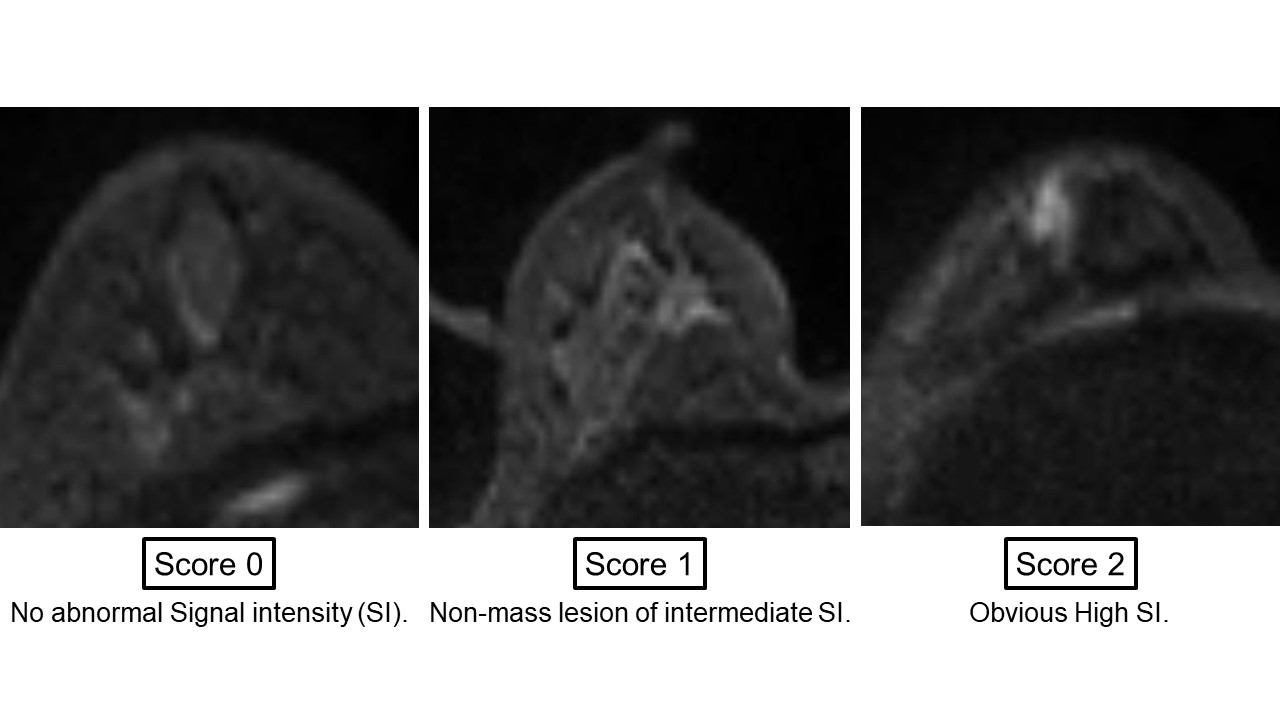
Figure 1. DWI score
DWI score was scored based on visual assessment of high intensity area on DWI and defined as follows;
0 : no abnormal signal intensity, 1 : non-mass lesion of intermediate signal intensity, and 2 : obvious high signal intensity.
Lower score indicates a higher likelihood of pCR and less cancer burden.
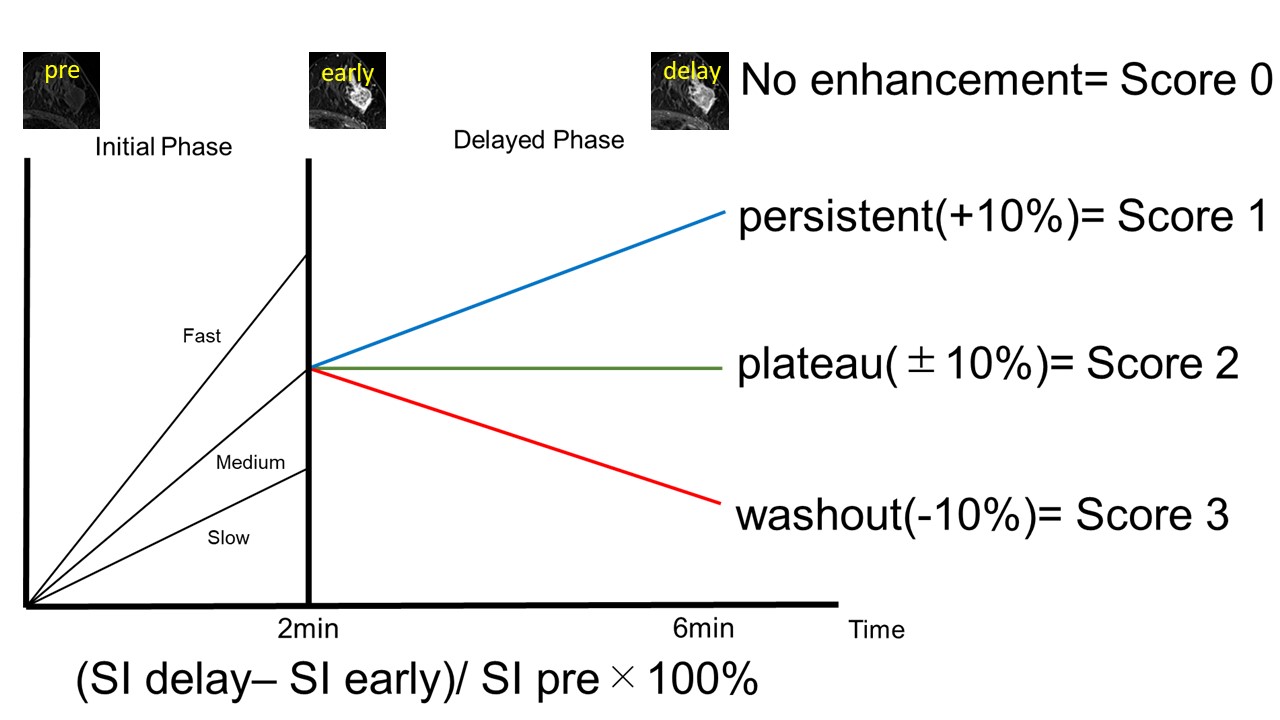
Figure 2. Kinetic score
Based on the time-intensity curve after contrast agent injection, kinetic scores of the lesions on DCE-MRI was defined as follows;
0 : no enhancement, 1 : persistent, 2 : plateau and 3 : washout.
Lower score indicates a higher
likelihood of achieving pCR and less cancer burden.
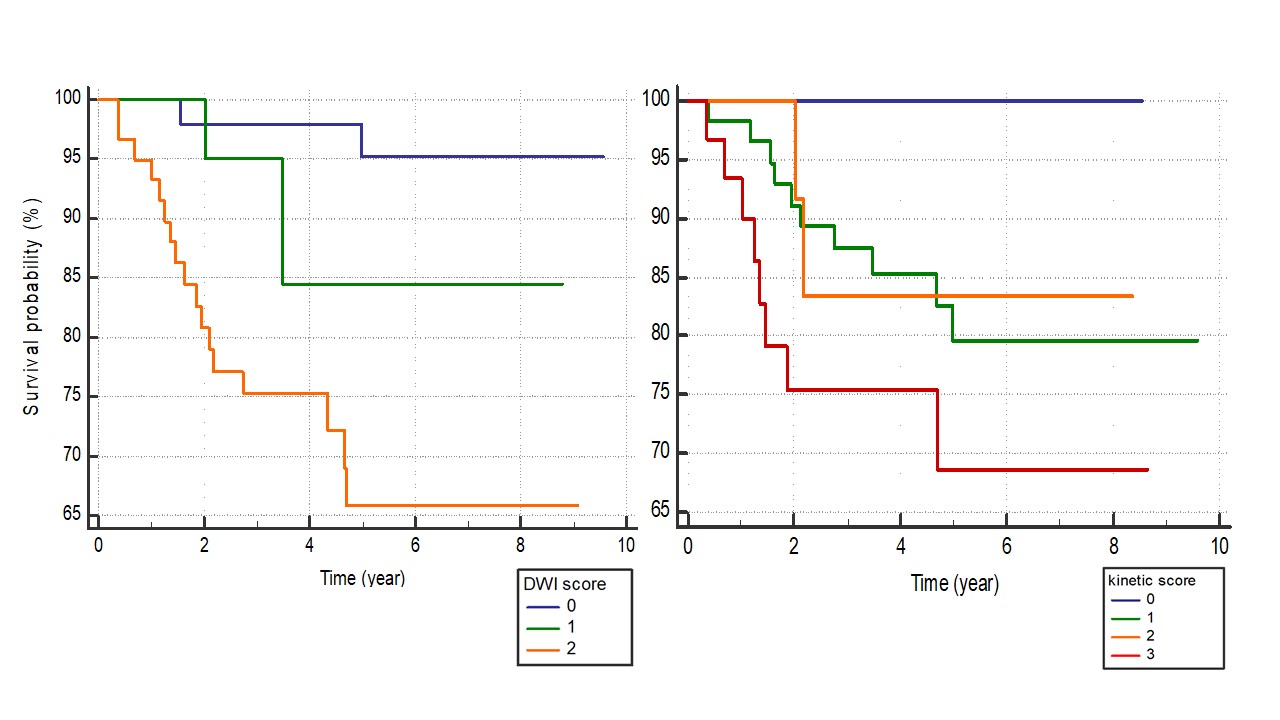
Figure 3. Kaplan-Meier survival curve of DFS for patients who underwent NST stratified by DWI score and kinetic socre after NST.
Patients with DWI score of 2 (orange) showed significantly shorter DFS compared to those with DWI score 0(blue) or 1(green), (Hazard radio (HR): 9.3, 95%CI 3.7-23.5). On DCE-MRI, patients with kinetic score of 2(orange) or 3(red) showed significantly shorter DFS compared to those with kinetic score of 0(blue) or 1(green), (HR: 1.9, 95%CI 0.59-6.1).
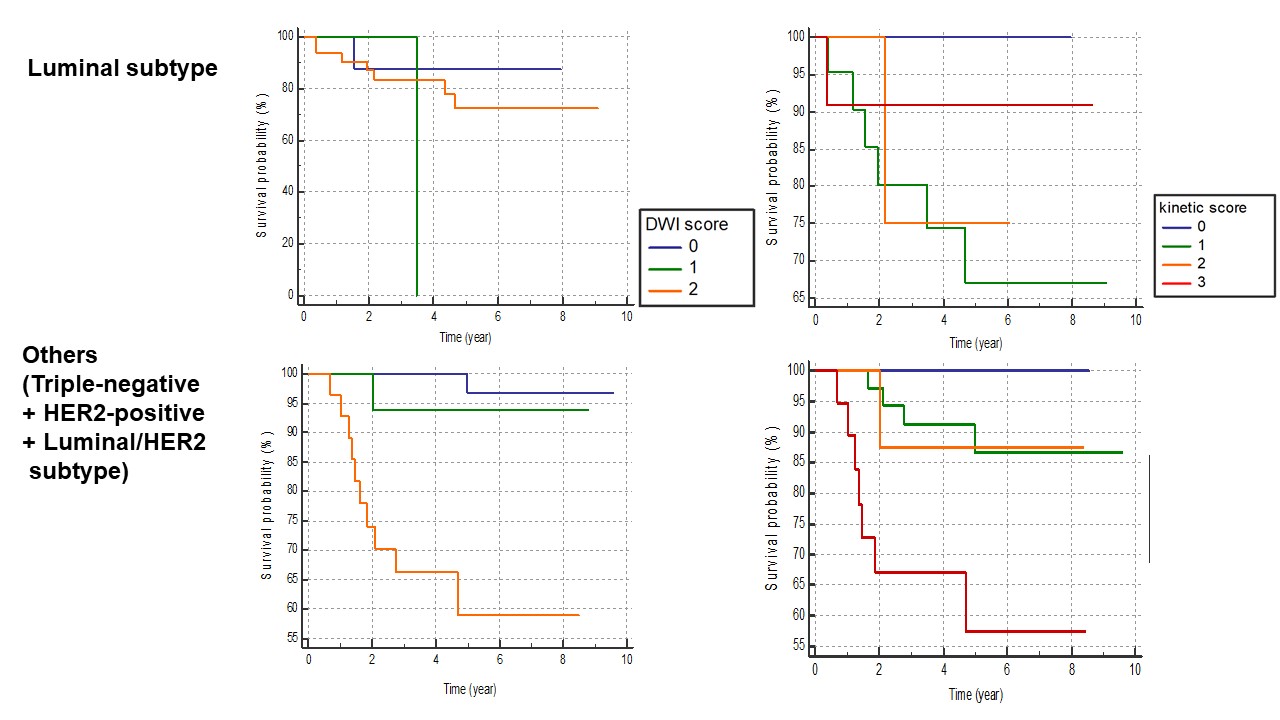
Figure 4. Kaplan-Meier survival curve of DFS for patients who underwent NST stratified by kinetic score after NST (Luminal and other subtypes).
For subgroup analysis, patients with high DWI and kinetic scores showed shorter DFS compared to those with low scores.
Among Luminal subtype, patients with high DWI score showed significantly shorter DFS compared to those with low DWI score. While, patients with high kinetic score did not show difference DFS compared to those with low kinetic score.