Exposing Vaping-Associated Lung Injury
1UW-Madison, United States
Synopsis
Keywords: Contrast mechanisms: Hyperpolarized MR (Gas), Body: Lung, Cross-organ: Inflammation
Electronic Vaping Associated Lung Injury (EVALI) and Electronic Nicotine Delivery Systems (ENDS) deliver addictive biologically active particulates (one micron in size) directly into the blood stream. This is accomplished by a battery powered heated filament that vaporizes the addictive agent along with one or more carrier substances. We are at the beginning stages of understanding the biological effects of these new delivery devices and if they will decrease the incidence of lung cancer in their users compared with cigarettes. Pilot data suggests that ENDS users have a disruption in their ability to match ventilation with perfusion at the arteriolar level.Overvew
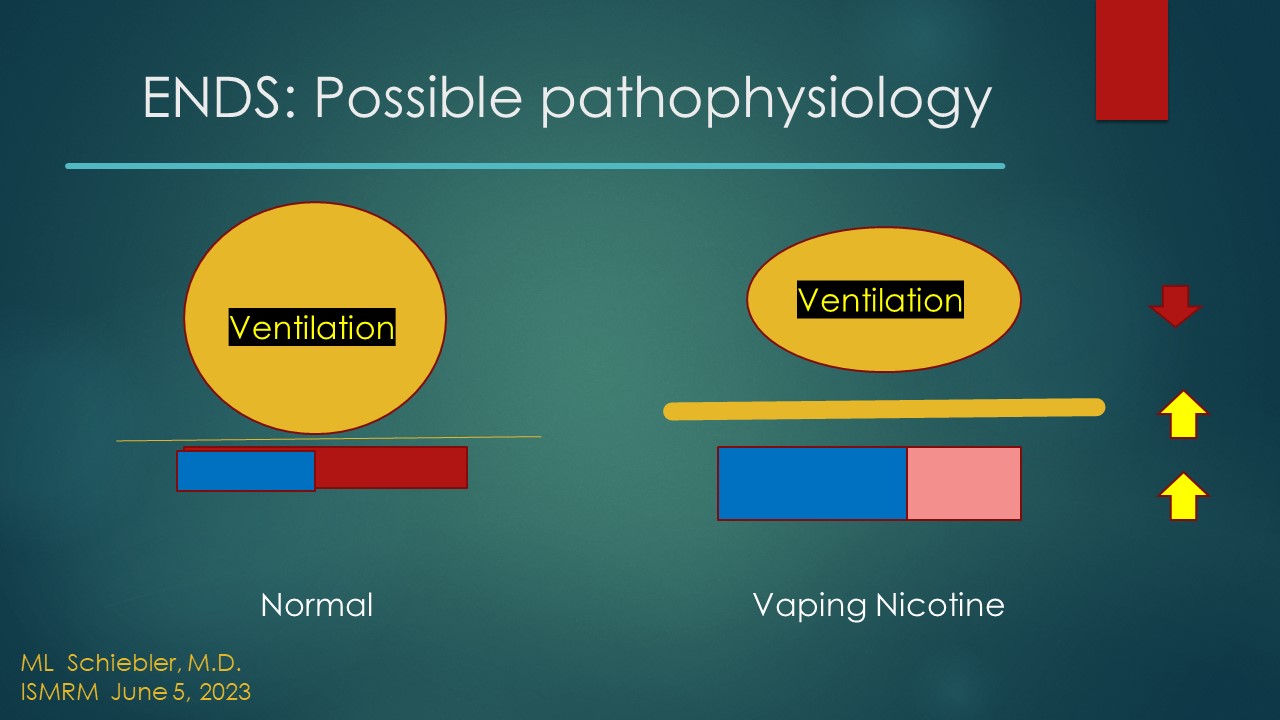
Electronic Vaping Associated Lung Injury (EVALI) and Electronic Nicotine Delivery Systems (ENDS) deliver addictive biologically active particulates (one micron in size) directly into the blood stream. This is accomplished by a battery powered heated filament that vaporizes the addictive agent along with one or more carrier substances. The temperature of the filament, the metal composition of the filament, the agent being vaporized, the carrier molecule(s), the frequency of use, the depth of inspiration, the host’s genetic response to particulates, other infections (e.g., COVID-19), all may have a role in determining the presentation of these patients to the clinic with a history of shortness of breath. (1) Hyperpolarized 123Xenon MRI spectroscopy is a proxy for regional lung function. Pilot data suggests that ENDS users have a disruption in their ability to match ventilation with perfusion at the arteriolar level. (2) Early results using Fourier decomposition analysis of the ventilation and perfusion signal intensities over the cardiac and respiratory cycles has also been used to study ENDS users. This non contrast method has also shown decreased ventilation and increased perfusion. (3) We are at the beginning stages of understanding the biological effects of these new delivery devices and if they will decrease the incidence of lung cancer in their users compared with cigarette smokers. This is a fertile area for future research as so little is really known about the role of vaping pens in the future of lung health.Acknowledgements
No acknowledgement found.References
1. Kligerman S, Raptis C, Larsen B, et al. Radiologic, Pathologic, Clinical, and Physiologic Findings of Electronic Cigarette or Vaping Product Use-associated Lung Injury (EVALI): Evolving Knowledge and Remaining Questions. Radiology. Mar 2020;294(3):491-505. doi:10.1148/radiol.2020192585
2. He M, Qing K, Tustison NJ, et al. Characterizing Gas Exchange Physiology in Healthy Young Electronic-Cigarette Users with Hyperpolarized (129)Xe MRI: A Pilot Study. Int J Chron Obstruct Pulmon Dis. 2021;16:3183-3187. doi:10.2147/COPD.S324388
3. Nyilas S, Bauman G, Korten I, et al. MRI Shows Lung Perfusion Changes after Vaping and Smoking. Radiology. Jul 2022;304(1):195-204. doi:10.1148/radiol.211327
Figures