Short & Sweet: Case Study & Applications of UTE/ZTE in MSK Contrast/Metal Artifact Reduction
Reto Sutter1
1University of Zurich, Zurich, Switzerland
1University of Zurich, Zurich, Switzerland
Synopsis
Keywords: Musculoskeletal: Skeletal, Musculoskeletal: Tendons
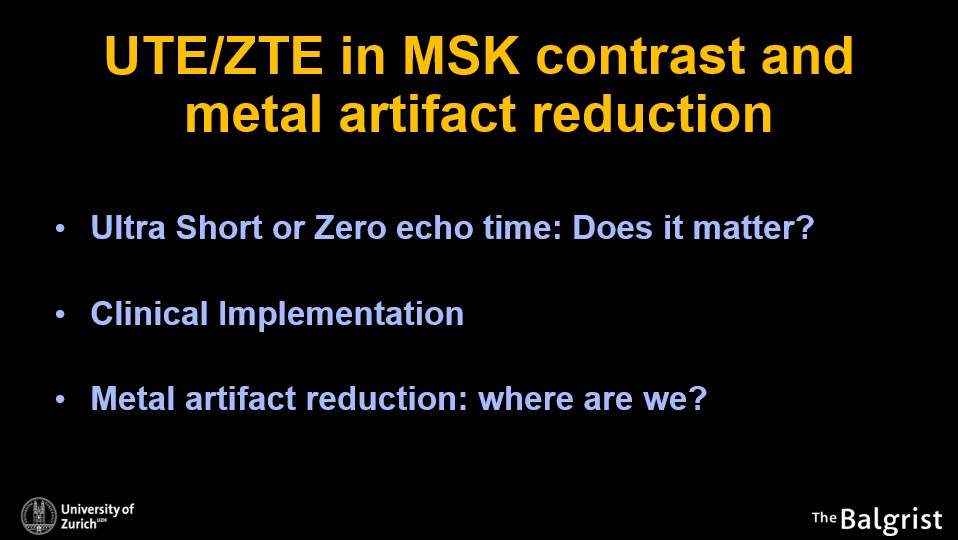
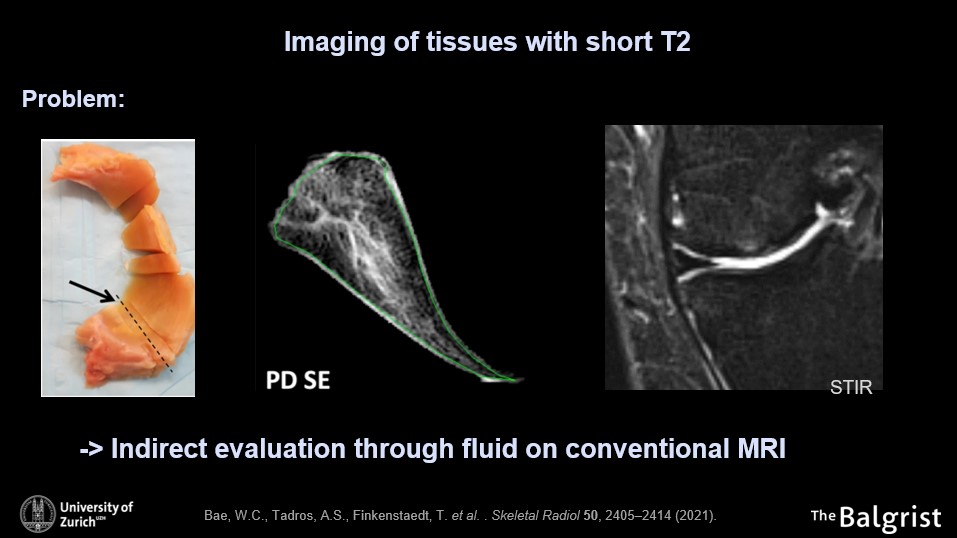
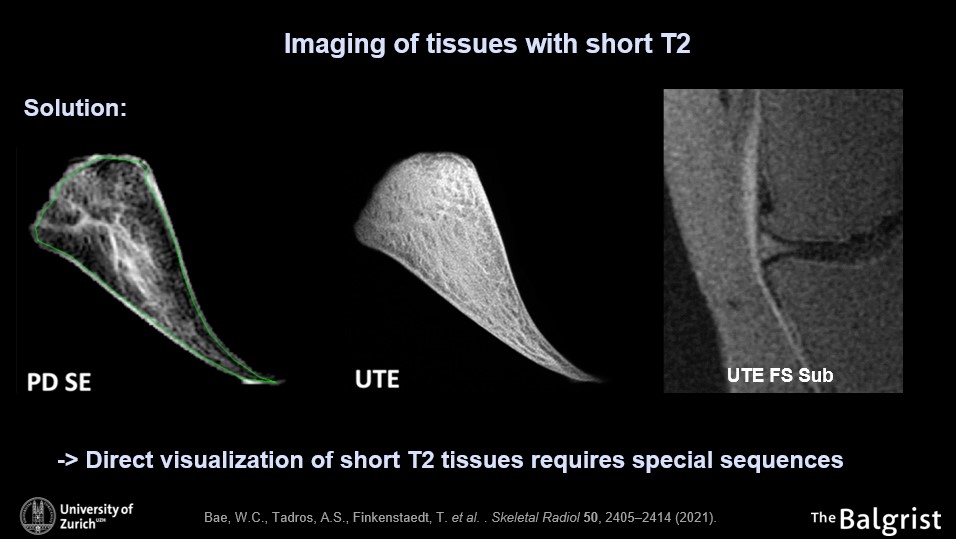
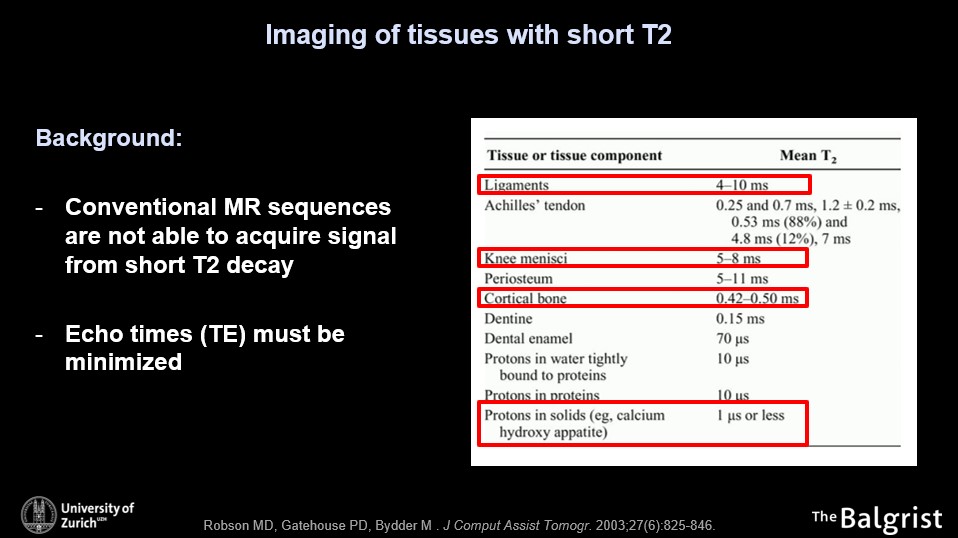
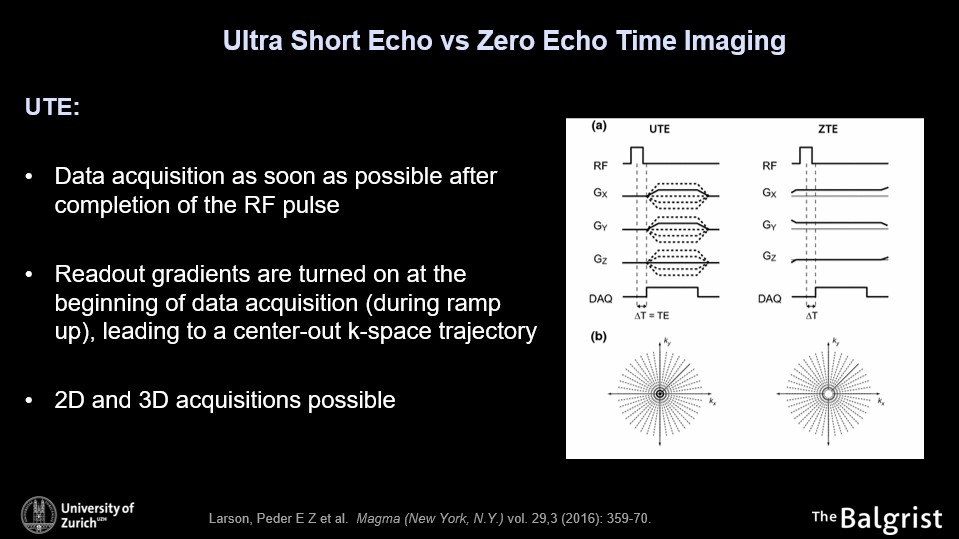
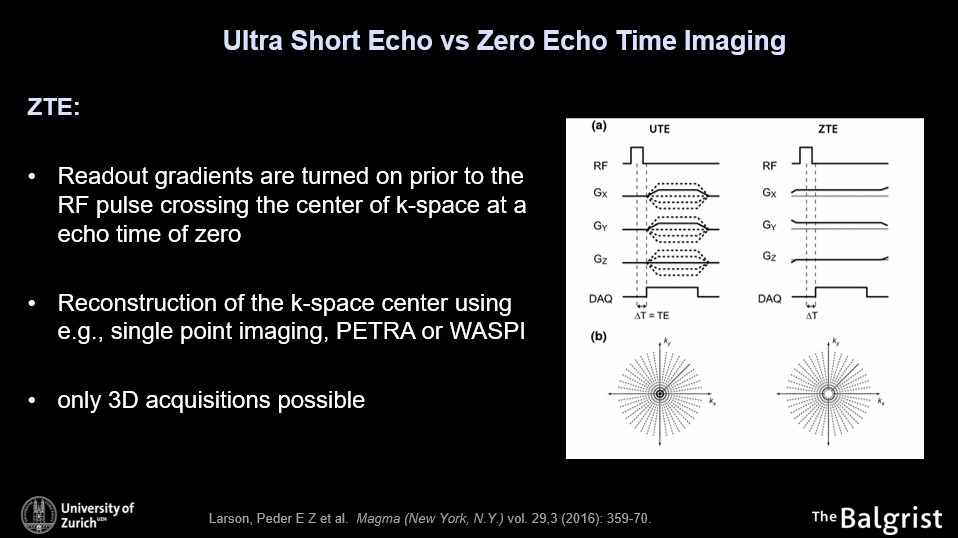
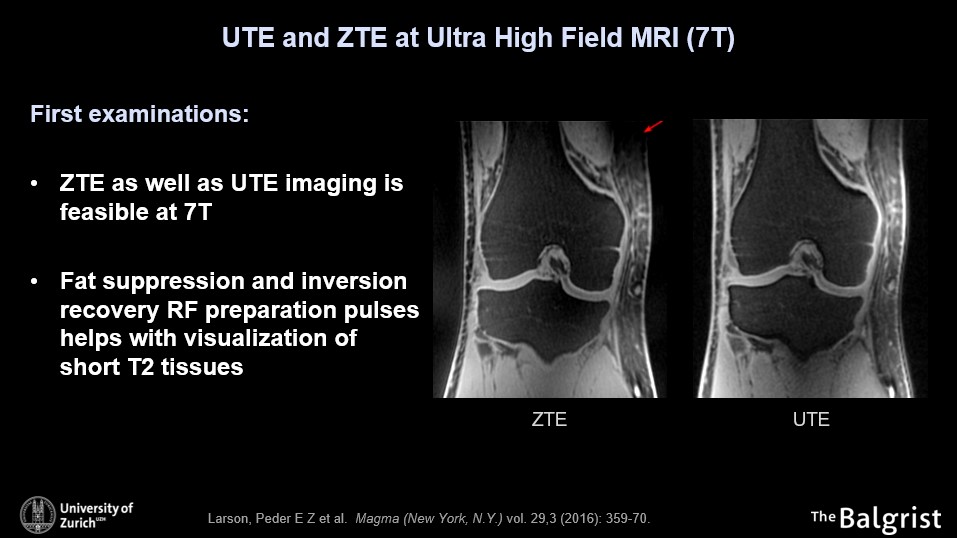
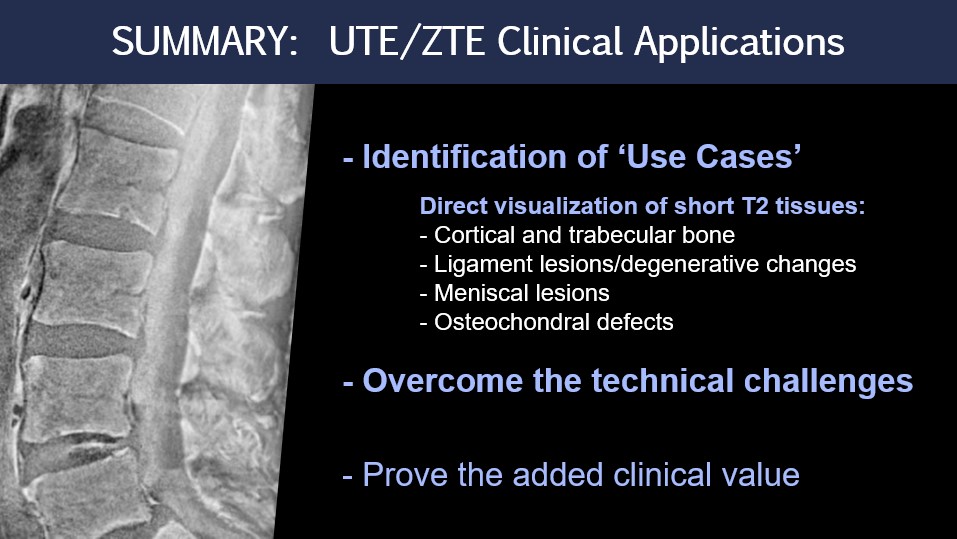
Ultra-Short Echo Time (UTE) and Zero Echo Time (ZTE) imaging are two advanced techniques that have been increasingly applied in musculoskeletal imaging for visualization of tissues with short T2 relaxation times. ZTE imaging has been used primarily for the assessment of various osseous pathologies including fractures, osteolysis and degenerative changes. UTE imaging was used to assess a variety of bone, cartilage, and tendon pathologies. UTE/ZTE imaging also allows for quantitative assessment of short T2 tissues, providing information about tissue properties such as T2* relaxation times and collagen content making them valuable tools for the diagnosis and monitoring of musculoskeletal disorders.Ultra-Short Echo Time (UTE) and Zero Echo Time (ZTE) imaging are two advanced techniques that have been increasingly applied in musculoskeletal imaging for visualization of tissues with short T2 relaxation times. ZTE imaging has been used primarily for the assessment of various osseous pathologies including fractures, osteolysis and degenerative changes. UTE imaging was used to assess a variety of bone, cartilage, and tendon pathologies. UTE/ZTE imaging also allows for quantitative assessment of short T2 tissues, providing information about tissue properties such as T2* relaxation times and collagen content making them valuable tools for the diagnosis and monitoring of musculoskeletal disorders.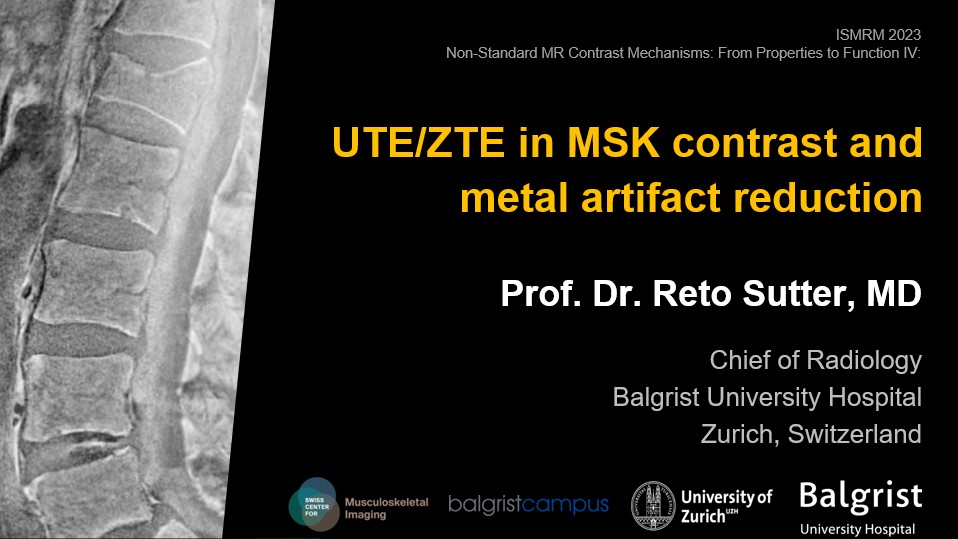 Slide #1
 Slide #2
 Slide #3
 Slide #4
 Slide #5
 Slide #6
 Slide #7
 Slide #8
 Slide #9
 Slide #10
 Slide #11
 Slide #12
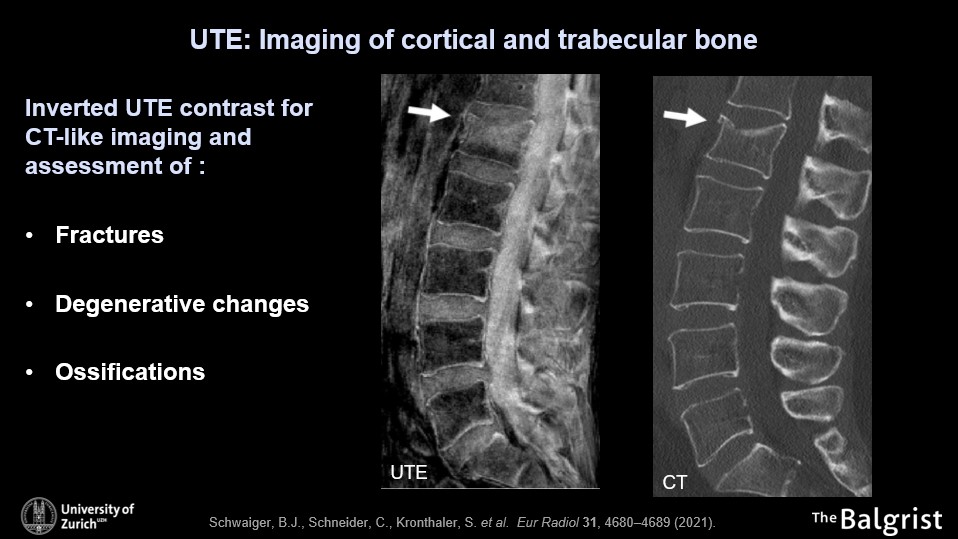 Slide #13
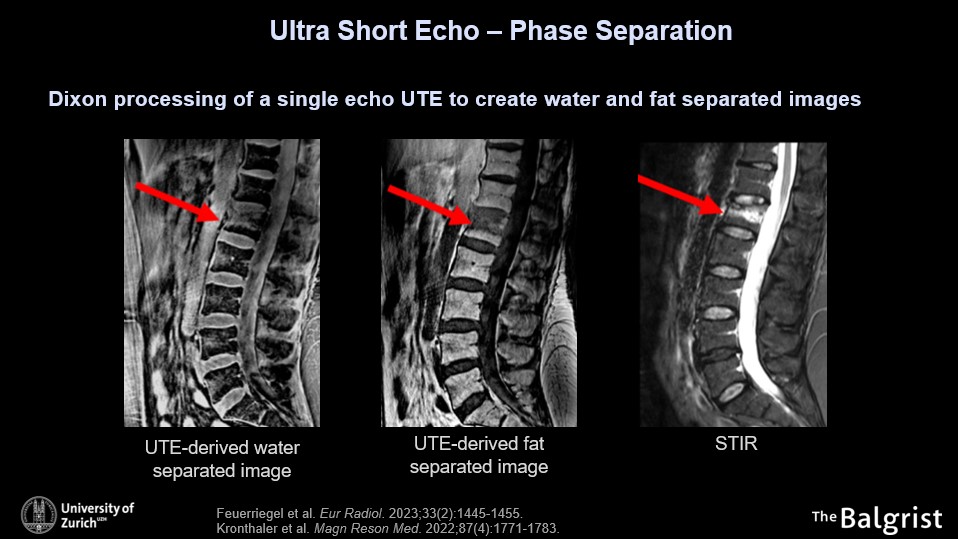 Slide #14
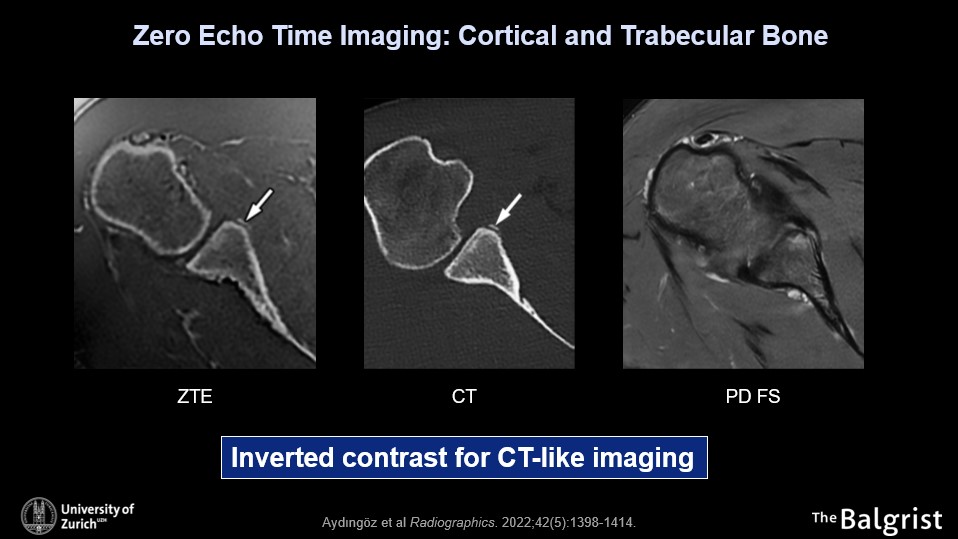 Slide #15
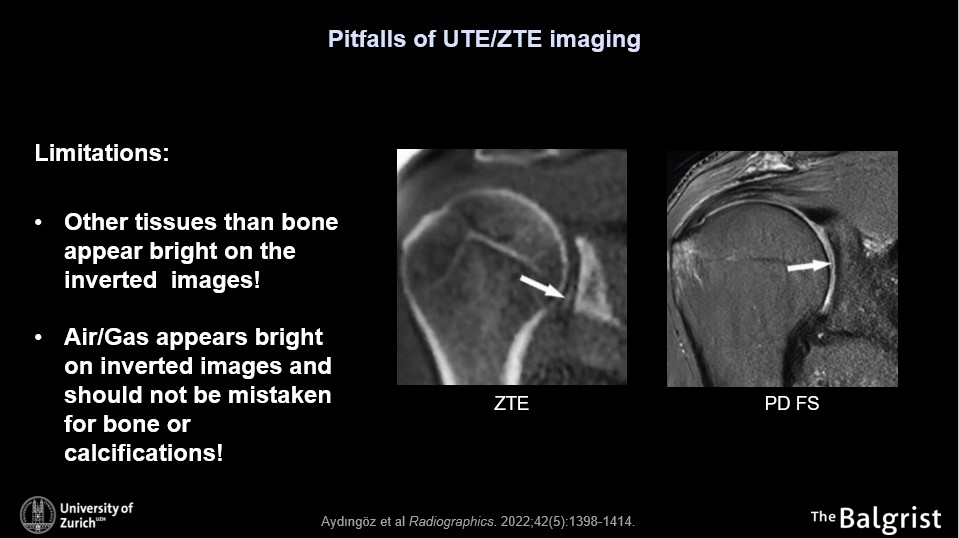 Slide #16
 Slide #17
 Slide #18
 Slide #19
 Slide #20
 Slide #21