5423
Investigation of mental state of patients after an examination in an MRI room with LED-backlight photoprints1Tobata Kyouritsu Hospital, Kitakyusyu,Fukuoka, Japan
Synopsis
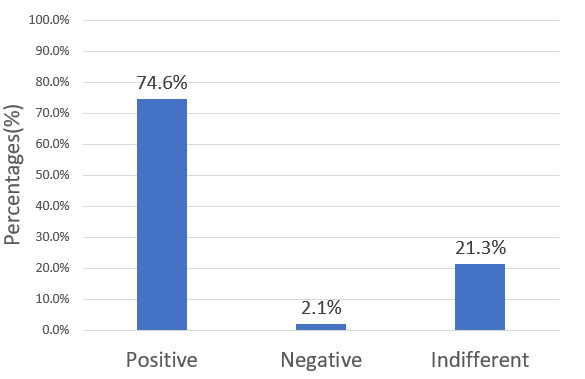
We investigated the psychological state of patients in an MRI examination room equipped with LED-backlit photoprints (SKY LIGHT). We surveyed patients who had completed their examinations in the room about their impressions of the room. The patients' responses were categorized into three types based on their words: positive, negative, and indifferent, and the percentages were calculated. 74.5% of the patients had positive impressions of the rooms after the examination. In conclusion, the results suggest that MRI rooms with SKY LIGHT can give positive impressions to patients.
INTRODUCTION
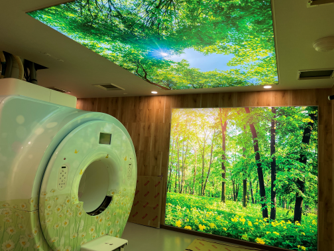
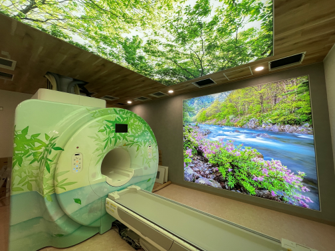
Currently, technologies and research are being developed to reduce the anxiety and stress patients have about MRI examinations.1 To improve the examination room environment and reduce patients' examination stress, we have installed LED-backlit photoprints(SKY LIGHT) in our MRI examination rooms. SKY LIGHT was developed in Germany to reduce the psychological burden on patients and the stress of hospital staff, and consists of a frame with LED lights for illumination and a fabric with vivid graphics.It has been shown that patients who have pictures of the sky placed on the ceiling of their hospital rooms are less anxious and less stressed than patients in rooms without the pictures.2We used pictures of natural landscapes such as forests and rivers in our graphic design and installed SKY LGHT on the ceiling and walls of the rooms. We conducted this study to verify the patients' reactions in MRI rooms with SKY LIGHT installed.METHODS
We installed SKY LIGHT on the ceiling and walls of each of the rooms of our two MRI machines. (Fig.1 and Fig.2)We interviewed patients who underwent MRI examinations in these rooms after the examinations. The total number of subjects was 47 (male:female = 19:28), and the mean age was 65.1 years (SD 16.7). In order to elicit the patients' intuitive impressions, we interviewed them and recorded the contents of the interviews. We calculated the percentage of reactions to the rooms based on the words in the patients' responses, which were classified into three categories: positive, negative, and indifferent. We also calculated the percentages of reactions in each county using the same method to find trends in reactions by gender and age.RESULTS
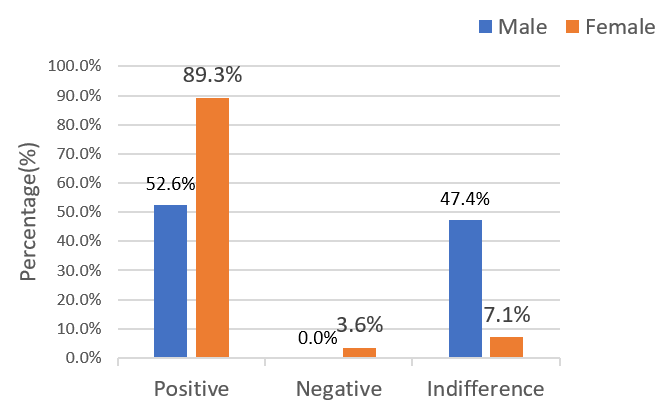
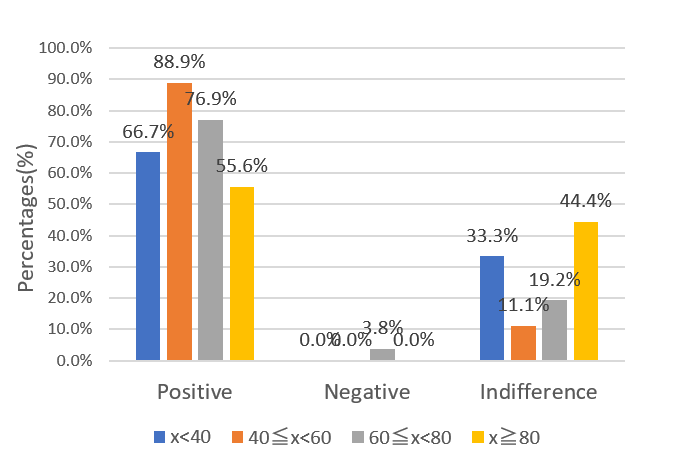
The largest percentage of reactions was positive at 74.6%. (Fig. 3). By gender, both groups had the largest percentage of positive reactions, with women having a larger percentage of positive reactions than men (Fig. 4). By age, each age group had the largest percentage of positive responses, with the group between 40 and 60 years old having the largest percentage (Fig. 5).DISCUSSION
We found that MRI rooms equipped with SKY LIGHT were able to create a positive impression on patients. Patients tended to respond positively to the brightness of the SKY LIGHT as lighting and to the design of the pictures such as colors of trees and flowers, mainly because the natural design was well received and seemed to give patients a sense of comfort and security. This tendency was particularly noticeable among elderly women. Given that Kitakyushu City, where our hospital is located, has a significantly large percentage of elderly people in Japan, we supposed that the installation of SKY LIGHT in the MR rooms has contributed to improving the psychological state of patients undergoing examinations there.CONCLUSION
MRI examination rooms with SKY LIGHT are able to give positive impressions to patients and improve their mental states.Acknowledgements
No acknowledgements found.References
1)Munn Z, Jordan Z. Interventions to reduce anxiety, distress and the need for sedation in adult patients undergoing magnetic resonance imaging: a systematic review. Int J Evid Based Healthc. 2013 Dec;11(4):265-74.
2)Pati D, Freier P, et al. The Impact of Simulated Nature on Patient Outcomes: A Study of Photographic Sky Compositions. HERD. 2016 Winter;9(2):36-51.
Figures