5421
Characteristics of brain white matter network in adolescent patients with first-episode non-suicidal self-injury
Yuwei Chen1 and Nian Liu1
1North Sichuan Medical College, Nanchong, China
1North Sichuan Medical College, Nanchong, China
Synopsis
Objective: Explore the characteristics of brain white matter network in non-suicidal self-injury patients.
Methods: The diffusion tensor imaging were prospectively collected form 30 adolescent patients with NSSI. The data was processed by software. Two independent sample t-test and partial correlation analysis were used to compare network metrics and clinical symptoms.
Results: There was no significant difference in global network metrics, but there were significant differences in nodal network metrics, including nodal efficiency, nodal degree centrality and nodal shortest path length (all P<0.05).
Conclusion: These finding provide new insights into the neural circuit mechanism of adolescent NSSI patients.
Objective
To explore the characteristics of brain white matter network in adolescents with first-episode non-suicidal self-injury (NSSI) by diffusion tensor imaging.Methods
The diffusion tensor imaging data, self-rating anxiety scale and self-injury behavior scale were prospectively collected from 30 adolescent patients with NSSI and 29 sex-and age-matched healthy controls. The data is preprocessed by FSL and PANDA software, and the fractional anisotropy is obtained to establish the network matrix. The white matter network is analyzed by graph theory using Gretna software, and the global and nodal network metrics are calculated. Two independent samples t-test was used to compare the differences of topological metrics of white matter network between the two groups after controlling for age, gender and education years. Bonferroni criterion was used for multiple comparisons of the topological metrics. Partial correlation analysis among the topological metrics, self-rating anxiety scale and self-injury behavior scale were performed.Results
There was no significant difference in global network metrics between NSSI group and healthy controls, but there were significant differences in nodal network metrics, including nodal efficiency, nodal degree centrality and nodal shortest path length (all P<0.05). Compared with the healthy controls, the NSSI patients showed decreased nodal efficiency and increased shortest path length involving right orbital middle frontal gyrus, left triangular inferior frontal gyrus, right insular, left median cingulate and paracingulate gyrus, right cuneus, right superior occipital gyrus, right inferior parietal angular gyrus, right angular gyrus and left thalamus, and increased shortest path length in left caudate nucleus. The NSSI patients showed decreased nodal degree centrality involving right orbital middle frontal gyrus, right insular, left median cingulate and paracingulate gyrus, left cuneus, right angular gyrus and left thalamus, and increased nodal degree centrality in right superior frontal gyrus. The clinical symptoms were negatively correlated with the nodal degree centrality of the right superior frontal gyrus, the node efficiency of the left median cingulate and paracingulate gyrus, positively correlated with the nodal shortest path length of the left triangular inferior frontal gyrus, left median cingulate and paracingulate gyrus, and the nodal centrality of the left thalamus (P < 0.05).Conclusion
Adolescent patients with first-episode NSSI have characteristic destruction of nodal white matter network, involving ventrolateral prefrontal lobe, limbic system, occipital lobe, inferior parietal lobule and insular, which is related to anxiety and self-injury behavior. These finding provide new insights into the pathogenesis of adolescent NSSI patients.Acknowledgements
No acknowledgement found.References
No reference found.Figures
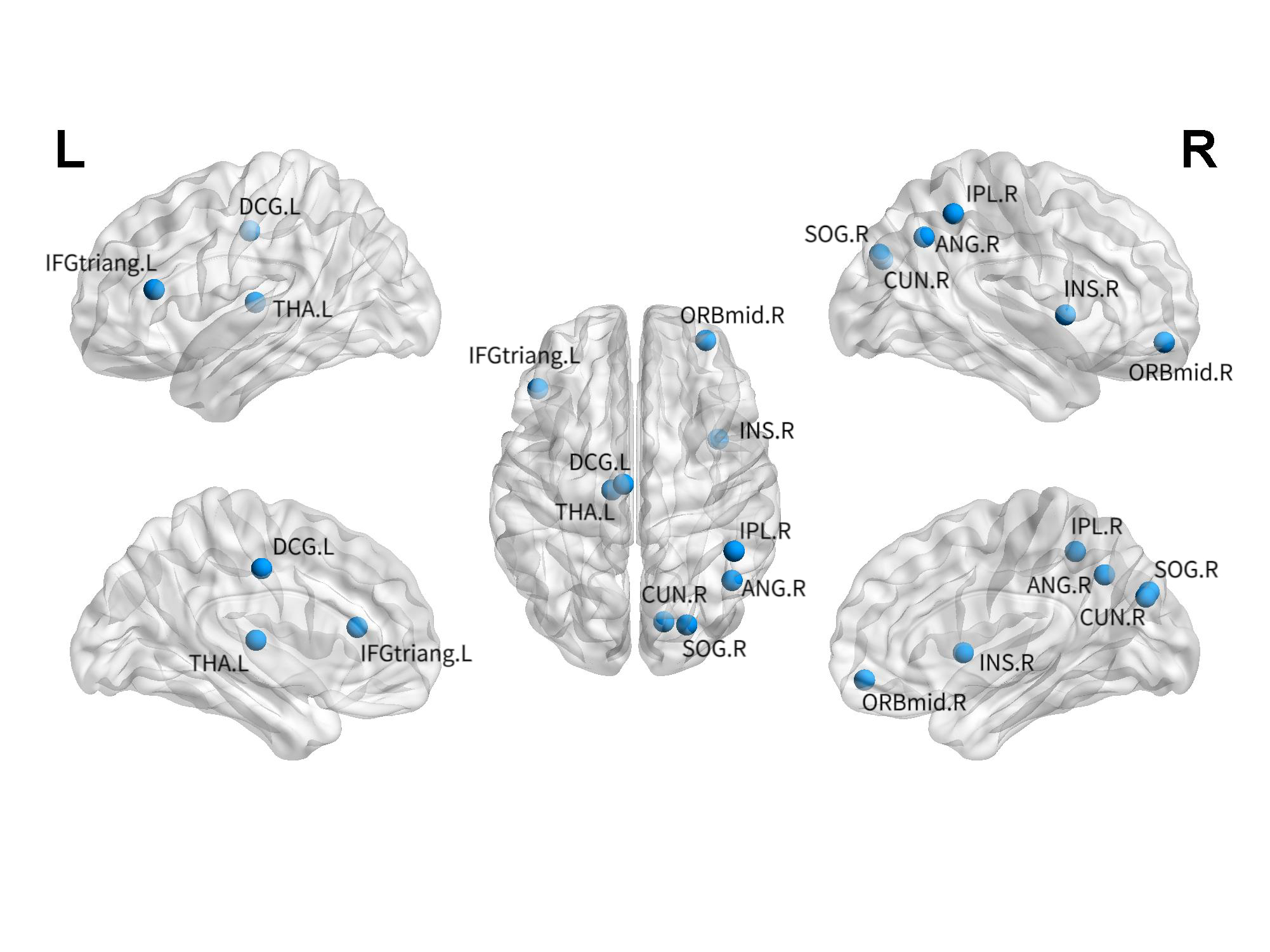
difference in NE between the two groups
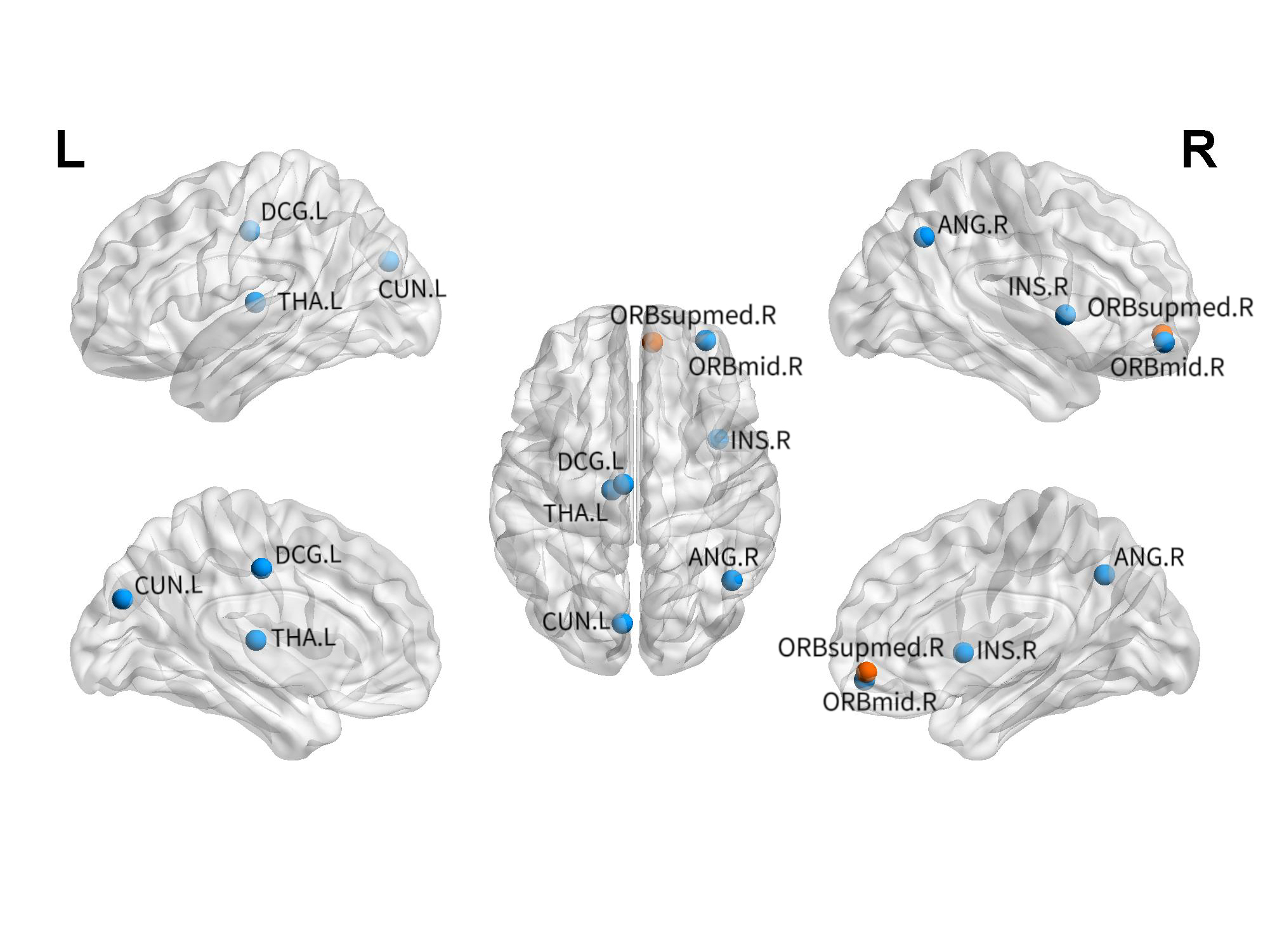
difference in DC between the two groups
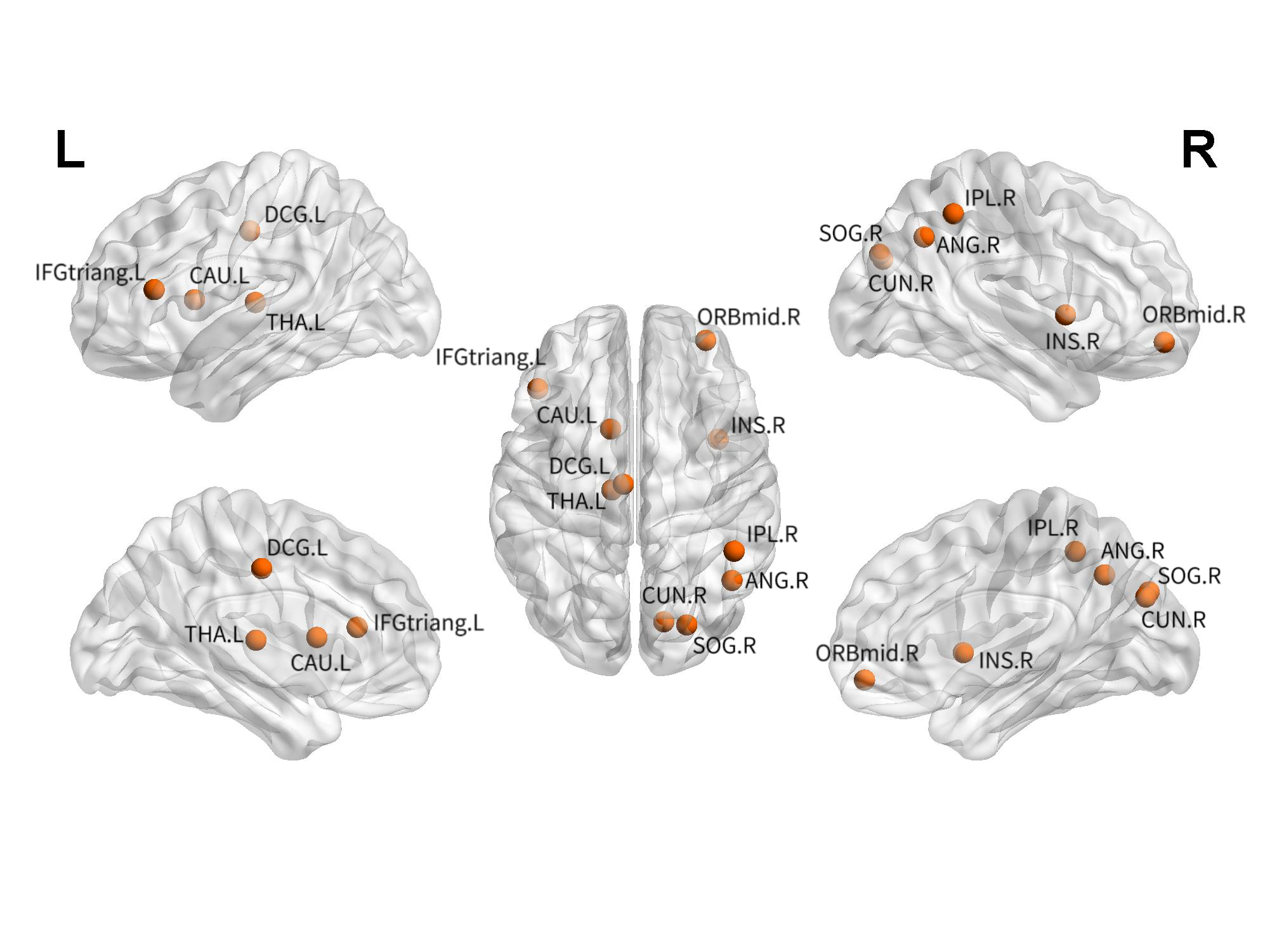
difference in NLP between the two groups
DOI: https://doi.org/10.58530/2023/5421