5376
CSF circulation and glymphatic system of the spinal cord: pathophysiology and imaging and treatment of associated diseases1Radiology, The University of Michigan, Ann Arbor, MI, United States
Synopsis
Keywords: Neurofluids, Spinal Cord
Glymphatic–lymphatic fluid transport system plays a critical role in fluid homeostasis in the spine associated with the CSF flow. Reviewed multiple diseases related to CSF circulation and glymphatic system. Intrathecal drug administration is an effective strategy to bypass the BBB via direct delivery to the CNS, especially in antibody or oligonucleotide-based therapeutics. Glymphatic system has an important role in drug-distribution from CSF to brain and spinal cord.Content:
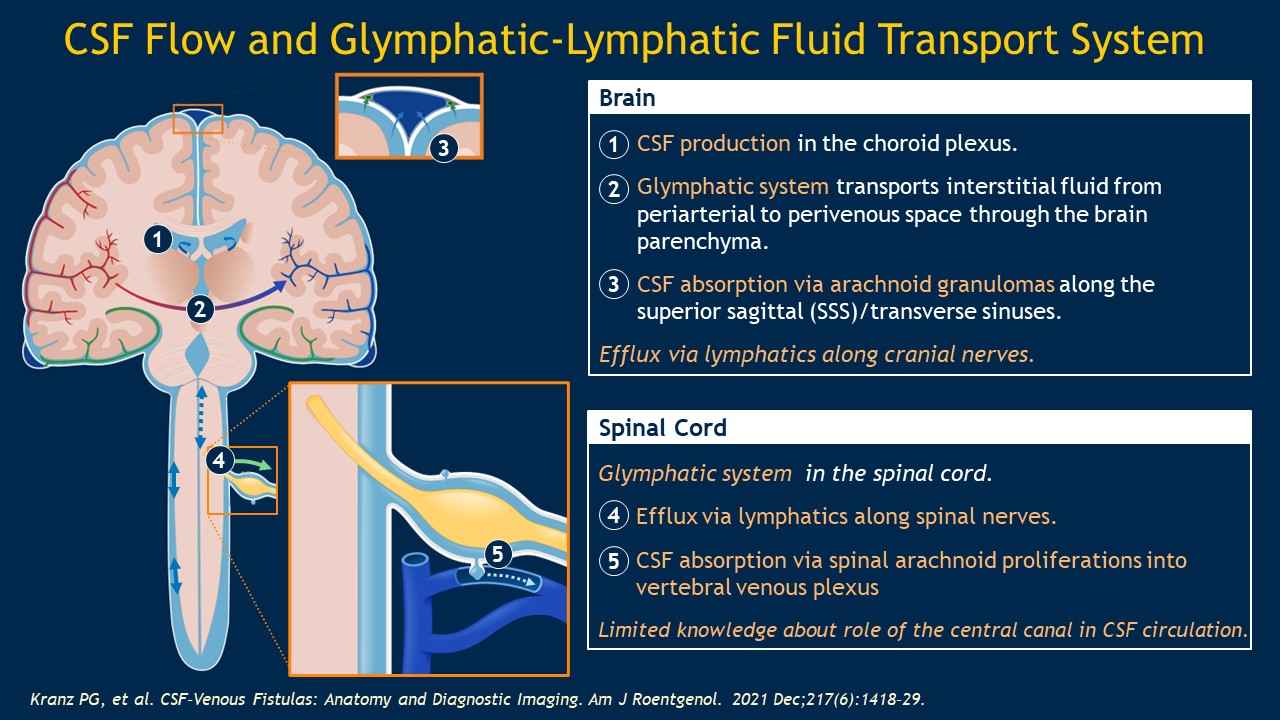
1. CSF circulation in the spine.
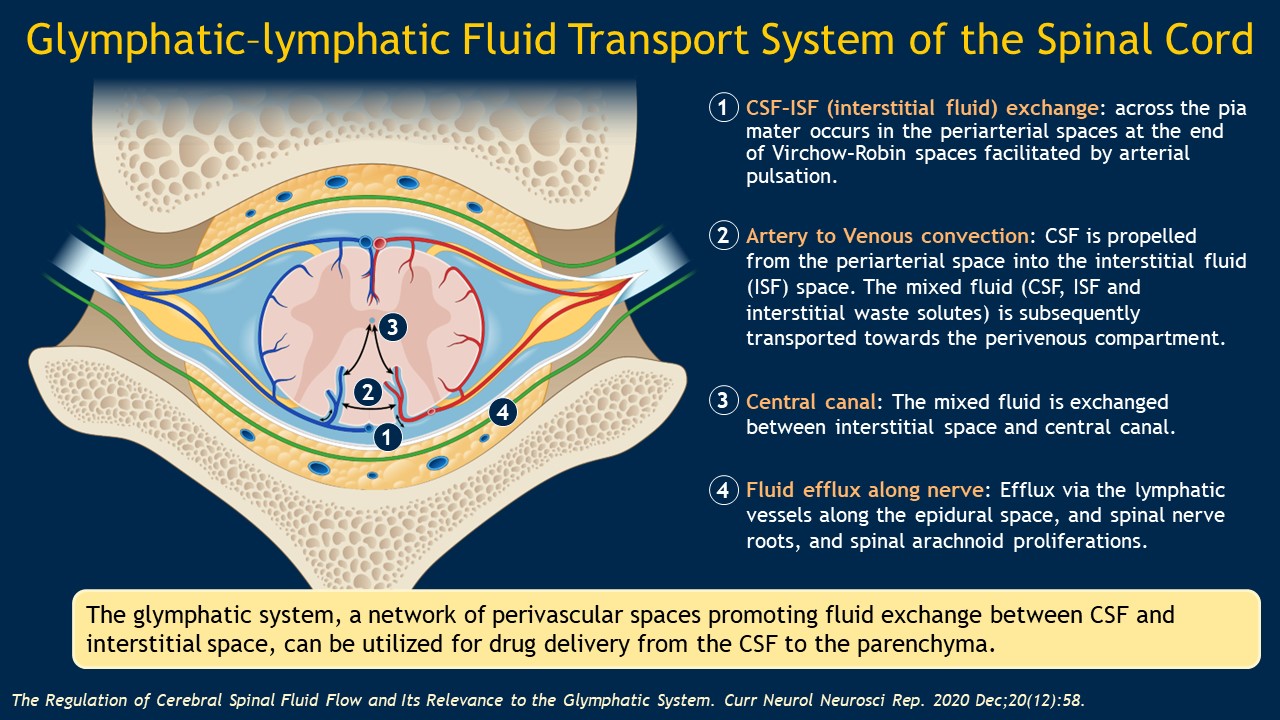
2. Glymphatic–lymphatic fluid transport system of the spinal cord.
3. Spinal cord diseases related to CSF production, absorption, and loss (leakage):
CSF leakage and CSF venous fistulas, Hypersecretion of CSF after dural ligation or subarachnoid hemorrhage.
4. Spinal cord diseases related to CSF flow abnormality:
Chiari malformation, spinal canal stenosis, spinal web, spinal cord herniation
5. Spinal cord diseases related to glymphatic system:
Iatrogenic intrathecal Gd administration, spinal neurosarcoidosis, neuromyelitis optica, syrinx and presyrinx state, SPAM
6. Drug delivery and glymphatic system:
Spinal muscular atrophy, amyotrophic lateral sclerosis (ALS) and other neurodegenerative diseases, Intrathecal chemotherapy, immunotherapy, and target therapy
Acknowledgements
N/AReferences
Fang Y, et al. A new perspective on cerebrospinal fluid dynamics after subarachnoid hemorrhage: From normal physiology to pathophysiological changes. J Cereb Blood Flow Metab. 2022 Apr;42(4):543–58.
Kranz PG, et al. CSF–Venous Fistulas: Anatomy and Diagnostic Imaging. Am J Roentgenol. 2021 Dec;217(6):1418–29
Safety of Intrathecal Administration of Gadolinium-based Contrast Agents: A Systematic Review and Meta-Analysis. Radiology. 2020
The Regulation of Cerebral Spinal Fluid Flow and Its Relevance to the Glymphatic System. Curr Neurol Neurosci Rep. 2020 Dec;20(12):58.
Zhang J, Wang G. Subacute posttraumatic ascending myelopathy: a literature review. Spinal Cord. 2017 Jul;55(7):644–50.
Fowler MJ, Cotter JD, Knight BE, Sevick-Muraca EM, Sandberg DI, Sirianni RW. Intrathecal drug delivery in the era of nanomedicine. Adv Drug Deliv Rev. 2020;165–166:77–95.
Lunn MR, Wang CH. Spinal muscular atrophy. Lancet. 2008 Jun 21;371(9630):2120–33.
Miller TM, et al. Trial of Antisense Oligonucleotide Tofersen for SOD1 ALS. N Engl J Med. 2022 Sep 22;387(12):1099–110.
Boros BD, et al. Antisense Oligonucleotides for the Study and Treatment of ALS. Neurotherapeutics. 2022 Jun 2
Figures