5375
Functional MR Spectroscopy - Challenges and Solutions
John Port1
1Mayo Clinic, Rochester, MN, United States
1Mayo Clinic, Rochester, MN, United States
Synopsis
Keywords: Psychiatric Disorders, Metabolism, functional MR spectroscopy
This educational poster reviews the challenges and issues present when performing functional MR spectroscopy. The poster will briefly review the history of the field, then present a framework for designing high-quality functional MRS experiments. Common artifacts and potential solutions to address them will also be discussed. The poster will conclude by discussing opportunities for developing the field.Introduction
MR spectroscopy has been available for in vivo measurement of brain metabolites since PRESS became widely available in 1985 (Bottomley). Since that time, thousands of MR spectroscopic studies of subjects with psychiatric subjects have been performed. Despite these studies, the clinical value of MR spectroscopy has been limited, in large part due to the overlap of metabolite levels between the patient and healthy groups.Almost all of these studies have measured static spectra from various brain regions, each acquired over several minutes time. Statistical comparisons are then made between groups, assuming that 1) the variability in the measurement itself is low, and 2) the biological variability of the metabolites is near zero. Recently the field has started questioning these assumptions, especially for the neurotransmitters glutamate and GABA.
Functional MR Spectroscopy
There has been growing interest in studying metabolite variability over time, much like functional MR imaging measures variability in blood flow over time. Early attempts at functional MRS consisted of acquiring sequential scans over a short time. This was necessary because scanner-related drift introduced significant artifacts into the data, requiring a "prescan" to reset the scanner before each sample. More recently, hardware and software improvements have been developed to allow for long continuous sampling of MRS data over many minutes.The purpose of this educational poster is to review the challenges and potential solutions for the many technical issues underlying functional MRS experiments. Five "pillars" of a prototypical functional MRS experiment will be presented, providing an operational context that can be used to design high-quality functional MRS experiments. Examples of common artifacts will be presented, along with potential explanations. The poster will conclude by discussing opportunities for improving FMRS methodology.
Acknowledgements
The author would like to acknowledge my Psychiatry colleagues Dr. Balwinder Singh and Dr. Mark Frye who have had faith in the FMRS technique over the past years, and who have funded the majority of this work.References
Bottomley PA et al, PNAS 82:2148-52, 1985
Figures
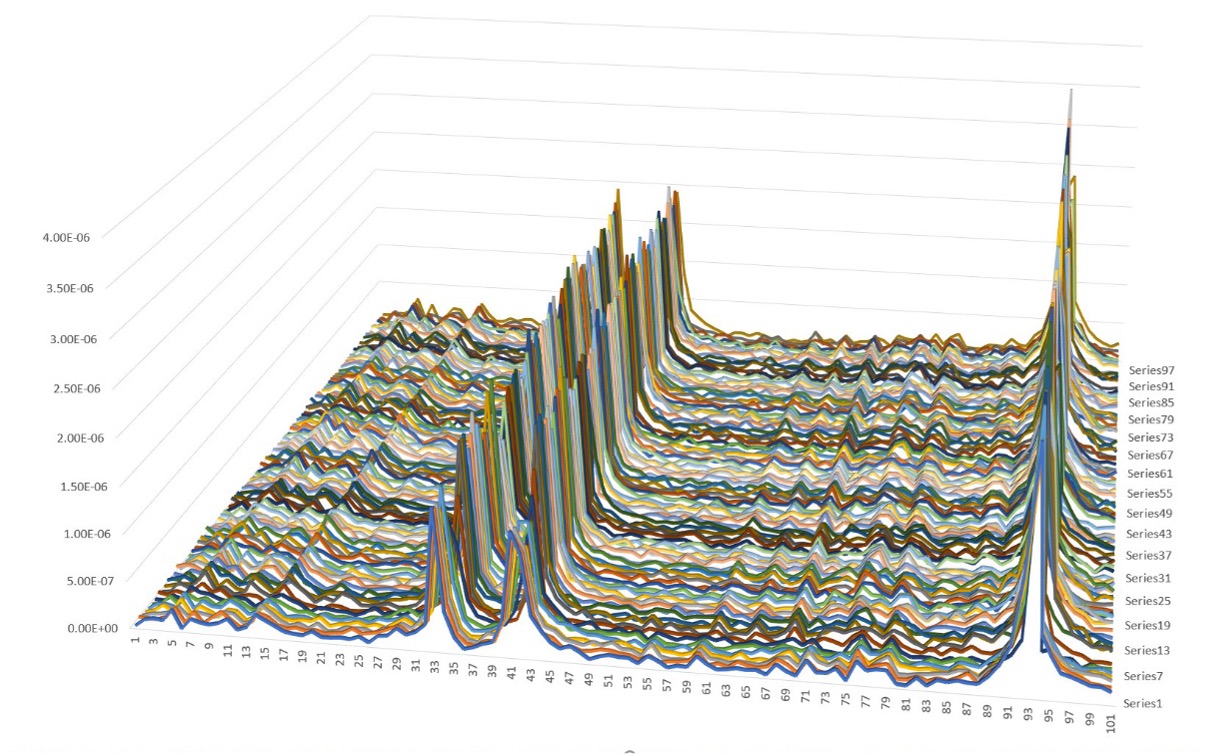
Functional MRS data from a phantom showing perfect data alignment and near-zero metabolite variation over time.
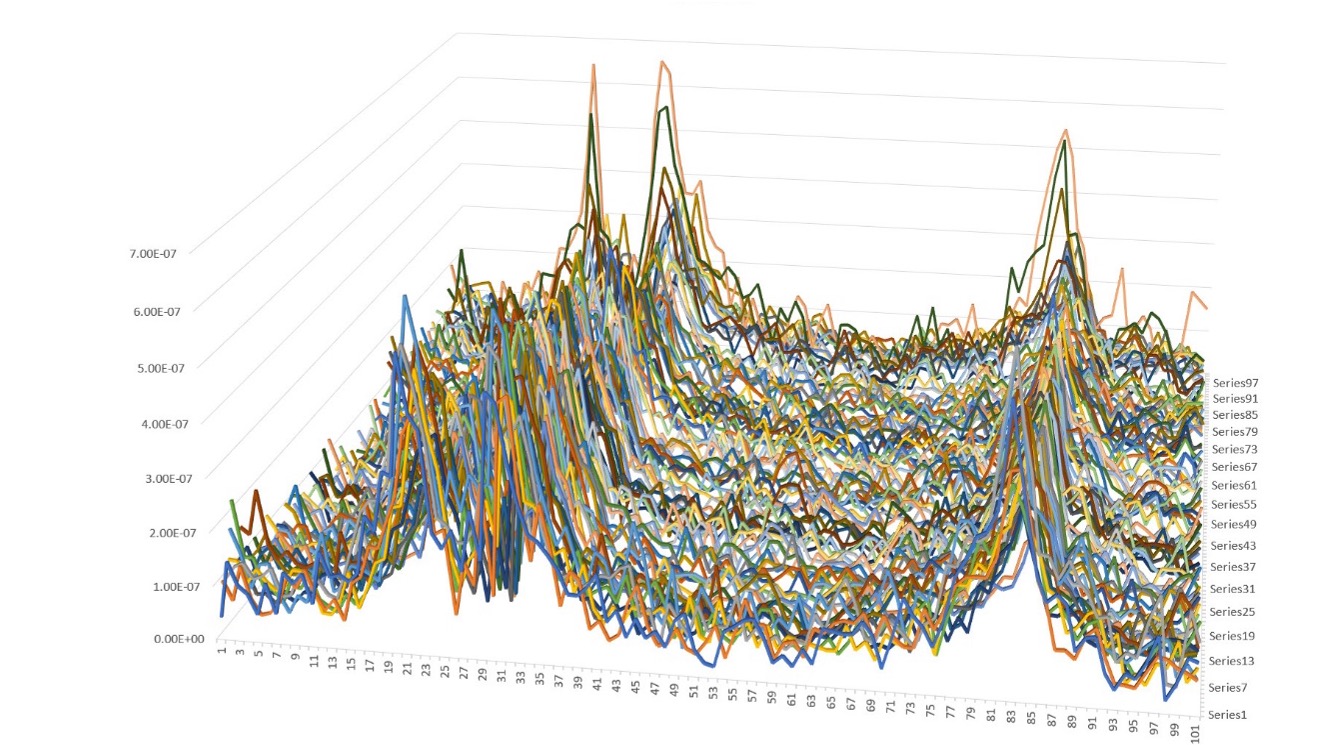
Functional MRS data from a live human being acquired on a 3T scanner. This is the reality of FMRS -- low SNR, wide peaks, large variability. This educational poster will address how to approach such a dataset.
DOI: https://doi.org/10.58530/2023/5375