5241
Clinical application of the Myocardial Transit-time (MyoTT) for patients with cardiac disease from a single center in China
Fei Yan1, Tao Li1, Xin Jin2, Jianing Cui1, Yanan Zhao1, and Xiuzheng Yue3
1Department of Radiology, 1st Medical Center of Chinese PLA General Hospital, Beijing, China, 2Beijing Cancer Hospital, Beijing, China, 3Philips Healthcare, Beijing, China
1Department of Radiology, 1st Medical Center of Chinese PLA General Hospital, Beijing, China, 2Beijing Cancer Hospital, Beijing, China, 3Philips Healthcare, Beijing, China
Synopsis
Keywords: Cardiomyopathy, Cardiomyopathy
Myocardial microvascular disease is widespread in cardiovascular disease and is associated with an increased risk of adverse events. Assessment of myocardial microcirculation is of great help in clinical diagnosis and treatment. Myocardial transit-time (MyoTT), as a relatively novel, non-invasive, non-radiation, and easy-to-perform CMR parameter, played an important role in the diagnosis and monitoring of disease prognosis. In this study, the CMR resting-state first-pass perfusion imaging sequence was used to measure the change of signal intensities from the coronary ostium to the coronary sinus to calculate the blood circulation time, as MyoTT. The study aims to observe the differences in myocardial microcirculation time of different diseases in the Chinese population.Keywords: CMR, cardiomyopathies, MyoTT,Introduction
Myocardial microvascular diseases are a series of diseases caused by changes in microvascular anatomy, changes in the microvascular wall structure, and changes in the autonomic fine-tuning of vascular tone. Microcirculation dysfunction can lead to myocardial injury and fibrosis.The presence of myocardial microvascular disease is associated with an increased risk of adverse cardiovascular events, and assessment of myocardial microcirculation is of great help in clinical diagnosis and treatment. However, myocardial microcirculation cannot be directly visualized [1]. Although it could be measured by interventional or nuclear medicine methods, these methods are invasive and radioactive, which are not conducive to widespread clinical development. Cardiac magnetic resonance imaging has gradually gained more clinical favors due to its non-invasiveness and non-ionizing radiation. The purpose of this study was to measure myocardial transit-time" (MyoTT) parameters using cardiac magnetic resonance resting-state first-pass perfusion imaging sequences [2].Materials and Methods
26 cardiomyopathies patients (8 patients with myocardial infarction(MI), 8 patients with connective tissue disease (CTD), 4 patients with hypertrophic cardiomyopathy (HCM), 3 patients with dilated cardiomyopathy (DCM), 2 patients with arrhythmias (AT) and 1 patients with myocardial amyloidosis (CA); 15 males; mean age 50±35) and 4 normal subjects (3 males;mean age 41±26) were included in this study. All CMR protocols were performed on Philips Ingenia CX 3.0 MRI scanner (Philips Healthcare, Best, The Netherlands) with a 16-channel body phase array coil. The resting state first-pass perfusion images were collected by dynamic turbo-filed echo (TFE) sequence in the free-breathing state. The injection flow rate of the contrast agent was 4.0ml/s. Then 20ml of normal saline was injected at the same rate. The image acquisition parameters were as follows: TR: shortest (2ms)/TE: shortest (1ms), FOV: 300×300mm, Voxel: 2.5x2.5x10mm³, SENSE: 2.3, flip angle:15°. To establish an objective and measurable parameter, we did not just rely on visual observation but accurately recorded the changes in the signal intensity of the coronary sinus and aortic root at different times during the first-pass perfusion process. During analysis, the position of the ROI must be manually adjusted to correct for cardiac motion. The detailed description of scanning positioning and measurement of MyoTT are shown in Figure 1 and Figure 2.Results
Thirty patients were included in this study. Different cardiomyopathies patients in China have different MyoTT values: eight MI patients: 18.48s; eight CTD patients: 13.4s; four HCM patients: 13.55s; in 1 case; three DCM patients: 14.7s; two AT patients: 16.8s; one CA patients: 25.7s; four normal subjects: 11.5s.Discussion&Conclusions
MyoTT is a novel, non-invasive and easy-to-implement method to rapidly assess myocardial microcirculation, and importantly, Compared with the data of 6.5 (4.8–8.4) for healthy Europeans in the previous study, the healthy people in China significantly prolonged. Therefore, different populations may have different numerical standards. MyoTT could be easily added to current CMR protocols and does not prolong CMR scan time. In addition, its subsequent analysis can be completed within 3 minutes on average, MyoTT will play an important role in the diagnosis and monitoring of the prognosis of myocardial microvascular diseases.Acknowledgements
None.References
1. Chatzantonis G, Bietenbeck M, Florian A, Meier C, Korthals D, Reinecke H, Yilmaz A. "Myocardial transit-time" (MyoTT): a novel and easy-to-perform CMR parameter to assess microvascular disease. Clin Res Cardiol. 2020 Apr;109(4):488-497. doi: 10.1007/s00392-019-01530-x. Epub 2019 Jul 18. PMID: 31321491.
2.Chatzantonis G, Bietenbeck M, Florian A, Meier C, Stalling P, Korthals D, Reinecke H, Yilmaz A. Diagnostic value of the novel CMR parameter "myocardial transit-time" (MyoTT) for the assessment of microvascular changes in cardiac amyloidosis and hypertrophic cardiomyopathy. Clin Res Cardiol. 2021 Jan;110(1):136-145. doi: 10.1007/s00392-020-01661-6. Epub 2020 May 5. PMID: 32372287; PMCID: PMC7806531.
Figures
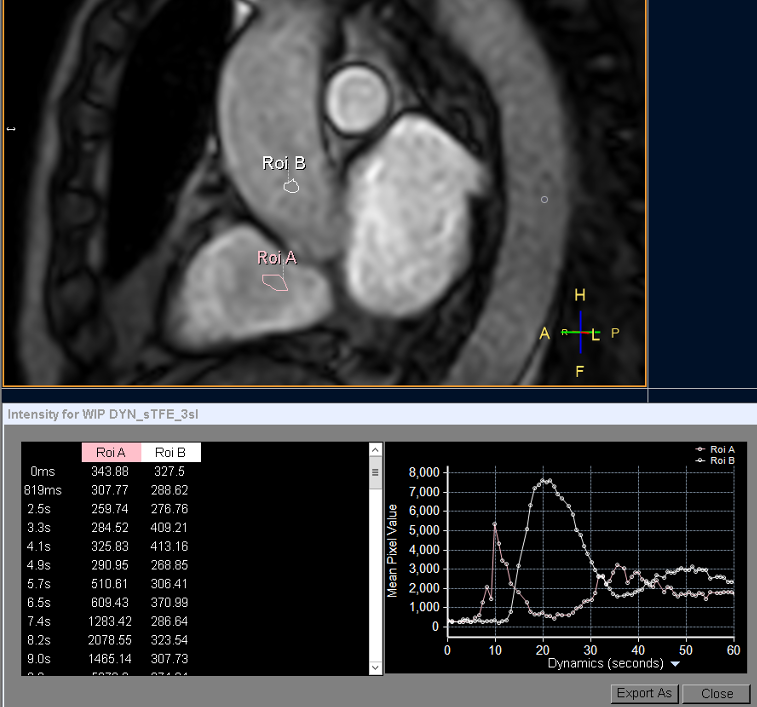
Figure 2 The measurement of MyoTT by measuring changes in signal enhancement in regions of interest (ROI)
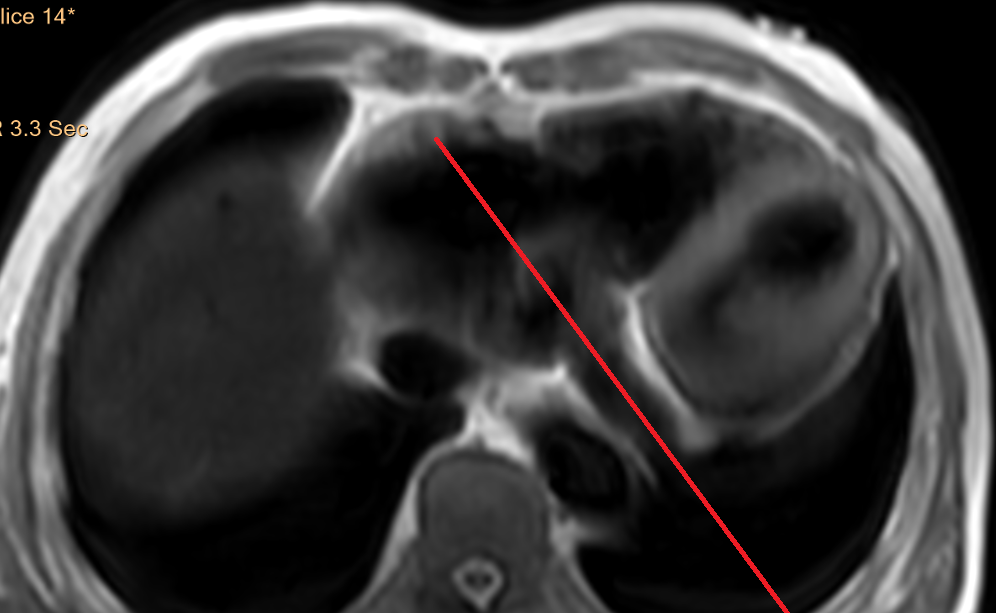
Figure1 The scan slices pass through the aortic root and coronary sinus.
DOI: https://doi.org/10.58530/2023/5241