4684
Diagnostic value of myocardial strain for evaluating pig model in ischemia with non-obstructive coronary artery disease1Department of Radiology, Xijing Hospital, Fourth Military Medical University, Xi'an, China, 2Department of Radiology, Xijing Hospital, Forth Military Medical University, Xi'an, China, 3Philips Healthcare China, Xi'an, China, 4Xijing Hospital, Fourth Military Medical University, Xi'an, China
Synopsis
Keywords: Myocardium, Animals
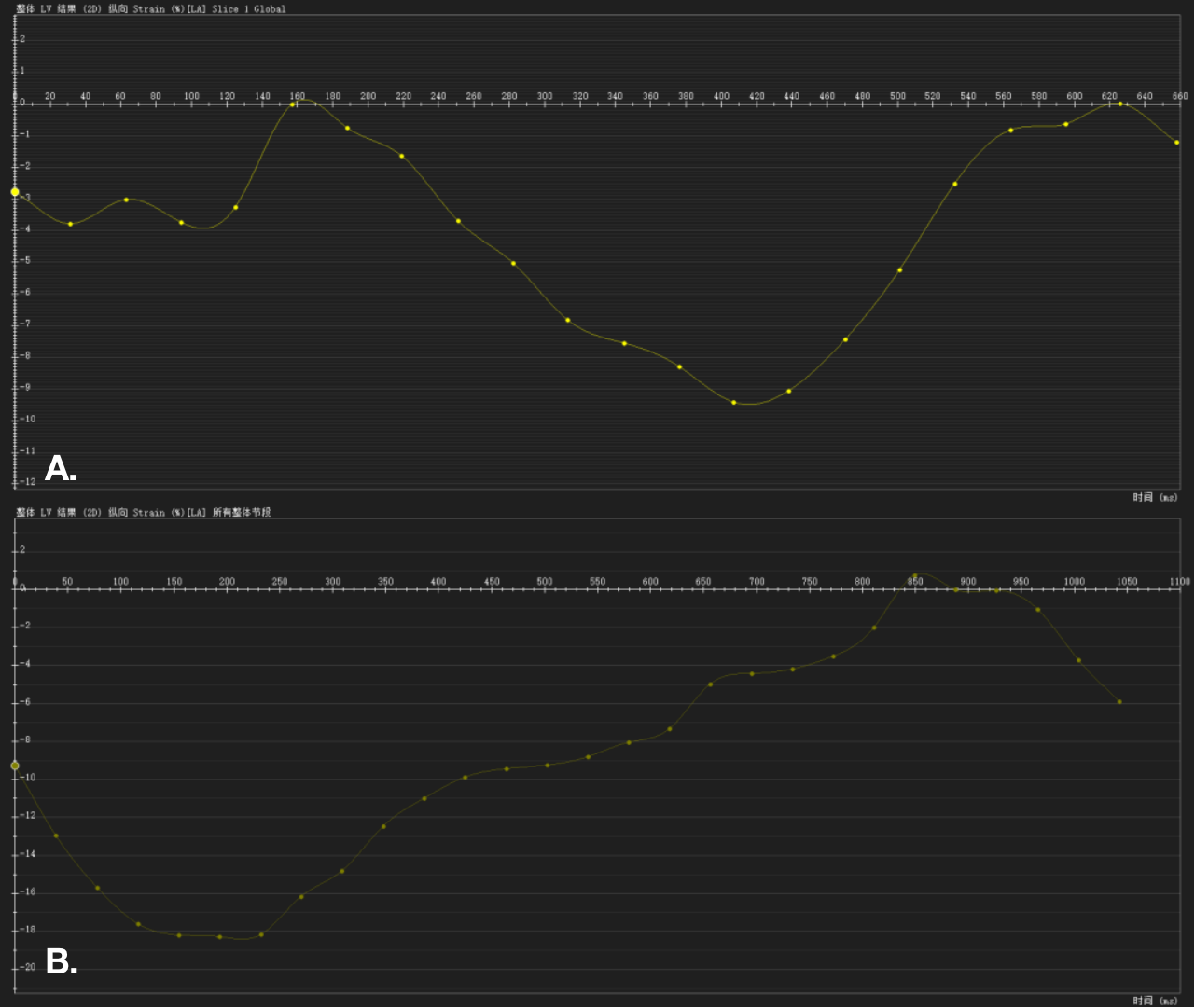
To explore whether myocardial strain can predict functional changes for ischemia with non-obstructive coronary artery disease (INOCA) in animal models. Results showed pigs with INOCA had lower global circumferential strain (GCS) and global longitudinal strain (GLS) (mean GCSnormal = -20.2 ± 2.0 %, mean GCSINOCA = -16.6 ± 1.4 %, P = 0.009; mean GLSnormal = -19.6 ± 1.9 %, mean GLSINOCA = -14.5 ± 3.0 %, P = 0.027). Therefore, the results showed that the myocardial deformation decreased in pigs with INOCA, which could provide information for the therapy of INOCA patients.Conclusion
Myocardial strain derived deformation quantification based on CMR feature tracking can predict functional changes in patients with INOCA, which may provide a promising approach for further evaluation disease progression.Introduction
Previous clinical studies found that approximately 70% of patients who underwent angiography for suspected ischemic heart disease did not have obstructive CAD, while myocardial ischemia was detected in one-third of men and two-thirds of women after other functional examinations (1). This phenomenon was defined as ischemia with non-obstructive coronary artery disease (INOCA) and invasive coronary angiography (ICA) is the current gold standard technique for diagnosing INOCA (2). However, cardiac magnetic resonance (CMR) has the advantages of low cost, non-invasiveness, and easiness, and are widely used in clinical practice when compared with ICA (3).CMR imaging is considered as the gold standard for alternative cardiac imaging techniques for assessing the cardiac structure and function. Moreover, it is considered the reference for the measurement of myocardial strain by feature tracking (FT) technology, such as global circumferential strain (GCS) and global longitudinal strain (GLS). In a study related to myocardial strain by Tamarappoo et al. (4), the LV circumferential strain was related to and predicted the CMD. Furthermore, the global longitudinal strain reserve was significantly lower in women with CMD (5). However, the research of investigating the ability of myocardial motion is limited, especially in the field of animal models. Therefore, this study aimed to analyze the myocardial strain characteristics of INOCA using a porcine model by CMR feature tracking.Method
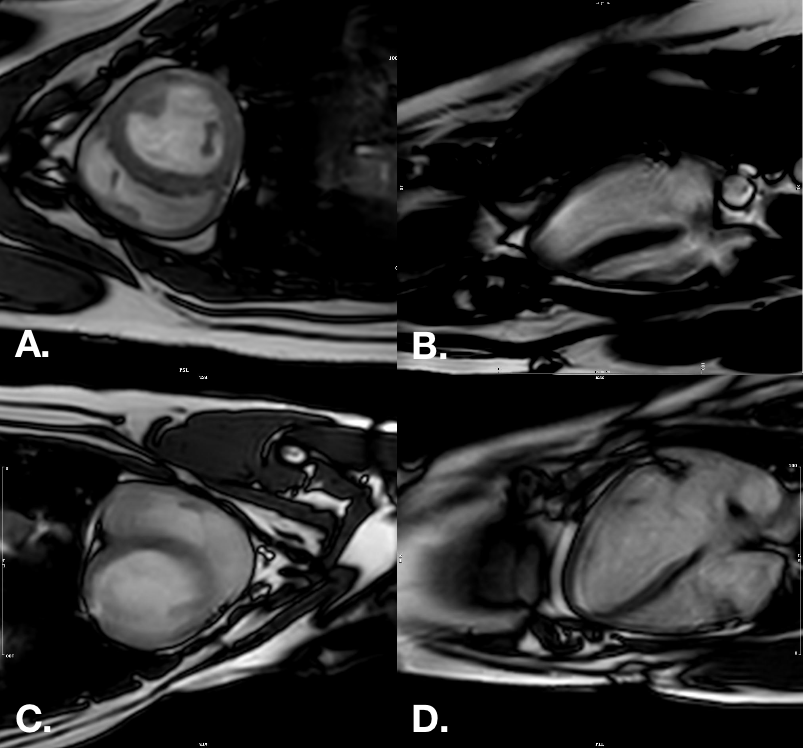
The pigs were chronically exposed to a combination of three common comorbidities, diabetes mellitus, hyperlipidemia, and chronic kidney disease to build a reliable INOCA model and we used this model extensively. The CMR was conducted on pigs in the supine position using a 3.0T system (Ingenia CX, Philips Medical Systems, Best, The Netherlands) with 32-channel phase-arrayed coils and electrocardiographic gating. The cine images were acquired with steady-state free precession (SSFP) sequence in different phases. The full examination included standard cine imaging for ventricular morphology and function. Three standard LV cine long-axis slices and a stack of contiguous short-axis slices were acquired from the atrioventricular ring to the apex (with a full LV coverage and slice thickness of 6 mm, and no overlap and gap). The imaging parameters were 16 temporal phases per slice, 35.49 ms repetition time (TR), 1.16 ms echo time (TE), 340 × 340 mm2 FOV, and 192 × 192 mm2 matrices.All CMR images were analyzed by the Philips MR post-processing workstation (IntelliSpace Portal; Version 10.1; Philips Healthcare, Best, the Netherlands) and the software (CVI 42; Circle Cardiovascular Imaging Inc., Calgary, AB, Canada). The endocardium and epicardium were delineated by semi-automated software with manual correction by two radiologists (ZMW and LY with 10 years of experience). The left and right ventricular function parameters such as myocardial mass, ventricular volume, and ejection fraction (EF) were obtained. Moreover, GCS and GLS were measured semi-automatically from the cine images. Statistical analyses were performed using IBM SPSS Statistics software (version 26.0). The continuous variables were reported as means ± standard deviations. Comparison was performed using an independent-sample parametric statistical test. Statistical significance was accepted when a P-value was <0.05 (two-tailed test).Result
7 pigs with INOCA and 3 normal (18.7 ± 1.1 vs. 18.8 ± 1.4 kg, P = 0.877) were performed in this study. The RVEDV (46.7 ± 8. vs. 63.1 ± 3.8 mL, P = 0.014) and RVCO (24.3 ± 4.9 vs. 39.5 ± 3.0 mL/min, P = 0.001) were lower in the DM + HC + CKD group compared with the healthy normal pigs, while others LV function parameters did not show any statistical differences between the two groups.The parameters related to strain, such as GPCS (-15.4 ± 2.1% vs. -21.0 ± 0.7%, P = 0.002) and GPLS (-13.2 ± 3.8% vs. -20.6 ± 0.8%, P = 0.011) were lower in the DM + HC + CKD group as shown in Table 1.Discussion
In this study, strain parameters were assessed in pigs with INOCA by CMR feature tracking technology. Results showed GLS and GCS decreased, suggesting a promising parameter for the subclinical myocardial dysfunction before the appearance of symptoms and decrease of LVEF. According to a study (5), the GLS reserve was significantly lower in women with CMD, but the mechanisms underlying the association between the CMD and GLS reserve warranted further study, which was corresponding with this study. Another study (4) demonstrated that the GCS of the left ventricle was related to and predicted the CMD, representing an early sign of LV mechanical dysfunction in CMD. Our conclusion was consistent with this result, while Tamarappoo et al. (4) found that the GCS was greater with CMD compared with that without CMD. In patients who had invasive coronary function testing, high GCS was associated with the increased likelihood of reduced vasodilator capacity. The conclusion was in contrast to the conclusion of this study. This study interpreted that subendocardial dysfunction may have promoted epicardial helical muscle fiber dominance, resulting in greater circumferential strain. However, this explanation needed to be further verified due to the limited models.Acknowledgements
No acknowledgement found.References
1. Knuuti J, Wijns W, Saraste A et al. 2019 ESC Guidelines for the diagnosis and management of chronic coronary syndromes. Eur Heart J 2020;41:407-477.
2. Pazhenkottil AP, Nkoulou RN, Ghadri JR et al. Impact of cardiac hybrid single-photon emission computed tomography/computed tomography imaging on choice of treatment strategy in coronary artery disease. European Heart Journal 2011;32:2824-2829.
3. Kunadian V, Chieffo A, Camici PG et al. An EAPCI Expert Consensus Document on Ischaemia with Non-Obstructive Coronary Arteries in Collaboration with European Society of Cardiology Working Group on Coronary Pathophysiology & Microcirculation Endorsed by Coronary Vasomotor Disorders International Study Group. European Heart Journal 2020;41:3504-3520.
4. Michelsen MM, Pena A, Mygind ND et al. Coronary microvascular dysfunction and myocardial contractile reserve in women with angina and no obstructive coronary artery disease. Echocardiography 2018;35:196-203.
5. Tamarappoo B, Samuel TJ, Elboudwarej O et al. Left ventricular circumferential strain and coronary microvascular dysfunction: A report from the Women's Ischemia Syndrome Evaluation Coronary Vascular Dysfunction (WISE-CVD) Project. International Journal of Cardiology 2021;327:25-30.
Figures