4545
AI inspired engineering of future MRI machines and components
J. Coupling1, E. Current1, and Line SP. Litting1
1Division of Medical Physics, Department of Diagnostic and Interventional Radiology, University Medical Center Freiburg, Faculty of Medicine, University of Freiburg, Freiburg, Germany
1Division of Medical Physics, Department of Diagnostic and Interventional Radiology, University Medical Center Freiburg, Faculty of Medicine, University of Freiburg, Freiburg, Germany
Synopsis
Keywords: Hybrid & Novel Systems Technology, New Devices
The topic of this contribution is how artificial intelligence (AI) can be used to engineer future magnetic resonance imaging (MRI) machines and components. MRI machines are vital tools in the medical field, used for everything from diagnosing injuries to detecting cancer. However, they are also extremely complex devices, made up of many different parts that must work together seamlessly.Introduction
AI has the potential to revolutionize the process of engineering MRI machines and components, by streamlining the design process and making it more efficient. However, there are also some drawbacks to using AI in this way, as it can lead to a loss of human expertise and control over the final product. In order to make sure that AI is used effectively in MRI machine engineering, it is important to have a clear understanding of both the benefits and the limitations of this technology.Engineering Future MRI Machines and Components with AI.
The use of artificial intelligence (AI) in engineering future magnetic resonance imaging (MRI) machines and components can offer various benefits. For instance, AI can be used to automate the design process of MRI machines, which would lead to a more efficient and faster design cycle. Additionally, AI can be used to improve the accuracy of predictions made by MRI machine models during the development stage. This is due to the fact that AI can learn from data much faster than humans and make better predictions as a result. Finally, the use of AI in MRI machine engineering can also help reduce the cost of developing new MRI machines and components.The Drawbacks of AI in MRI Machine Engineering.
There are also some potential drawbacks associated with the use of AI in engineering future MRI machines and components. For example, if not properly managed, the increased speed at which AI can learn and make predictions could lead to errors in the final product. Additionally, there is a risk that companies may become too reliant on AI technologies and lose sight of the need for human expertise in this field.
How to Use AI in MRI Machine Engineering.
The first step in using AI to engineer future MRI machines and components is to create a digital twin of the machine. This digital replica can be used to test different design scenarios and optimize the machine for specific tasks.Once the digital twin is created, it can be used to generate data that can be used to train machine learning algorithms. These algorithms can then be used to automatically design and optimize new MRI machines and components.The Need for Human Experts.
While AI can be used to automate many aspects of MRI machine engineering, there will still need to be human experts involved in the process. This is because AI cannot yet replace humans when it comes to creativity and innovation.Human experts will also be needed to interpret the results of AI-generated designs and make sure that they meet all safety and performance requirements.
The Future of AI in MRI Machine Engineering.
The benefits of using AI in MRI machine engineering are many and varied. By using AI, engineers can create more sophisticated machines that are able to provide more accurate diagnosis and treatment. Additionally, AI-enabled machines can be used to create customized treatment plans for individual patients based on their unique needs and characteristics. In the future, AI will likely play an even bigger role in MRI machine engineering, as the technology continues to evolve and become more sophisticated.The Drawbacks of AI in MRI Machine Engineering.
Despite the many benefits of using AI in MRI machine engineering, there are also some potential drawbacks to consider. One of the biggest concerns is that as machines become increasingly sophisticated, they may eventually surpass human intelligence altogether. This could lead to humans becoming obsolete in the field of medicine, which could have devastating consequences for society as a whole. Additionally, some experts believe that AI-enabled machines could eventually become so advanced that they might be able to diagnose and treat conditions without any input from human experts whatsoever. While this may sound like a good thing at first glance, it could actually lead to a loss of jobs in the medical field, as well as a decrease in the quality of care overall.
Conclusion
The benefits of engineering future MRI machines and components with AI are clear. By automating repetitive tasks, AI can help speed up the engineering process and improve accuracy. Additionally, AI can help identify errors and potential problems early on in the design process. However, there are also some drawbacks to using AI in MRI machine engineering. One potential downside is that AI could lead to a loss of jobs for human experts. Additionally, if not used correctly, AI could introduce new errors and problems into the design process. Despite these potential drawbacks, the benefits of using AI in MRI machine engineering outweigh the negatives. With proper implementation, AI can help improve the efficiency and accuracy of future MRI machines and components.Acknowledgements
The authors would like to thank www.texta.ai and www.huggingface.co/spaces/stabilityai/stable-diffusion for their valuable outputReferences
No reference found.Figures
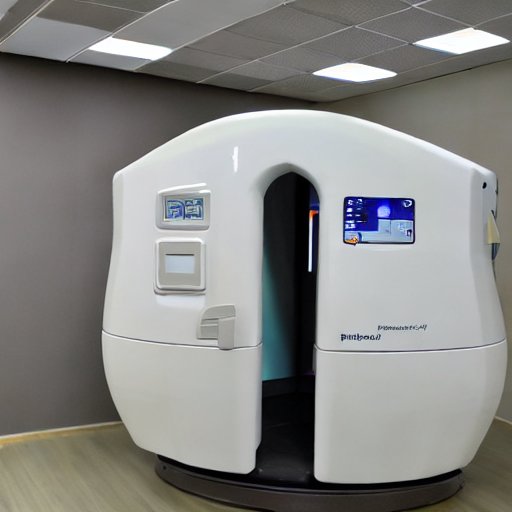
Example of an AI inspired future scanner.
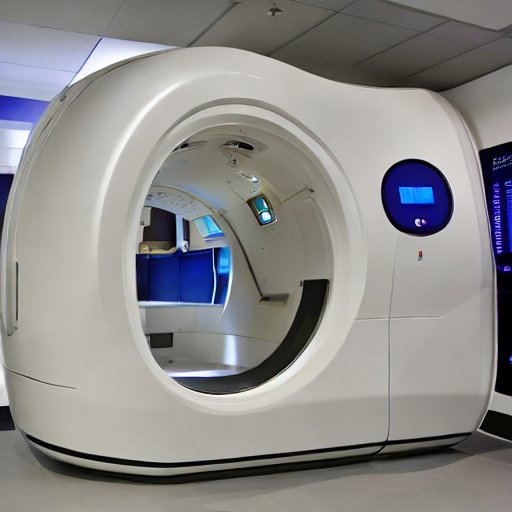
Second example of an AI inspired future scanner.
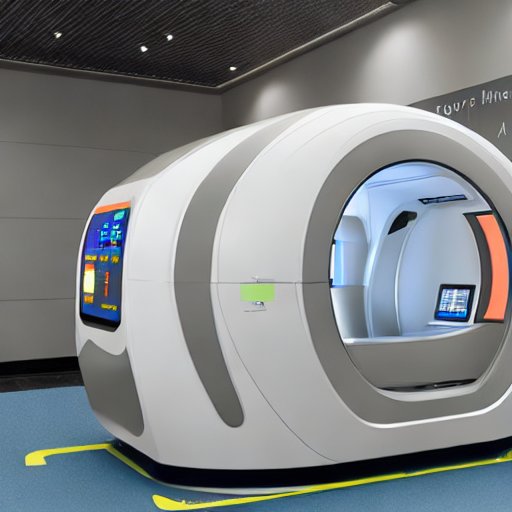
Third example of an AI inspired future scanner.
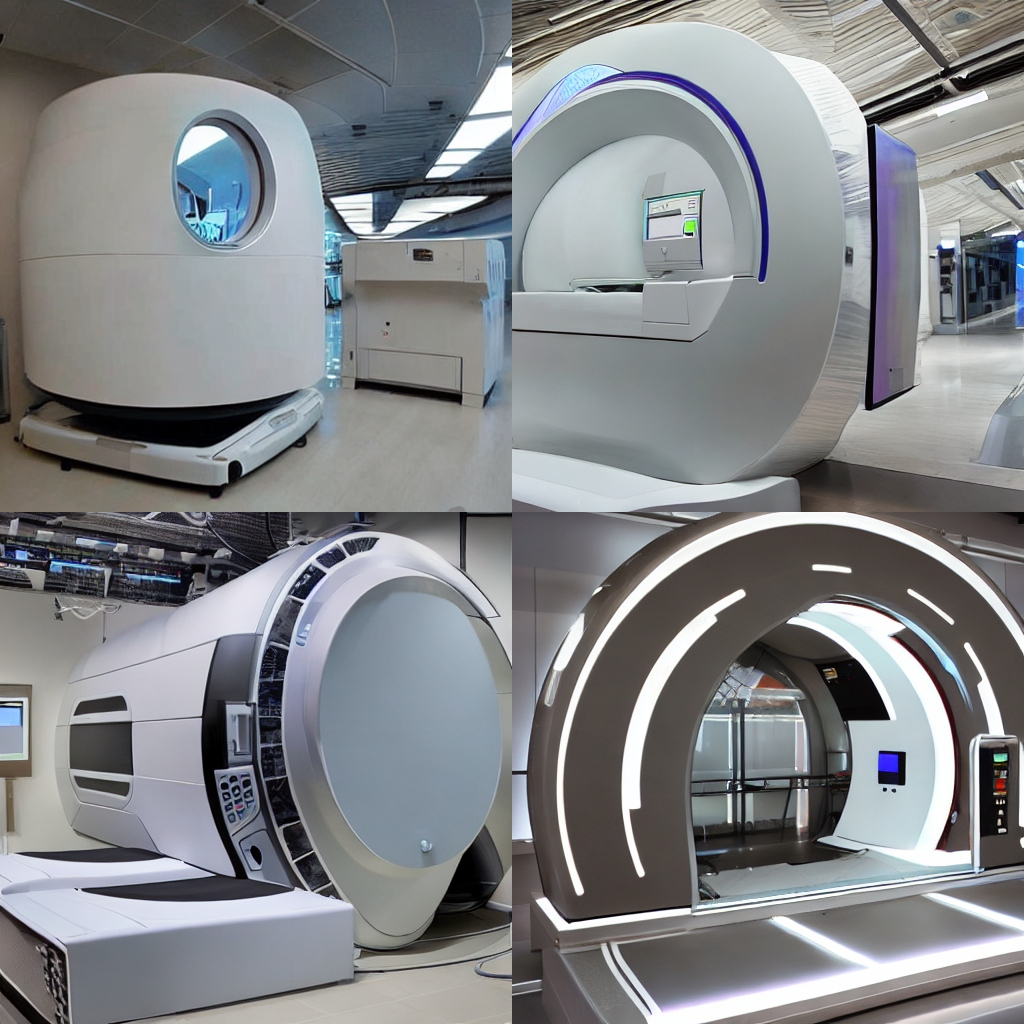
Further examples of AI inspired future scanners.
DOI: https://doi.org/10.58530/2023/4545