4534
Evaluation of the application of integrated high-quality intervention mode in large-aperture MRI examination of patients with knee joint injury
Jun Zhang1, Lina Zhuang1, Nan Wang2, Lihua Chen2, Qinhe Zhang2, Shuheng Zhang2, Yuyin Man2, Qingwei Song2, and Ailian Liu2
1Discussion and Conclusions, Dalian, China, 2The First Affiliated Hospital of Dalian Medical University, Dalian, China
1Discussion and Conclusions, Dalian, China, 2The First Affiliated Hospital of Dalian Medical University, Dalian, China
Synopsis
Keywords: Bone, Bone
The integrated high-quality intervention mode is adopted for patients with knee joint injuries, combined with super large aperture magnetic resonance equipment, to effectively relieve the negative emotions of patients, relieve pain, improve scanning efficiency and safety, and enhance scanning efficiency and safety.Introduction
The integrated high-quality intervention mode is adopted for patients with knee joint injuries, combined with super large aperture magnetic resonance equipment, to effectively relieve the negative emotions of patients, relieve pain, improve scanning efficiency and safety, and enhance scanning efficiency and safety. The compliance of patients to the examination has good promotion value.Methods:
A total of 65 patients with knee joint injuries who underwent a large-aperture magnetic resonance examination in our hospital from December 2021 to July 2022 were selected to participate in the study[1]. The patients from December 2021 to May 2022 were the control group (32 cases), and the patients from June 2022 to July 2022 were the experimental group (33 cases). The control group implemented the traditional inspection intervention mode, while the experimental group adopted the integrated technical nursing high-quality intervention mode based on the traditional inspection intervention mode. The patient satisfaction, visual analog scale (VAS), anxiety score (SAS), repeat scan rate, examination time, risk of hospital safety events, and image quality were compared between the two groups.Results:
The SAS and VAS of patients in the control group after scanning were slightly higher than those before scanning (P < 0.05), while the SAS and VAS of patients in the experimental group after scanning were not significantly different from those before scanning (P > 0.05). The satisfaction of patients in the experimental group was significantly higher than that in the control group, and the difference was statistically significant (P = 0.003). The mean scores of risk assessment, information communication, risk prevention, risk disposal, and safety nursing in the experimental group were slightly higher than those in the control group, and the differences were statistically significant (all P < 0.05). The scanning time and repeated scanning rate of the experimental group were significantly lower than those of the control group, while the subjective image score was slightly higher than that of the control group (P < 0.05).Discussion and Conclusions
Adopting an integrated high-quality intervention mode in large-aperture MRI examination of patients with knee joint injury can strengthen the communication and cooperation of the three parties, effectively relieve patients' negative emotions[2], reduce pain, improve scanning efficiency and safety, and enhance scanning efficiency and safety. The patient's compliance with the examination has a good promotion value.Acknowledgements
No acknowledgement found.References
[1] Fischer S, Grodzki DM, Domschke M, et al. Quiet MR sequences in clinical routine: initial experience in abdominal imaging[J]. Radiol Med,2017,122(3):194-203. DOI: 10.1007/s11547-016-0710-x.
[2] Gabr RE, Zunta-Soares GB, Soares JC, et al. MRI acoustic noise-modulated computer animations for patient distraction and entertainment with application in pediatric psychiatric patients[J]. Magn Reson Imaging,2019,61:16-19. DOI: 10.1016/j.mri.2019.05.014
Figures
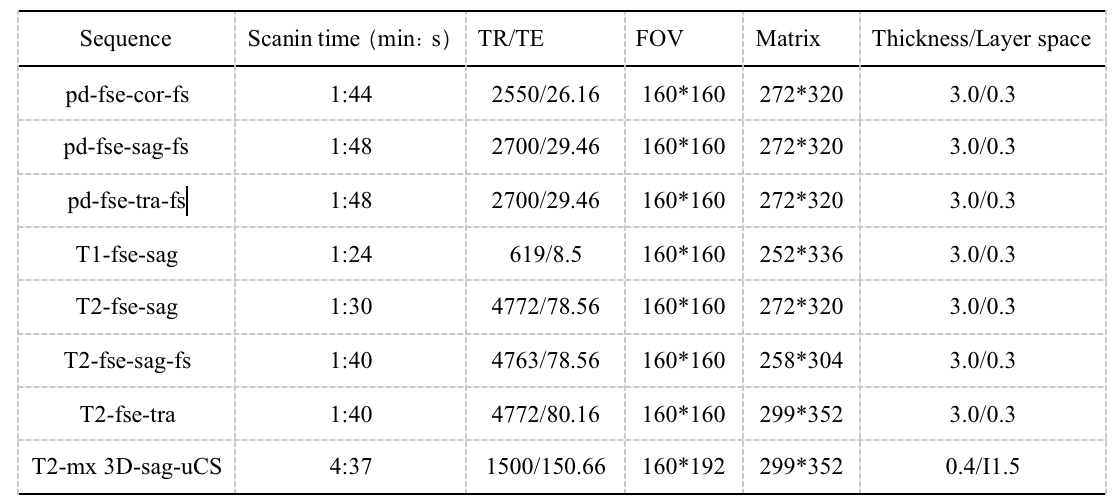
Table 1 Knee scan sequence and parameters
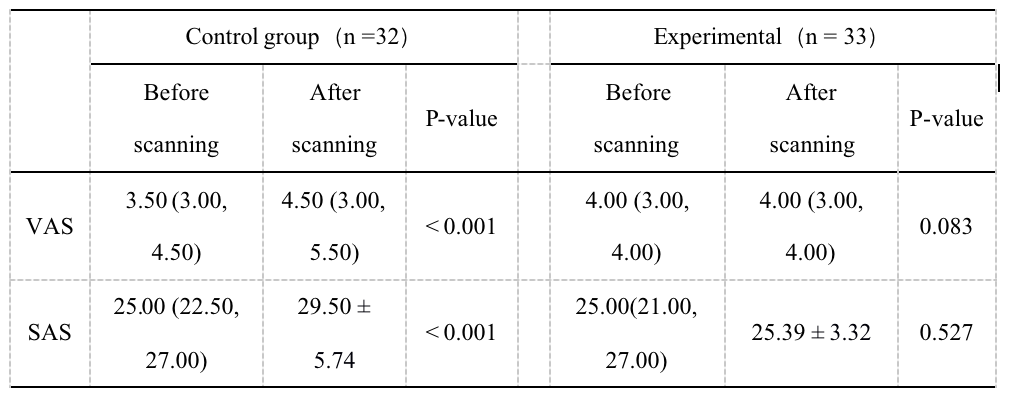
Table 2 Comparison of VAS and SAS scores before and after scanning between the two groups of patients
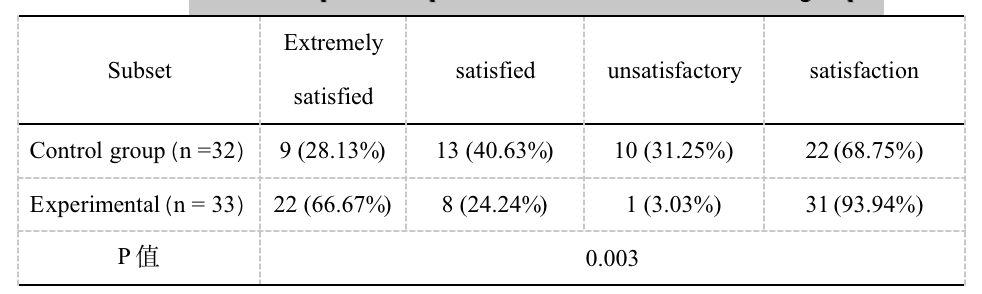
Table 3 Comparison of patient satisfaction between the two groups
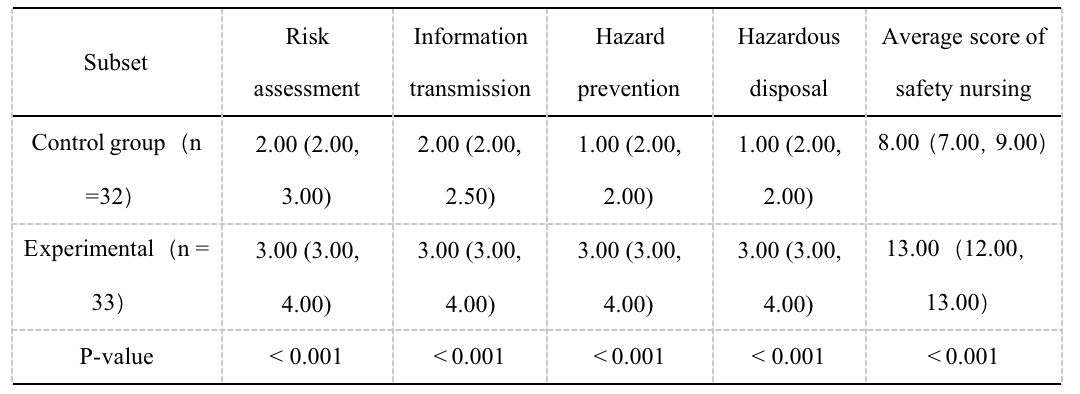
Table 4 Comparison of the safety of the two groups of patients
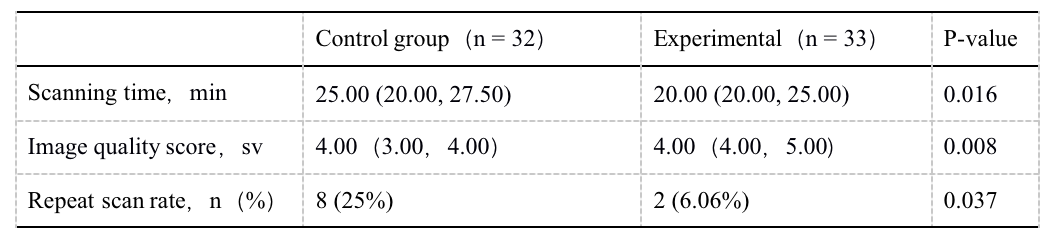
Table 5 Comparison of image quality and examination time between the two groups of patients
DOI: https://doi.org/10.58530/2023/4534