4364
T2 Relaxation Time Decreases in Regions of Loaded Contact in Superficial and Deep Layers of Articular Cartilage1Mechanical Engineering, University of Saskatchewan, Saskatoon, SK, Canada, 2Mechanical Engineering, University of Victoria, Victoria, BC, Canada, 3Siemens Healthcare Ltd., Burnaby, BC, Canada
Synopsis
Keywords: Cartilage, Joints
The aim of this work was to identify focal changes in T2 relaxation times inside and outside regions of tibiofemoral contact in loaded cadaver knee articular cartilage whole, superficial, and deep layers. We used a cluster analysis approach to identify regions of change in T2 relaxation time. We found that 1) decreases in T2 relaxation time with load appeared predominantly inside of the femoral and tibial cartilage contact areas, and 2) greater decreases in T2 within the tibial and femoral cartilage contact area were observed in the superficial layer of cartilage.Introduction
Articular cartilage plays a fundamental role in load transmission through the knee joint during activities of daily living and yet it is most often studied in the relaxed, unloaded state. T2 relaxation time mapping is a particularly useful metric to study articular cartilage because it is associated with collagen organization and water content1,2, both of which contribute to the load carrying characteristics of the tissue. While most quantitative MRI studies acquire data in the unloaded knee, it has been shown that T2 relaxation times decrease when the knee is loaded3. Whether this is a global or focal phenomenon has not been ascertained. Therefore, this work aimed to identify focal changes in T2 relaxation times inside and outside regions of tibiofemoral contact in loaded cadaver knee articular cartilage whole, superficial, and deep layers.Methods
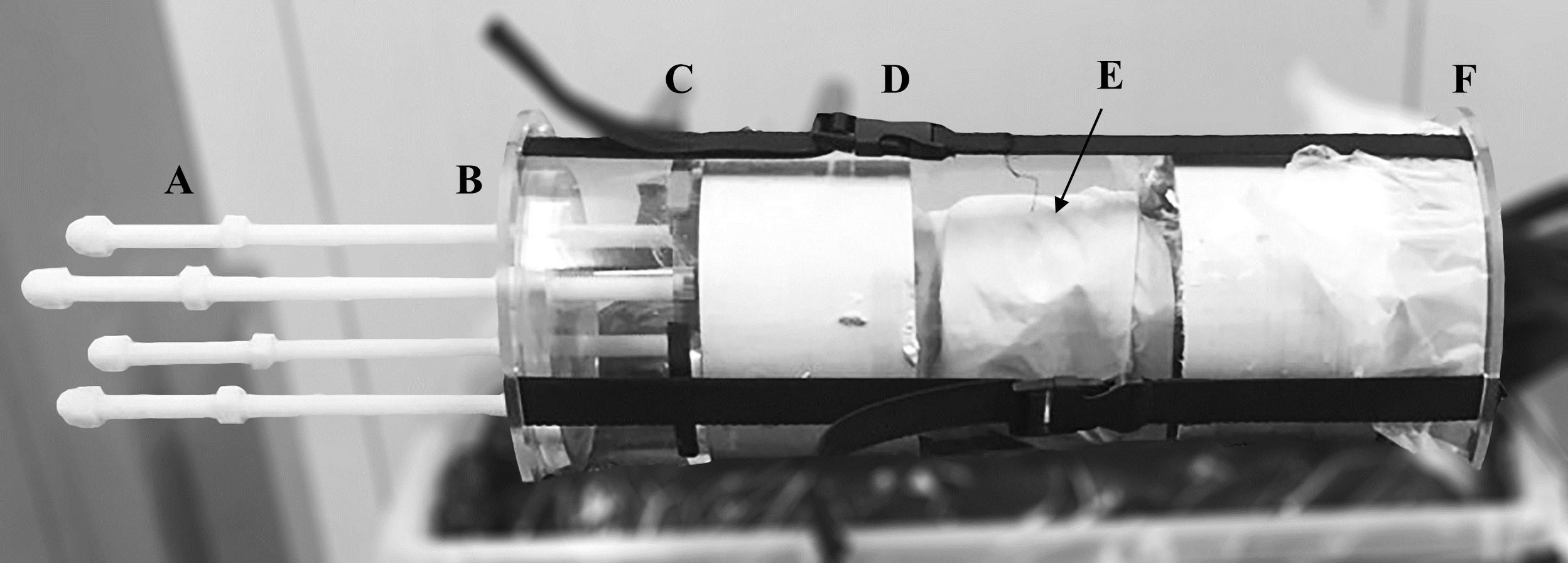
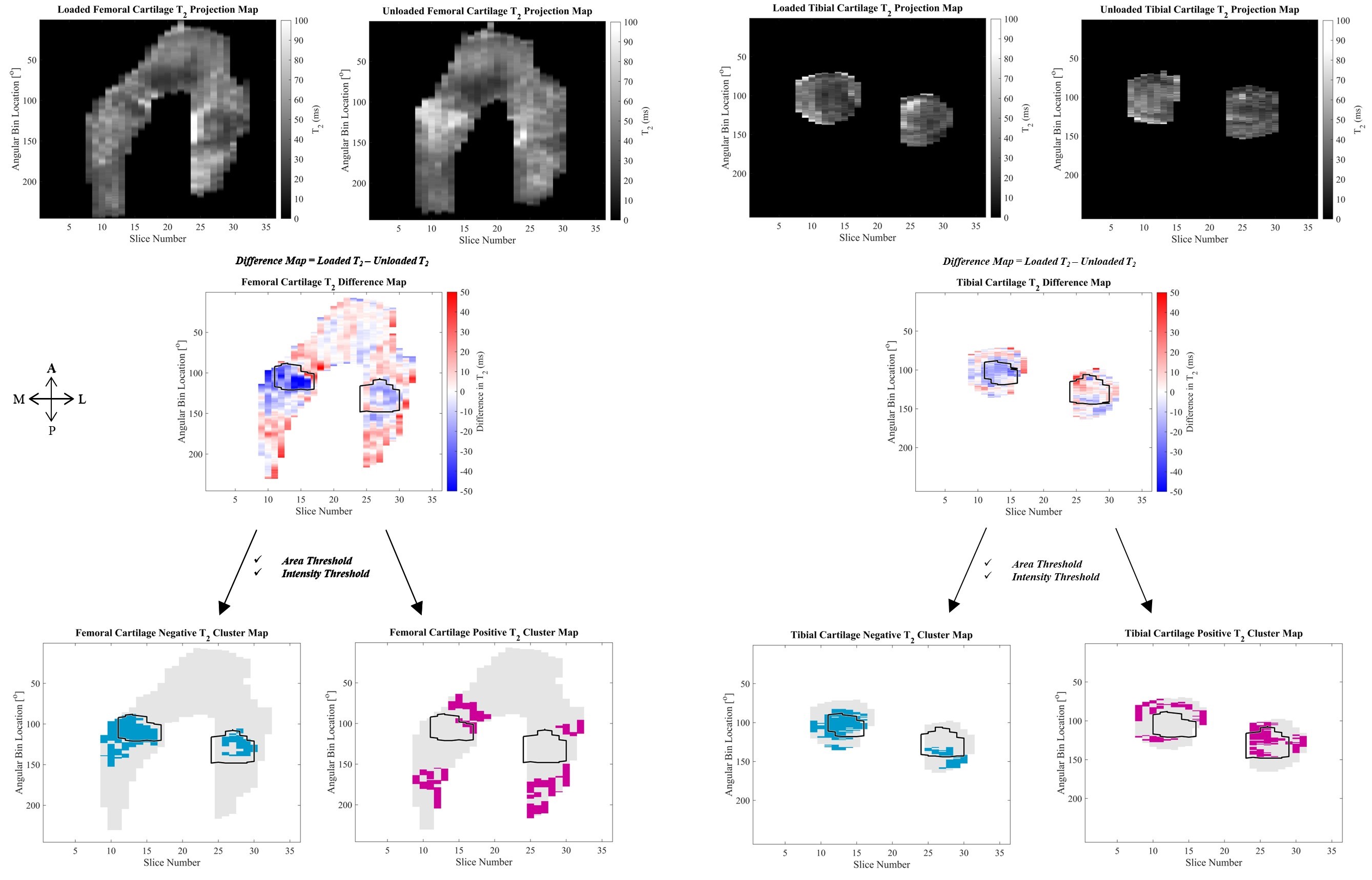
Six cadaver knee specimens (70.3 +/- 9.3 years; no history of injury or surgery; no full thickness cartilage defects) were scanned using an in-house quantitative double-echo in steady-state (qDESS) sequence at 3T (MAGNETOM Skyra, Siemens Healthineers, Erlangen, Germany)4. Imaging parameters include: TR=20.07 ms, TE=4.19 and 35.95 ms, flip angle 25°, matrix size 256 x 256, field of view 160 mm, slice thickness 3mm. Images were first acquired unloaded and then the knees were loaded in displacement control to approximately 800N using a custom, MRI-safe loading apparatus (Figure 1). There was a 110-minute delay between load application and image acquisition to account for cartilage stress relaxation. Femoral and tibial cartilage, and the region of visible tibiofemoral contact was manually segmented (Analyze 14.0, AnalyzeDirect, USA) and T2 relaxation time maps were generated using an analytic approach which estimates T2 from qDESS images5. T2 relaxation time of the femoral and tibial cartilage plates were projected onto the bone-cartilage surfaces using an established cylinder-fitting approach6 and projection lines normal to the tibial surface, respectively. Unloaded projection maps were registered to the loaded ones using an affine image registration (Elastix7,8 toolbox for MATLAB). The unloaded projection maps were subtracted from the loaded maps to create difference maps, and clusters of increased (positive) and decreased (negative) T2 relaxation time were identified6,9. A cluster was defined as groups of contiguous pixels for which 1) T2 relaxation time was greater than 10ms for femoral cartilage and 5ms for tibial cartilage, and 2) area was greater than 1% of the total projection map area10. The percentage of the cartilage plate covered by positive (+CL%) or negative clusters (-CL%) was calculated. The loaded tibiofemoral contact area was then projected onto the femoral and tibial difference maps to identify the clusters inside and outside of the contact area. The percentage of the area inside and outside of the contact boundary occupied by positive or negative clusters was calculated (Figure 2). A one-sample Wilcoxon Signed Rank test was used to identify the presence of significant clusters (+CL% and -CL%) in the femoral and tibial cartilage plates (SPSS, IBM, USA). A Wilcoxon Matched Pair test was used to identify differences in +CL% and -CL% inside and outside of the contact region (SPSS, IBM, USA). Superficial and deep layers of cartilage were separated based on the mid-point of the cartilage thickness and the same methodology as the whole cartilage thickness was applied.Results
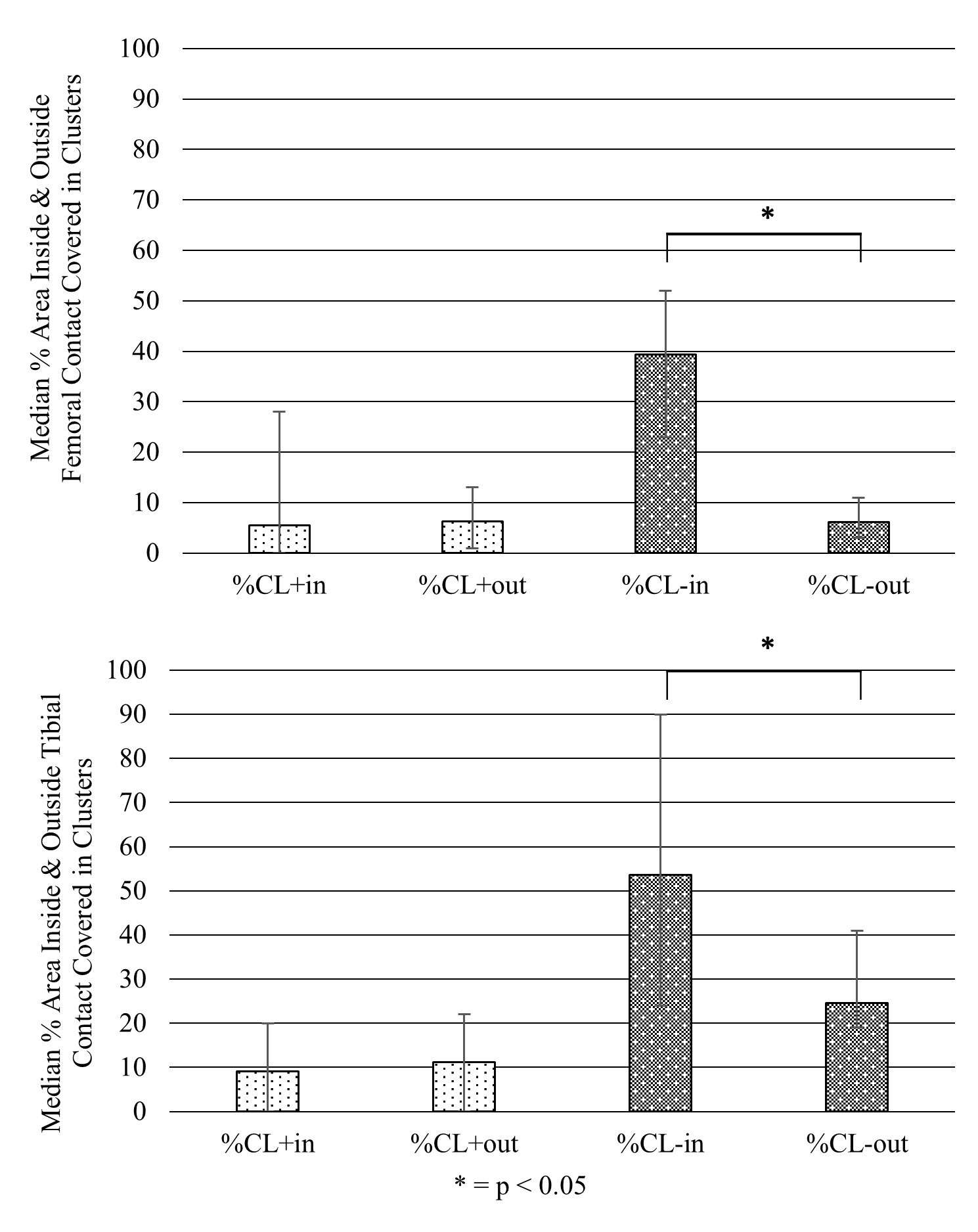
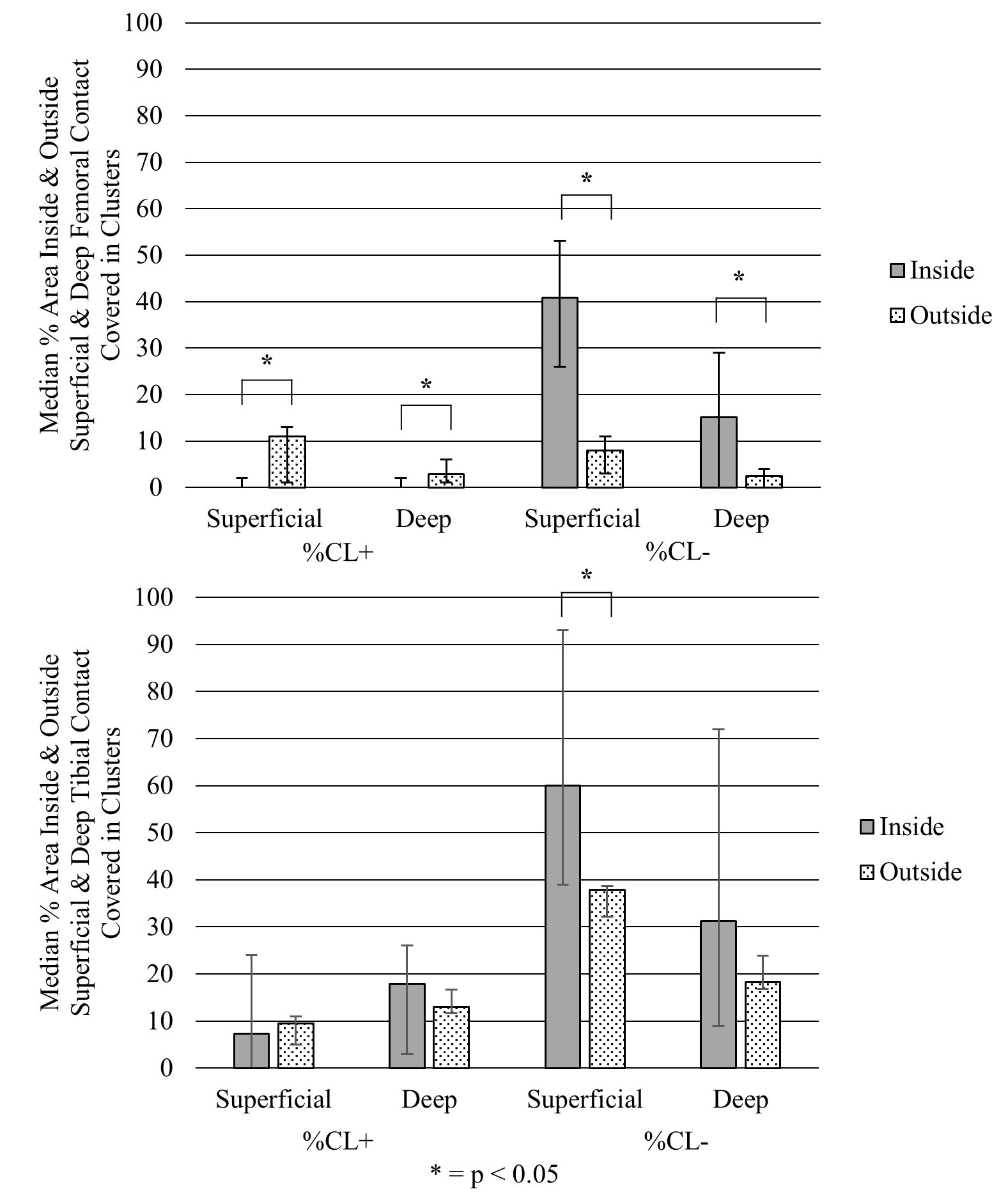
Negative clusters, indicating a decrease in T2 relaxation time with load, appeared predominantly inside of the femoral and tibial cartilage contact areas. The median percentage of loaded femoral and tibial cartilage contact area covered in negative clusters was 39% (Range: 23-52%, p = 0.028) and 56% (Range: 27-90%, p = 0.028), respectively (Figure 3). The superficial layer had significantly more negative clusters within the tibial and femoral contact region compared to the deep layer (p = 0.028) (Figure 4).Discussion
The negative clusters, which indicate a decrease in T2 relaxation time with load, covered more area than the positive clusters. This finding aligns with previous results that found a net decrease in T2 relaxation time with load in the superficial cartilage layer4. The negative clusters appear predominantly inside the region of tibiofemoral contact of both the tibial and femoral cadaver cartilage. This may reflect greater changes in water content and collagen orientation in the direct area of load application, as opposed to the adjacent tissue. Positive clusters were less common but may reflect an increase in water resulting from the redistribution of water within the tissue when the load is applied. The presence of both positive and negative clusters may represent changes in cartilage collagen architecture and water distribution when load is applied.Conclusion
Both positive and negative focal changes in T2 relaxation time are present in loaded cartilage, and majority of negative focal changes were observed within the tibial and femoral cartilage contact area. Greater negative focal changes within the tibial and femoral cartilage contact area were observed in the superficial layer of cartilage.Acknowledgements
Funding provided by Siemens Healthcare (McWalter E.J., Cui L.), GE (Black M.S), NSERC Discovery Grant, Mitacs, and The Arthritis Society.References
1. Raya JG, Ferizi U, Ruiz A, Abramson SB, Bencardino J, Krasnokutsky Samuels S. Changes in collagen and proteoglycan in cartilage with OA severity. ISMRM. 2017; 5087.
2. Nieminen MT, Rieppo J, Töyräs J, Hakumäki JM, Silvennoinen J, Hyttinen MM, Helminen HJ, Jurvelin JS. T2 relaxation reveals spatial collagen architecture in articular cartilage: a comparative quantitative MRI and polarized light microscopic study. Magn Reson Med. 2001; 46(3):487-493
3. Subburaj K, Souza RB, Stehling C, Wyman BT, Le Graverand-Gastineau MP, Link TM, Li X, Majumdar S. Association of MR relaxation and cartilage deformation in knee osteoarthritis. J Orthop Res. 2012; 30(6):919-926.
4. Staroswiecki E, Granlund KL, Alley MT, Gold GE, Hargreaves BA. Simultaneous estimation of T(2) and apparent diffusion coefficient in human articular cartilage in vivo with a modified three-dimensional double echo steady state (DESS) sequence at 3 T. Magn Reson Med. 2012; 67(4):1086-1096.
5. Sveinsson B, Chaudhari AS, Gold GE, Hargreaves BA. A simple analytic method for estimating T2 in the knee from DESS. Magn Reson Imaging. 2017;38:63-70.
6. Monu UD, Jordan CD, Samuelson BL, Hargreaves BA, Gold GE, McWalter EJ. Cluster analysis of quantitative MRI T2 and T1ρ relaxation times of cartilage identifies differences between healthy and ACL-injured individuals at 3T. Osteoarthr Cartil. 2017;25(4):513-520.
7. Klein S, Staring M, Murphy K, Viergever MA, Pluim JPW. Elastix: a toolbox for intensity based medical image registration. IEEE Transactions on Medical Imaging. 2010; 29(1): 196-205.
8. Shamonin DP, Bron EE, Lelieveldt BPF, Smits M, Klein S, Staring M. Fast Parallel Image Registration on CPU and GPU for Diagnostic Classification of Alzheimer’s Disease. Frontiers in Neuroinformatics. 2014;7:50.
9. Black MS. Quantitative imaging of cartilage and meniscus for detection of early osteoarthritic degeneration. 2019; 74-92.
10. Thomas KA, Krzemiński D, Kidziński L, Paul R, Rubin EB, Halilaj E, Black MS, Chaudhari A, Gold GE, Delp SL. Open Source Software for Automatic Subregional Assessment of Knee Cartilage Degradation Using Quantitative T2 Relaxometry and Deep Learning. Cartilage. 2021;13(1_suppl):747S-756S.Figures