4110
Assessment of Alcoholic Impact on Multiple Organs by Dual-frequency Dual-driver Abdominal MR Elastography (MRE)1Radiology, Mayo Clinic, Rochester, MN, United States, 2Gastroenterology and Hepatology, Mayo Clinic, Rochester, MN, United States
Synopsis
Keywords: Digestive, Digestive
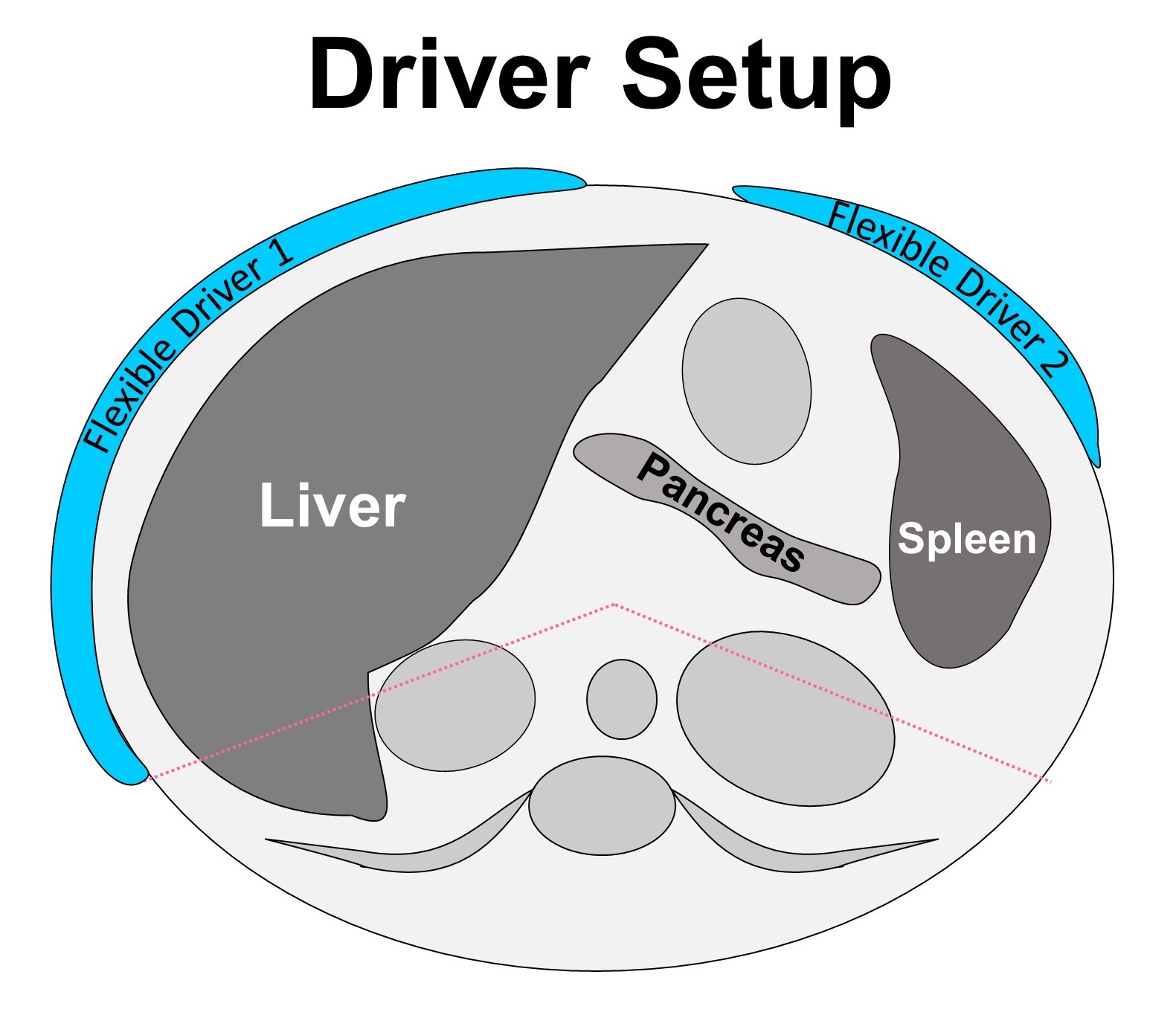
We performed dual-frequency dual-driver abdominal MR Elastography (MRE) on 11 patients with alcoholic hepatitis (AH), and 6 healthy volunteers without known histories of chronic alcohol consumption. Two flexible drivers were placed over the anterior abdominal wall to deliver sufficient shear wave propagation in multiple abdominal organs at two different mechanical frequencies. The liver stiffness (LS) and spleen stiffness (SS) calculated from MRE at 60Hz, and pancreas stiffness derived from 30Hz, all significantly increased in patients with AH, compared with controls. This pilot study indicates the feasibility of dual-frequency dual-driver abdominal MRE to assess the alcoholic impact on multiple organs.Introduction
In the past 10–15 years, the prevalence of high-risk drinking and alcohol use disorder has increased by 30% and 50% in the US, respectively. This increase has resulted in higher morbidity and mortality in people with alcohol dependence and alcohol abuse (1). Excessive alcohol consumption shortens the onset of fetal syndromes such as liver cirrhosis, cancers, heart disease, and stroke by affecting the gastrointestinal, immune, and cardiovascular systems (2, 3).As the primary cause of alcohol-related morbidity and mortality, alcoholic liver disease (ALD) has aroused more attention. The spectrum of chronic ALD ranges from simple hepatic steatosis, steatohepatitis, to cirrhosis and hepatocellular carcinoma. Alcoholic hepatitis (AH) is an acute and severe form of ALD often related to high short-term mortality. Alcohol-related cirrhosis and portal hypertension-associated complications are more likely to present as the initial diagnosis than other causes of liver disease (4).
Portal hypertension is not the only alcohol-related impact on the spleen in ALD patients. As the central organ regulates the inflammation-related immune response, spleen enlargement is commonly seen in these patients (5). In addition, some studies also demonstrated that chronic alcohol intake could result in decreased number and reduced function of immune cells (6), which are associated with severe hyposplenism in ALD patients (7).
Alcoholic pancreatitis is another major complication of alcohol abuse. The alcohol-induced pancreatic damage is related to the acute toxic effects of alcohol on the exocrine pancreas, and the progression of acute (potentially reversible) disease to chronic, irreversible changes in the gland (8).
Although many invasive and noninvasive modalities can assess the alcoholic impact on different organs (9, 10), it would be more time- and cost-efficient to have one quick exam with well-established imaging biomarkers associated with multiple organs. Shear stiffness derived from MR Elastography (MRE) has been demonstrated to be accurately correlated with disease pathogenesis status (e.g., inflammation and fibrosis) in different organs (9-14). This pilot study aims to assess the feasibility of dual-frequency dual-driver abdominal MRE in evaluating the alcoholic impact on multiple organs.
Methods
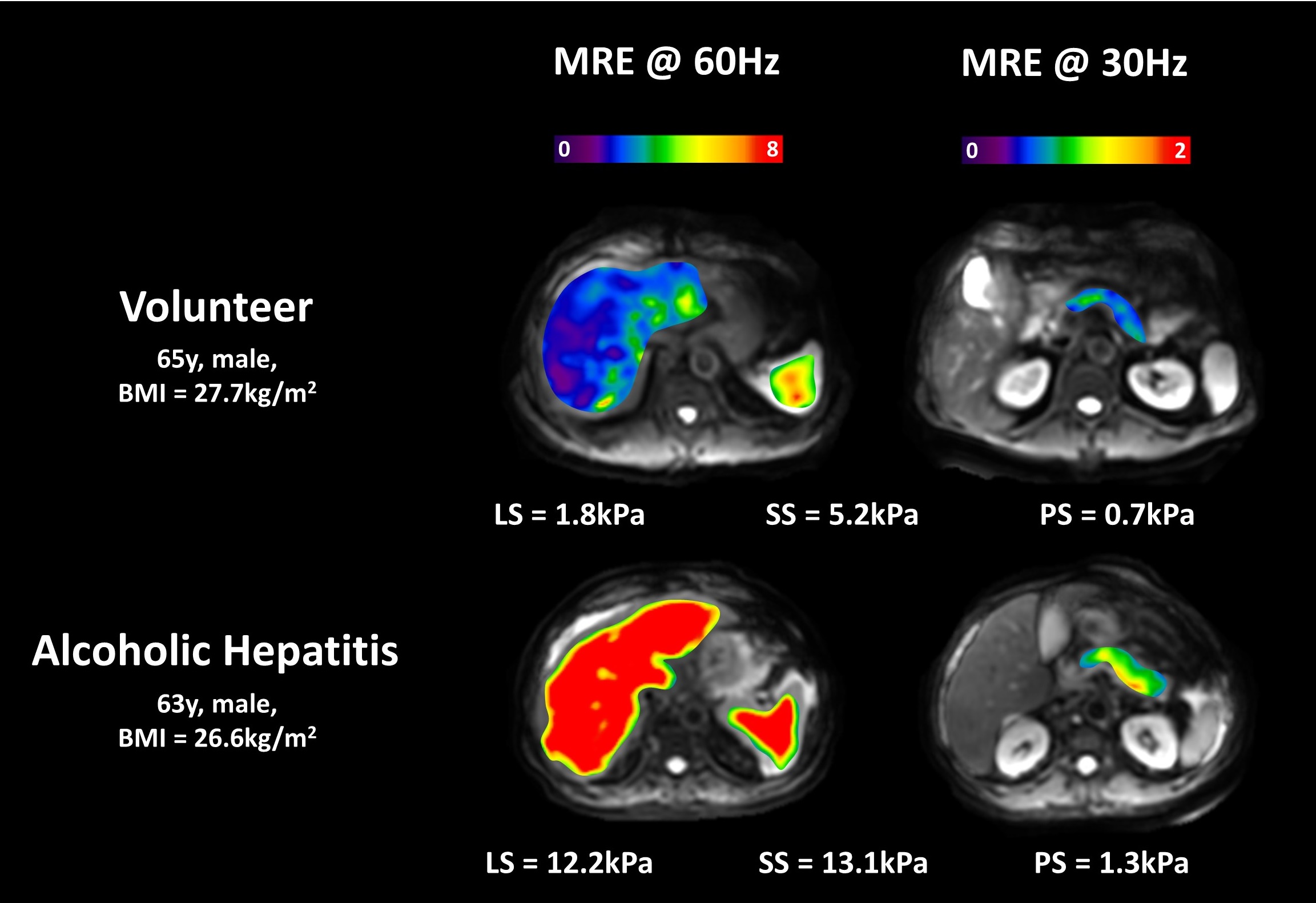
This pilot study enrolled 17 participants in total, including patients with AH (N=11), and volunteers without known histories of chronic alcohol consumption (N=6). All participants underwent MRE exams at 30Hz and 60Hz. Two drivers were fastened against the anterior abdomen by one elastic band. One of the drivers was placed on the right side of the upper abdominal wall, to cover the liver. The other was placed on the anterior side to transmit waves into the pancreas and spleen, as shown in Figure1. The stiffness value in this study was defined as the magnitude of the complex shear modulus (|G*|). Shear stiffness of the liver (LS) and spleen (SS) was derived from 3D MRE at 60Hz, while shear stiffness of the pancreas (PS) was calculated from 3D MRE at 30Hz. All were calculated from manually drawn ROIs covering as much targeted tissue with sufficient wave propagation as possible. The Mann-Whitney test were performed to test the difference between AH patients and healthy volunteers. A significance level of 0.05 was used.Results
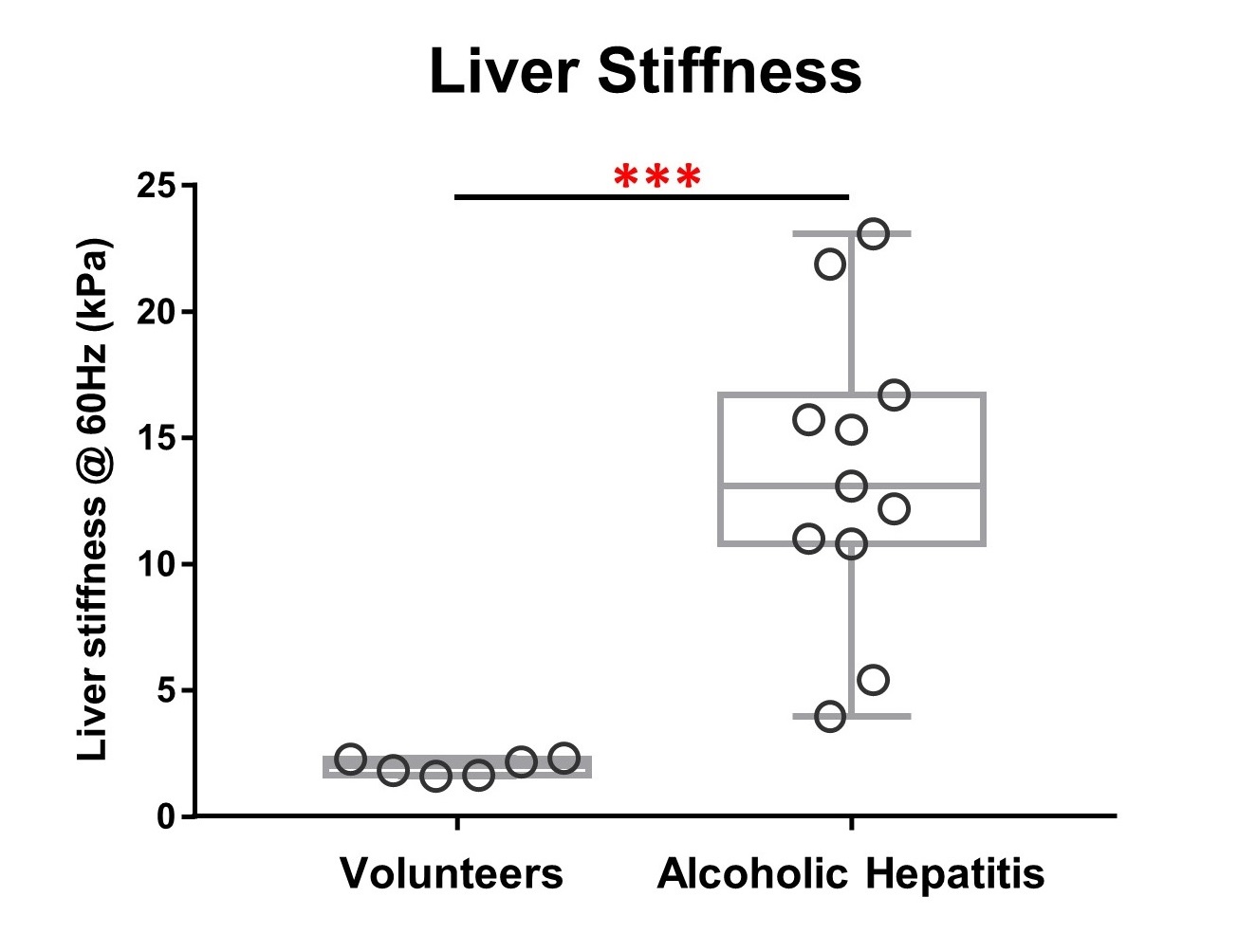
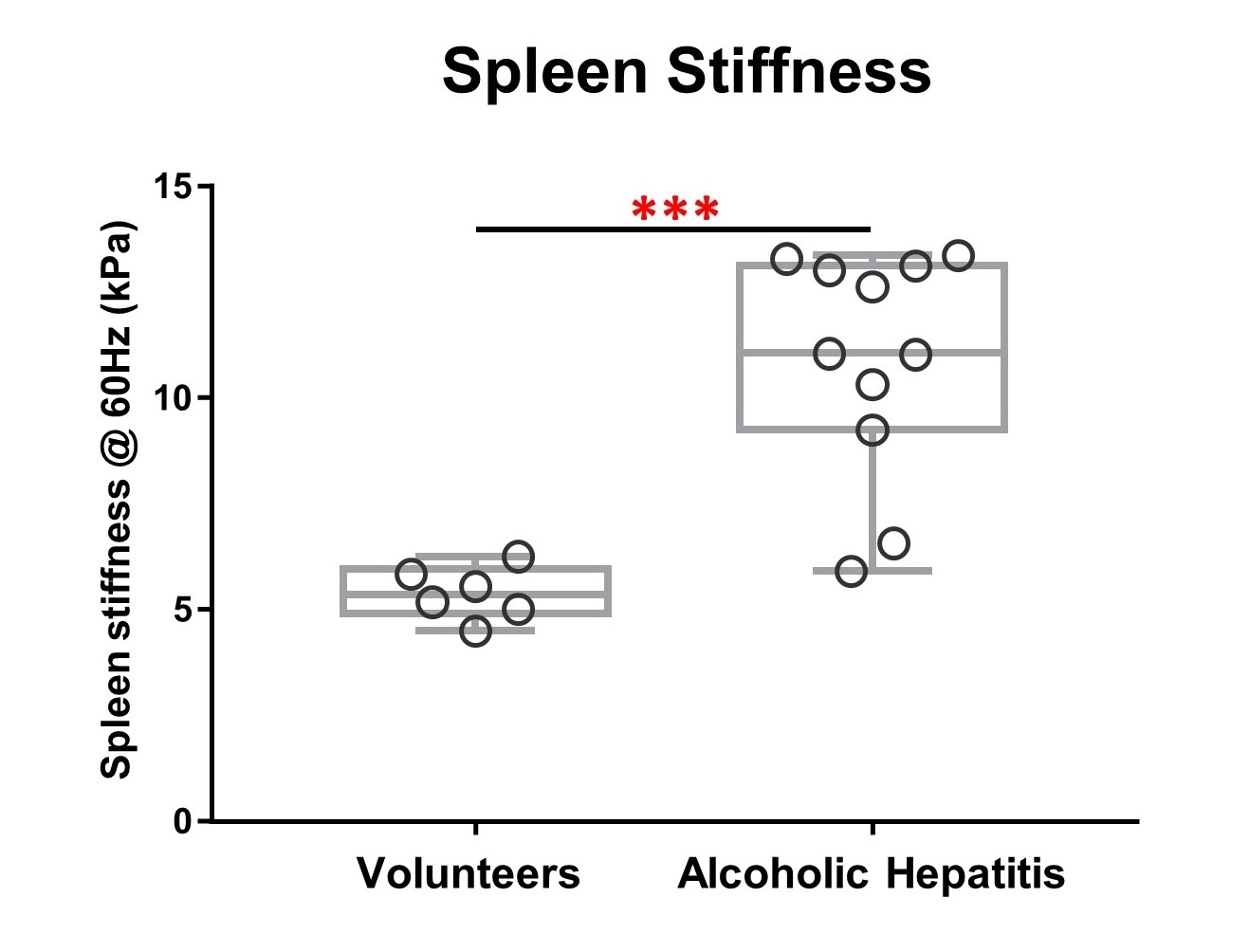
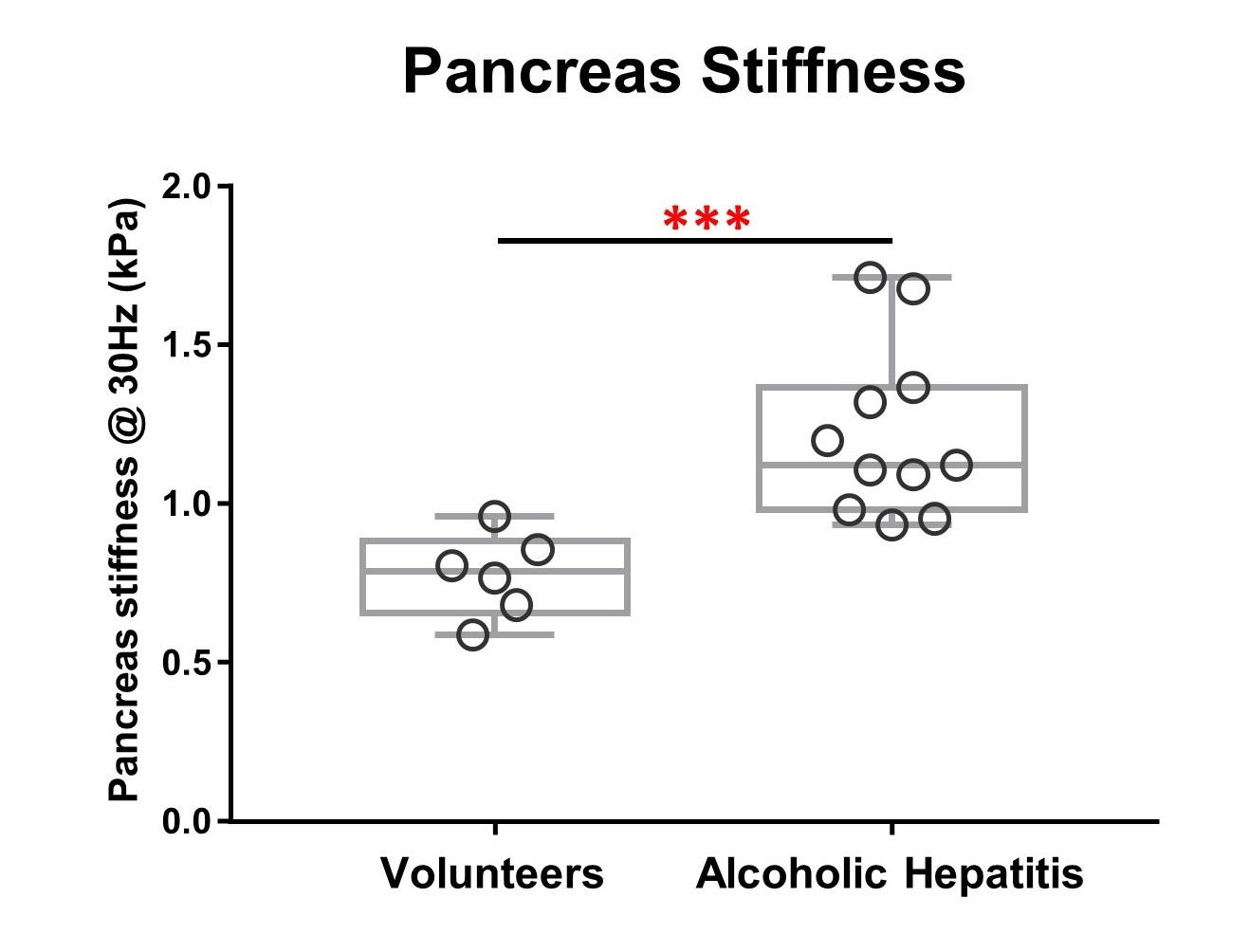
There was no significant difference in age or BMI between AH patients and healthy volunteers (AH: 50y [33, 55], Volunteer: 47y [31, 62], p = 1.00; AH: 30.0kg/m2 [25.0, 37.0], Volunteer: 27.9kg/m2 [26.1, 28.6], p = 0.52). However, compared with volunteers, AH patients showed significant elevations in LS (13.09kPa [10.90, 16.21] vs. 1.99kPa [1.68, 2.25], p = 0.0002), SS (11.05kPa [9.79, 13.06] vs. 5.36kPa [5.06, 5.78], p = 0.0003), and PS (1.12kPa [1.04, 1.34] vs. 0.79kPa [0.70, 0.84], p = 0.0006) (Figure2-5).Discussion
In this pilot study, AH patients showed significantly elevated shear stiffness of the liver, spleen, and pancreas, compared with healthy volunteers. Since LS is positively correlated with hepatic fibrosis (9), inflammation (10), and portal hypertension (11), the elevation of LS in patients with AH might be associated with alcohol-induced inflammation, fibrosis, and increased tissue pressure caused by portal hypertension. Besides the reported strong correlations with portal pressure (15, 16), MRE-assessed SS may also reflect the inflammation-related immune response to alcoholic impact. PS augmentation in AH patients is consistent with other groups’ findings, which could be alcohol-induced chronic inflammation and even fibrosis developed in the pancreas (17). In brief, dual-frequency dual-driver abdominal MRE can provide quantitative assessments of multiple organs’ mechanical properties within one acquisition. This method might be promising in diagnosing and monitoring systemic tissue changes in multiple abdominal organs for other etiologies.Conclusion
We concluded that MRE-assessed shear stiffness of the liver, spleen, and pancreas can increase with alcohol-induced tissue injuries. Dual-frequency dual-driver abdominal MRE can provide quantitative assessments of multiple organs’ mechanical properties with reliable tissue coverage and stiffness calculation and a shortened acquisition time.Acknowledgements
This study is funded by NIH grants EB017197 (M.Y.), EB001981(R.L.E.), AA26887 (V.H.S., & M.Y.), DK115594 (A.M.A.), DK059615 (V.H.S.), and DoD grant W81XWH-19-1-0583-01 (M.Y.).References
1. Simonetto DA, Shah VH, Kamath PS. Outpatient management of alcohol-related liver disease. The Lancet Gastroenterology & Hepatology 2020;5(5):485-493. doi: https://doi.org/10.1016/S2468-1253(19)30415-7
2. Schuckit MA. Alcohol-use disorders. Lancet (London, England) 2009;373(9662):492-501. doi: 10.1016/s0140-6736(09)60009-x
3. Haber PS, Kortt NC. Alcohol use disorder and the gut. Addiction 2021;116(3):658-667. doi: 10.1111/add.15147
4. Mellinger JL, Shedden K, Winder GS, Tapper E, Adams M, Fontana RJ, Volk ML, Blow FC, Lok ASF. The high burden of alcoholic cirrhosis in privately insured persons in the United States. Hepatology 2018;68(3):872-882. doi: 10.1002/hep.29887
5. Barrea L, Di Somma C, Muscogiuri G, Tarantino G, Tenore GC, Orio F, Colao A, Savastano S. Nutrition, inflammation and liver-spleen axis. Crit Rev Food Sci Nutr 2018;58(18):3141-3158. doi: 10.1080/10408398.2017.1353479
6. Chadha KC, Stadler I, Albini B, Nakeeb SM, Thacore HR. Effect of alcohol on spleen cells and their functions in C57BL/6 mice. Alcohol 1991;8(6):481-485. doi: 10.1016/s0741-8329(91)90187-2
7. Corazza GR, Addolorato G, Biagi F, Caputo F, Castelli E, Stefanini GF, Gasbarrini G. Splenic function and alcohol addiction. Alcohol Clin Exp Res 1997;21(2):197-200.
8. Apte MV, Pirola RC, Wilson JS. Mechanisms of alcoholic pancreatitis. Journal of gastroenterology and hepatology 2010;25(12):1816-1826. doi: 10.1111/j.1440-1746.2010.06445.x
9. Chen J, Allen AM, Therneau TM, Chen J, Li J, Hoodeshenas S, Chen J, Lu X, Zhu Z, Venkatesh SK, Song B, Ehman RL, Yin M. Liver stiffness measurement by magnetic resonance elastography is not affected by hepatic steatosis. Eur Radiol 2021. doi: 10.1007/s00330-021-08225-w
10. Li J, Allen AM, Shah VH, Manduca A, Ehman RL, Yin M. Longitudinal Changes in MR Elastography-based Biomarkers in Obese Patients Treated with Bariatric Surgery. Clin Gastroenterol Hepatol 2021. doi: 10.1016/j.cgh.2021.10.033
11. Navin PJ, Gidener T, Allen AM, Yin M, Takahashi N, Torbenson MS, Kamath PS, Ehman RL, Venkatesh SK. The Role of Magnetic Resonance Elastography in the Diagnosis of Noncirrhotic Portal Hypertension. Clinical gastroenterology and hepatology : the official clinical practice journal of the American Gastroenterological Association 2020;18(13):3051-3053.e3052. doi: 10.1016/j.cgh.2019.10.018
12. Singh R, Wilson MP, Katlariwala P, Murad MH, McInnes MDF, Low G. Accuracy of liver and spleen stiffness on magnetic resonance elastography for detecting portal hypertension: a systematic review and meta-analysis. European journal of gastroenterology & hepatology 2021;32(2):237-245. doi: 10.1097/meg.0000000000001724
13. Xu Y, Cai X, Shi Y, Yin M, Lan G, Zhang X, Ji R, Chang L. Normative Pancreatic Stiffness Levels and Related Influences Established by Magnetic Resonance Elastography in Volunteers. Journal of magnetic resonance imaging : JMRI 2020;52(2):448-458. doi: 10.1002/jmri.27052
14. Serai SD, Yin M. MR Elastography of the Abdomen: Basic Concepts. Methods Mol Biol 2021;2216:301-323. doi: 10.1007/978-1-0716-0978-1_18
15. Yin M, Kolipaka A, Woodrum DA, Glaser KJ, Romano AJ, Manduca A, Talwalkar JA, Araoz PA, McGee KP, Anavekar NS, Ehman RL. Hepatic and splenic stiffness augmentation assessed with MR elastography in an in vivo porcine portal hypertension model. Journal of magnetic resonance imaging : JMRI 2013;38(4):809-815. doi: 10.1002/jmri.24049
16. Yoon H, Shin HJ, Kim MJ, Han SJ, Koh H, Kim S, Lee MJ. Predicting gastroesophageal varices through spleen magnetic resonance elastography in pediatric liver fibrosis. World journal of gastroenterology 2019;25(3):367-377. doi: 10.3748/wjg.v25.i3.367
17. Conti CB, Weiler N, Casazza G, Schrecker C, Schneider M, Mücke MM, Queck A, Herrmann E, Conte D, Colombo M, Zeuzem S, Fraquelli M, Friedrich-Rust M. Feasibility and reproducibility of liver and pancreatic stiffness in patients with alcohol-related liver disease. Dig Liver Dis 2019;51(7):1023-1029. doi: 10.1016/j.dld.2018.12.017
Figures