3991
Prediction for P53 Status Using Intravoxel Incoherent Motion Imaging in Rectal Cancer
Deshuo Dong1, Anliang Chen1, Changjun Ma1, Ailian Liu1, and Qingwei Song1
1radiology, The First Affiliated Hospital of Dalian Medical University, Dalian, China
1radiology, The First Affiliated Hospital of Dalian Medical University, Dalian, China
Synopsis
Keywords: Pelvis, fMRI
Mutant P53 promotes tumor cell proliferation, invasion, and resistance to chemotherapy. The purpose of this study was to evaluate the value of intravoxel incoherent motion (IVIM) imaging for prediction of P53 expression status in rectal cancer. The results indicate that D and f values for positive P53 status were significantly lower than those for negative P53 status, while D* was higher. The combination of D, D* and f improved diagnostic efficiency than single parameters. IVIM imaging allows non-invasive visualization and quantification of tissue composition for prediction of P53 status in rectal cancer.Introduction
Colorectal cancer (CRC) ranks the third estimated new cancer cases and deaths in men and wemen, and rectal cancer (RC) accounts for approximately three-tenth of all CRC cases1. Mutant P53 promotes tumor cell proliferation, invasion, and resistance to chemotherapy2. IVIM imaging can noninvasively and quantitatively evaluate the diffusion and microcirculation perfusion of the water molecules in the voxel without the need for an exogenous contrast agent, and were used in all parts of human body. This study is aimed to evaluate the value of IVIM imaging for prediction of P53 status in rectal cancer.Methods and Materials
This study retrospectively included 82 patients which were divided into two groups, positive P53 status group (n=60, 45 males, 15 females, age 66.57±9.91) and negative P53 status group (n=22, 17 males, 5 females, age 62.55±10.13). All patients underwent IVIM imaging and conventional MR examinations including T1WI, T2WI, DCE-MR on a 3.0T GE MR scanner. Raw data were transferred to AW 4.6 workstation for postprocessing. Three regions of interest (ROIs) were manually placed on the lesion of rectal lesions to obtain ADC, D, D* and f values (Figure1). The ADC, D, D* and f values were compared between the two groups using Mann-Whitney U test. Logistic regression and receiver operating characteristic (ROC) curve analyses were performed to evaluate the diagnostic efficiency of the parameters. Differences in the area under the curves (AUCs) of different parameters were compared using the DeLong test. Statistical analyses were carried out with SPSS 26.0 (IBM) and MedCalc 12.5.5.Results
Positive P53 status group had significantly lower D and f values, and higher mean D* values than negative P53 status group (P < 0.05)(Table 1). There was no difference of ADC values between two groups. The AUC values for the ROC analyses of D, D* and f values for differentiation two groups was 0.702, 0.712 and 0.649, respectively (Figure 2). The AUC value of combined parameter was 0.806, with a sensitivity of 76.67% and specificity of 72.73% (Table 2). The combination of D, D* and f improved diagnostic efficiency than single parameters (Table 3).Discussion and Conclusions
IVIM imaging can effectively reflect lesion changes between two groups of P53 status in rectal cancer. The D value reflects the diffuse state of the tumor. The decrease in D value and the increase in tumor density may be related to the higher invasiveness and malignancy of rectal cancer with Positive P53. The increase in D* value of positive P53 status may be caused by the severe canceration of the lesion tissue, the active proliferation of tumor cells, and the increase of blood microcirculation in rectal cancer tissue. The f value reflects the volume ratio of the perfusion effect of the local microcirculation to the overall diffusion effect. The decrease of f-value in patients with positive P53 status may be related to the increase of immature blood vessels in tumors. In conclusion, IVIM imaging may serve as a promising non-invasive technique for prediction for P53 status in rectal cancer.Acknowledgements
No acknowledgement found.References
[1] Siegel RL, Miller KD, Fuchs HE, Jemal A. Cancer statistics, 2022. CA Cancer J Clin. 2022 Jan;72(1):7-33.
[2] Nakayama M, Oshima M. Mutant p53 in colon cancer. J Mol Cell Biol 2019;11(4):267-276.
Figures
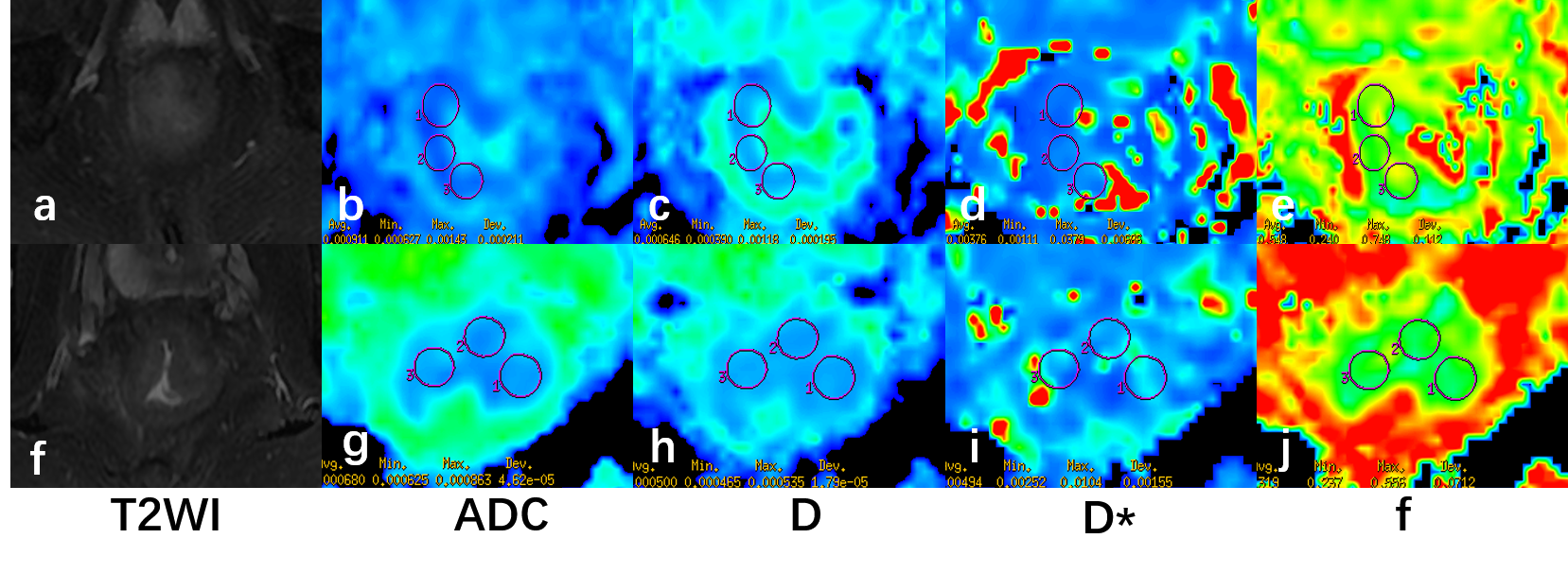
Figure 1 T2WI (a,f) showed the largest lesion of rectal cancer. Figure a-e: A 67-year-old male patient with negative P53 status. ADC(b), D(c), D* (d) and f(e) images are shown and the average values were 0.954×10⁻³ mm2/s, 0.675×10⁻³ mm2/s, 4.35×10⁻³ mm2/s and 0.522. Figure f-j: A 58-year-old male patient with positive P53 status. ADC(g), D(h), D* (i) and f(j) images are shown and the average values were 0.686×10⁻³ mm2/s, 0.514×10⁻³ mm2/s, 5.19×10⁻³ mm2/s and 0.313.
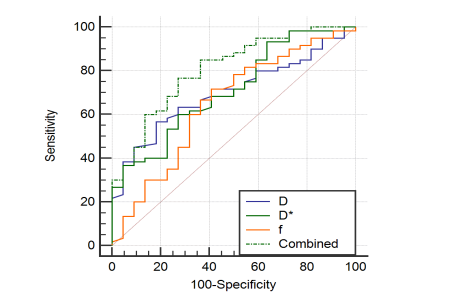
Figure 2 ROC Curves of D, D*, f value and combination in the comparison of P53 status in rectal cancer. The area under the ROC curve were 0.702, 0.712, 0.649 and 0.806.
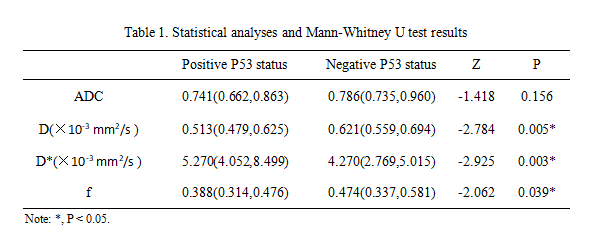
Table 1. Statistical analyses and Mann-Whitney U test results
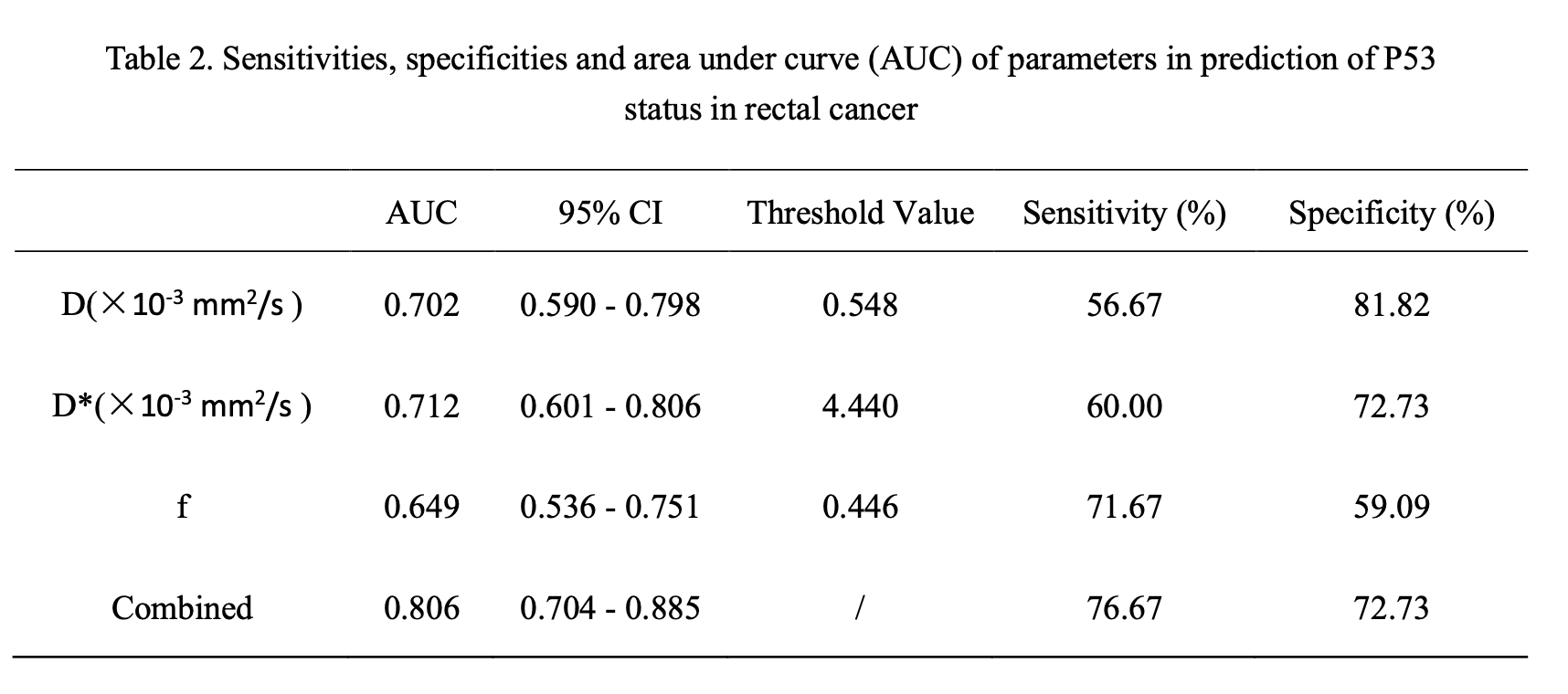
Table 2. Sensitivities, specificities and area under curve (AUC) of parameters in prediction of P53 status in rectal cancer
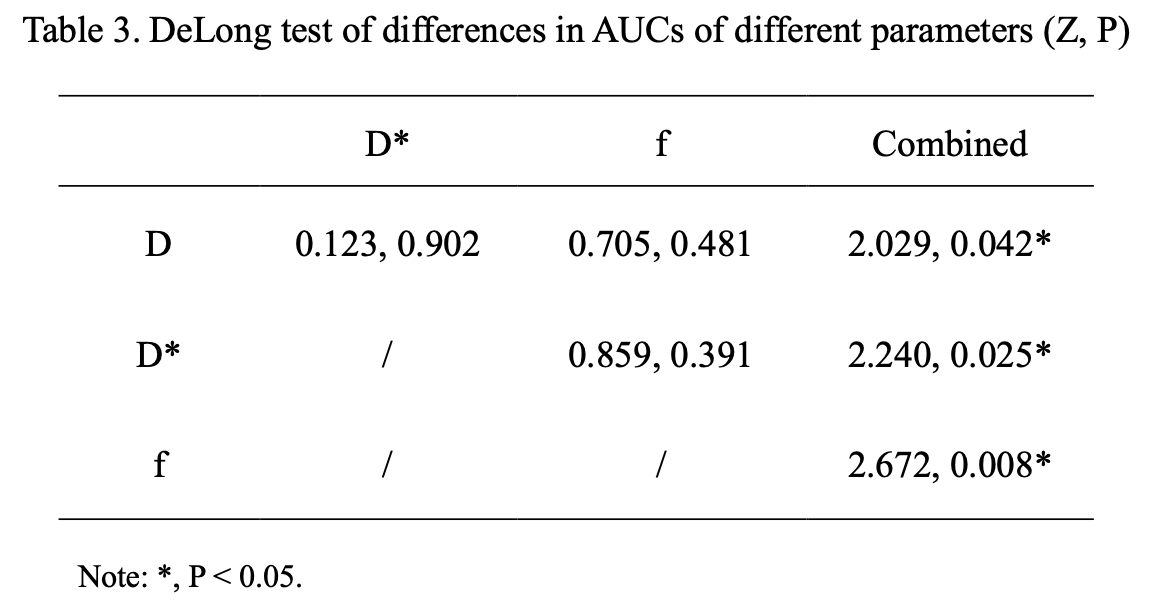
Table 3. DeLong test of differences in AUCs of different parameters
DOI: https://doi.org/10.58530/2023/3991