3950
Long-term balance training enhances sensorimotor GABA levels in older adults: A 7 T longitudinal magnetic resonance spectroscopy study1Animal Imaging and Technology, Ecole Polytechnique Fédérale de Lausanne, Lausanne, Switzerland, 2Laboratory for functional and metabolic imaging (LIFMET), Ecole Polytechnique Fédérale de Lausanne, Lausanne, Switzerland, 3Center for Biomedical Imaging (CIBM), Lausanne, Switzerland, 4Department of Neurosciences and Movement Science, University of Fribourg, Fribourg, Switzerland
Synopsis
Keywords: Data Acquisition, Spectroscopy, Data analysis, motor training, GABA, 7 Tesla
This study aims to examine the modulatory effect of long-term balance training on sensorimotor cortex GABA level in an older population. In-vivo GABA levels were accessed using in-vivo MR spectroscopy (MRS) at 7T. GABA level in sensorimotor cortex was measured in sixteen healthy older adults using MEGA-sSPECIAL sequence, and short echo time semi-sSPECIAL sequence was used for metabolite profiling, before and after a three-months period of balance training. Using edited MEGA-sSPECIAL we detected a significant increase in sensorimotor GABA level after training, indicating potentially enhanced motor inhibition by coordinative balance learning.
Introduction
γ-aminobutyric acid (GABA) is the primary inhibitory neurotransmitter in the brain that is known to play a pivotal role in regulating the excitation/inhibition balance that is essential for various behavioral domains in general and for motor inhibition in particular 1,2. Cortical inhibitory control was shown to be less pronounced in elderly adults relative to young adults 3. Indeed, older adults with lower GABA levels within the pre-supplementary motor area showed deficits in inhibitory motor control 4. Short-term motor learning has been shown to influence cortical GABA concentration5,6, however, the influence of long-term motor training on GABA levels is less understood, especially in the elderly population. In this study, we seek to evaluate the effects of long-term balance training on sensorimotor GABA levels in elderly adults using 7T magnetic resonance spectroscopy (MRS). GABA levels were measured by MEGA-sSPECIAL, which has been reported to have high measurement reproducibility for GABA in the motor cortex at 7T 7. To study the effect on other brain metabolites, short echo time semi-adiabatic SPECIAL sequence 8 was used for neurochemical profiling of a large number of metabolites.Methods
Sixteen healthy volunteers (66 – 79 years old, average: 72.2, 8 males / 8 females) gave informed consent prior to the study and participated MR measurements at 7T (Siemens, Erlangen, Germany) for both sessions. MP2RAGE sequence was used to acquire images for the voxel positioning (TR = 6000 ms; TI1/TI2 = 800/2700 ms; TE = 4.94 ms; voxel size = 0.6 × 0.6 × 0.6 mm3; Matrix size = 256 × 320 × 320). B0 field inhomogeneity was optimized using first- and second-order shims with FAST(EST)MAP. Localized 1H single-voxel spectra from the sensorimotor cortex are acquired by the semi-adiabatic SPECIAL (TR/TE = 4000/16 ms) and MEGA-sSPECIAL (TR/TE = 4000/80 ms) sequences using the following parameters: number of datapoints = 2048, spectral width = 4000 Hz, volume of interest = 30 × 20 × 20 mm3, average numbers 100/128, with four preparation scans. Total scanning time for the two sequences are 6 min 56 s and 8 min 32 s, respectively. A dielectric pad was positioned on the side near the motor cortex to improve the transmit field efficiency. After the first MRS session, participants underwent three months of progressive, multifaceted balance training. They trained around 3 times per week (a total of at least 30 trainings) for 45 minutes in supervised group sessions. After three months, they underwent the second MRS session with the same protocol as the first one.MR spectra were averaged after frequency drift and phase correction using FID-A and analyzed by LCModel for quantification. Metabolites with CRLB larger than 30% were considered as non-detected. The resulting metabolite concentrations were corrected for tissue composition and unsuppressed water signal was used for metabolite quantification. A paired t-test was used to test metabolite concentration difference between two MRS sessions.
Results
Demographic information for the participants and spectral quality parameters are shown in Table 1. MEGA-SPECIAL data of two participants were discarded because of severe misalignment between ON and OFF spectra. There is no significant difference observed in signal-to-noise ratio (SNR) and linewidths between the pre- and post- measurements. Figure 1 shows the voxel location in this study. Representative spectra obtained using the two sequences are shown in Figure 2. MEGA-sSPECIAL detected a significant increase in GABA concentration in the post-training session compared to pre-training (p < 0.01) (Figure 3). We found no significant metabolite concentration difference between pre- and post- training sessions using short TE method (Figure 4).Discussion and Conclusion
This is the first study that examines the effect of long-term balance training on cortical GABA level at 7T, where MEGA-sSPECIAL detected a significant increase in GABA level after balance training. In previous studies, GABA level has been reported to decrease with age 2,4,9, accompanied with inferior motor performance. Our findings of increased sensorimotor GABA levels as a result of long-term balance training suggest that decline in cortical GABA level in older adults could be mitigated by balance training.In conclusion, we found that long-term balance training can improve sensorimotor GABA level in older adults as detected by editing based MRS at 7T. The finding sheds new light on the neural plasticity in the GABAergic system in the elderly population.
Acknowledgements
This work was supported by the Swiss National Science Foundation (grants n° 32003B_197687). We acknowledge access to the facilities and expertise of the CIBM Center for Biomedical Imaging, a Swiss research center of excellence funded and supported by Lausanne University Hospital (CHUV), University of Lausanne (UNIL), Ecole Polytechnique Fédérale de Lausanne (EPFL), University of Geneva (UNIGE) and Geneva University Hospitals (HUG).
References
1. Li, H. et al. The role of MRS-assessed GABA in human behavioral performance. Prog. Neurobiol. 212, 102247 (2022).
2. Hermans, L. et al. Brain GABA levels are associated with inhibitory control deficits in older adults. J. Neurosci. 38, 7844–7851 (2018).
3. Cuypers, K., Maes, C. & P. Swinnen, S. Aging and GABA. Aging (Albany NY) 10, 1186–1187 (2018).
4. Pauwels, L., Maes, C. & Swinnen, S. P. Aging, inhibition and GABA. Aging (Albany. NY). 10, 3645–3646 (2018).
5. Floyer-Lea, A., Wylezinska, M., Kincses, T. & Matthews, P. M. Rapid modulation of GABA concentration in human sensorimotor cortex during motor learning. J. Neurophysiol. 95, 1639–1644 (2006).
6. Kolasinski, J. et al. The dynamics of cortical GABA in human motor learning. J. Physiol. 597, 271–282 (2019).
7. Lim, S. I. & Xin, L. γ-aminobutyric acid measurement in the human brain at 7 T: Short echo-time or Mescher–Garwood editing. NMR Biomed. 1–17 (2022) doi:10.1002/nbm.4706.
8. Xin, L., Schaller, B., Mlynarik, V., Lu, H. & Gruetter, R. Proton T1 relaxation times of metabolites in human occipital white and gray matter at 7 T. Magn. Reson. Med. 69, 931–936 (2013).
9. Cassady, K. et al. Sensorimotor network segregation declines with age and is linked to GABA and to sensorimotor performance. Neuroimage 186, 234–244 (2019).
Figures
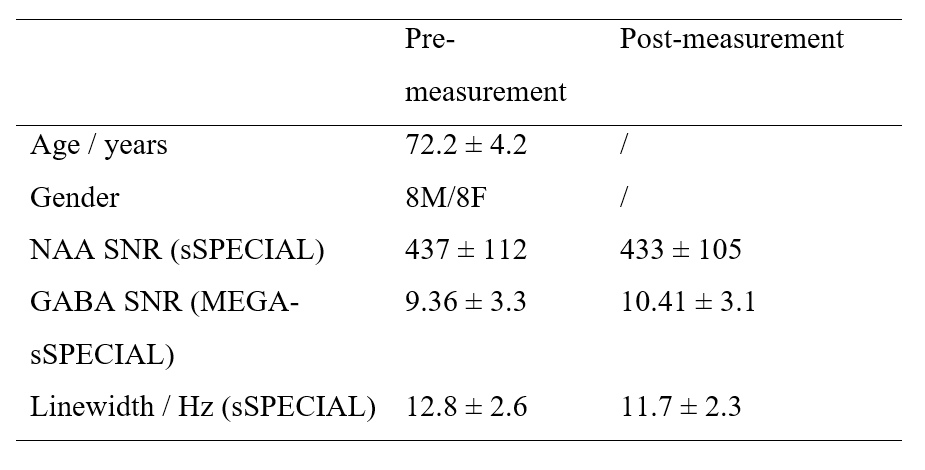
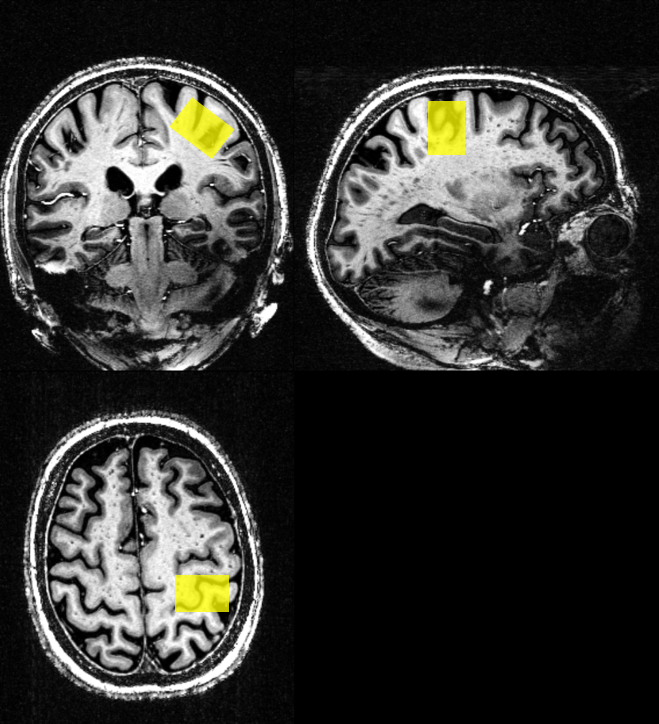
Figure 1. Exemplar voxel placement for motor cortex.
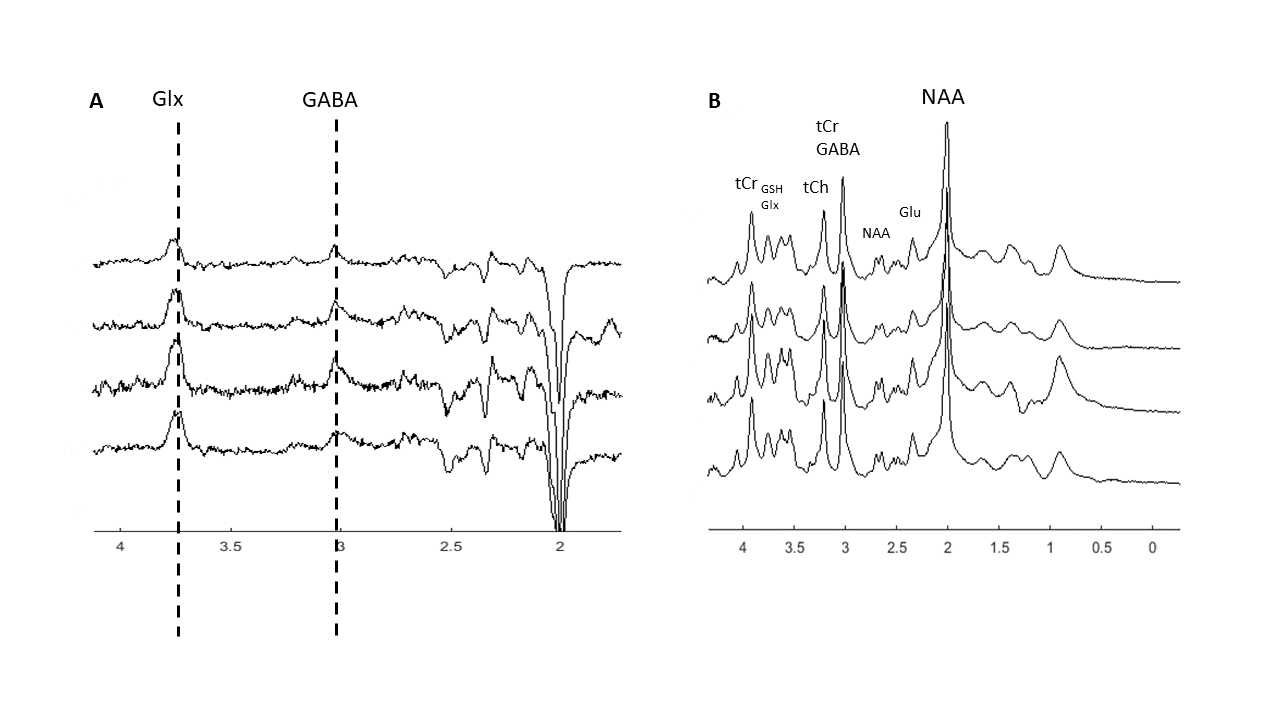
Figure 2. Representative spectra of four subjects for MEGA-sSPECIAL(A) and sSPECIAL(B).
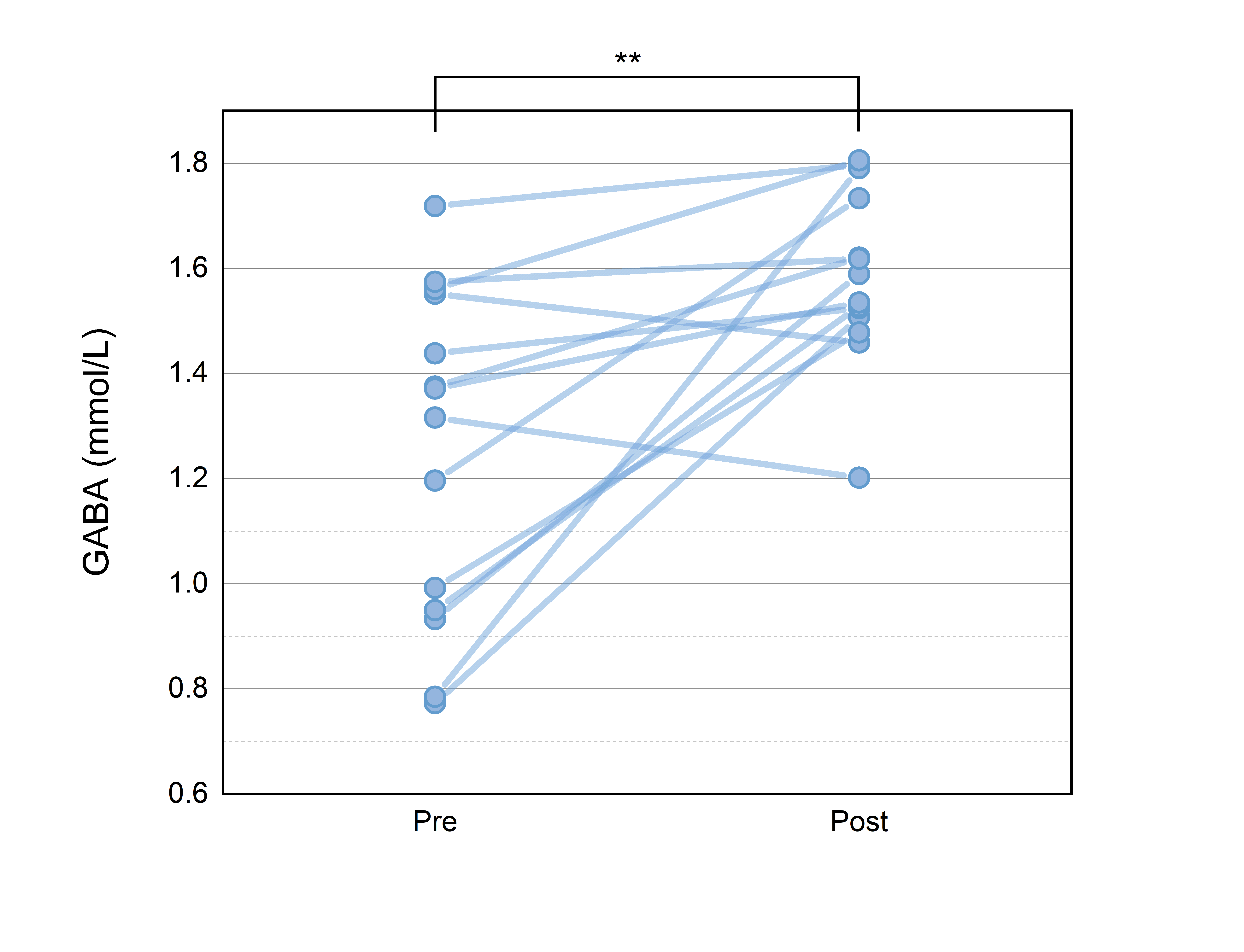
Figure 3. Pre- and post- training GABA concentrations measured using MEGA-sSPECIAL. A significant increase is found in GABA level after training.
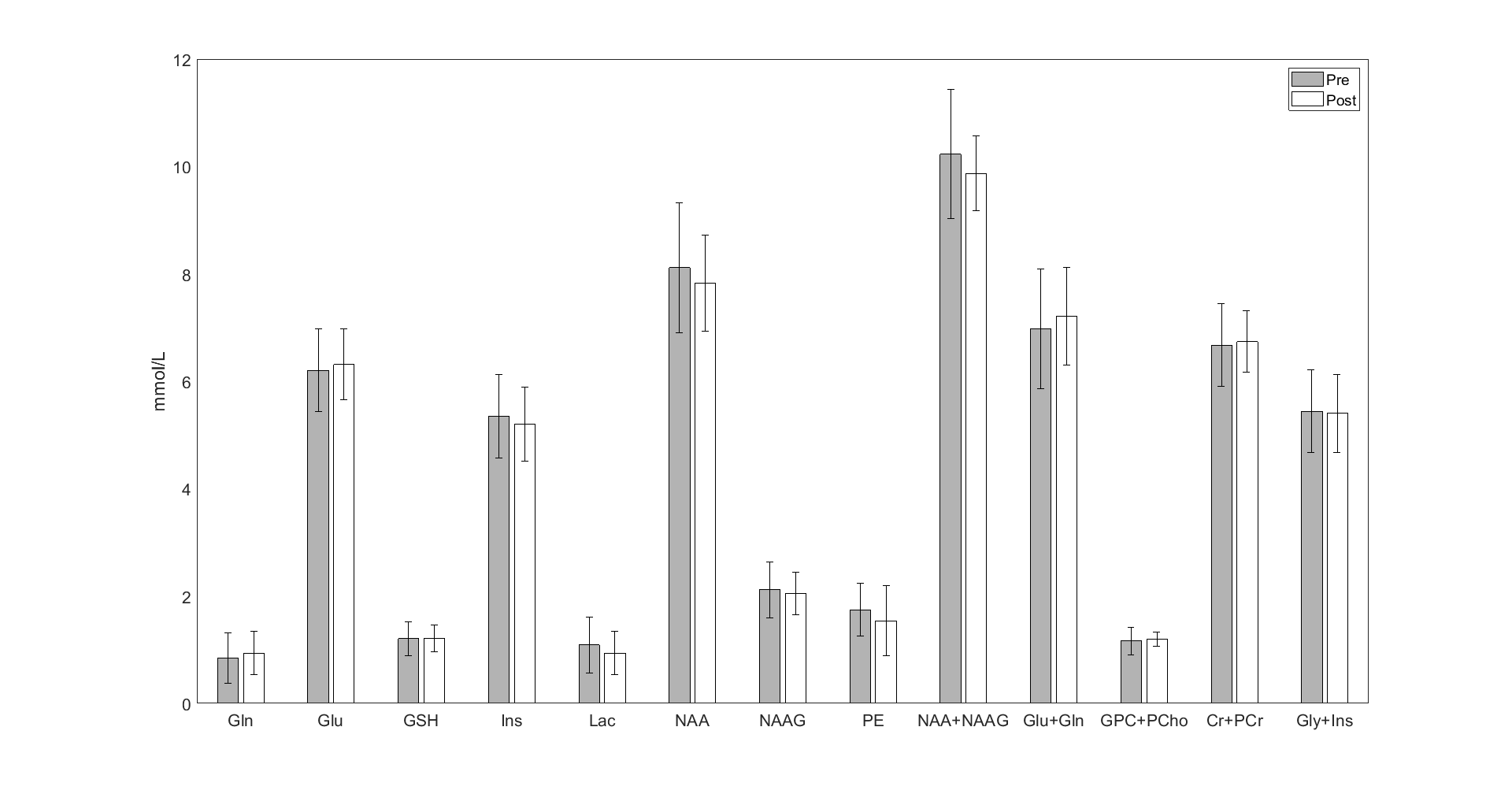
Figure 4. Mean and standard deviation of metabolite concentrations measured using sSPECIAL. There is no significant difference between pre- and post- training sessions.