3861
Correlation of NAAG level in the bilateral medial prefrontal cortex with nicotine dependence score in adult cigarette smokers1Clinical and Technical Support, Philips Healthcare, Beijing, China, 2Magnetic Resonance Imaging, The First Affiliated Hospital of Zhengzhou University, Zhengzhou, China
Synopsis
Keywords: Spectroscopy, Metabolism, Hydrogen proton magnetic resonance spectroscopy (1H MRS)
Smoking can cause cancer, heart disease, stroke, lung diseases, diabetes, and chronic obstructive pulmonary disease including emphysema and chronic bronchitis. Our study aims to explore the correlation between neurotransmitter levels in the medial prefrontal cortex of patients with nicotine addiction (NA) using the J-edited 1H MRS technique. Results showed that the N-acetylaspartylglutamate (NAAG) level in medial prefrontal of nicotine addicts was significantly correlated with the score of Fagerstrom Test for Nicotine Dependence, suggesting that the metabolism of NAAG may play a key role in nicotine dependence patients.Introduction
There are currently more than 1 billion cigarette smokers worldwide[1]. Long-term smoking can lead to both cardiovascular and respiratory diseases, as well as cognitive and neurological damage. Numerous studies have shown that nicotine addiction induces changes in brain structure and function[2, 3], but only a few has been done on the changes in neurometabolism in smokers. Excitation/inhibition (E/I) balance of neurotransmitters is vital for maintaining normal brain functions[4], while the contributions of nicotinic signaling to homeostatic regulation and maintenance of the E/I ratio are only beginning to be understood. The advanced J-edited 1H MR spectroscopy technique (MEGA-PRESS) enables reliable determination of local concentrations of brain metabolites, including the excitation neurotransmitters of glutamate and N-acetylaspartylglutamate (NAAG), and the inhibitory neurotransmitter gamma-aminobutyric acid (GABA) in the brain[5]. The medial prefrontal cortex (mPFC) plays a vital role in cognitive behavior, personality expression, and social behavior. This study aims to explore the changes in brain neurotransmitters in the prefrontal cortex of patients with nicotine addiction (NA), which may help understand the underlying metabolic mechanism in nicotine addiction.Method
A total of 45 males aged 40-60 were initially recruited in Henan Province, China, who had not taken any drugs during 3 months before the MR scan, including 21 in the NA group and 24 in the healthy control (HC) group. All subjects underwent conventional MRI and the editing 1H-MRS (acquisition voxel in the prefrontal cortex region) scans on a 3.0 T scanner (Ingenia Meta, Philips Healthcare, Best, the Netherlands). After excluding patients with underlying diseases, combined alcohol dependence or bad data quality, 18 NA patients and 22 age-and sex-matched HCs were included for analyses. The MEGA-PRESS sequence for GABA and Glx (glutamate combined with glutamine signal) editing was implemented with parameters as follow: repetition time (TR) = 2000 ms; echo time (TE) = 68 ms; number of averages = 96; on/off frequencies = 1.9/7.5 ppm; scan time = 6 min 30 s. The MEGA-PRESS sequence for NAAG editing was implemented with parameters as follow: repetition time (TR) = 2000 ms; echo time (TE) = 140 ms; number of averages = 96; on/off frequencies = 4.61/4.15 ppm; scan time = 6 min 30 s. The VAPOR scheme was used for water suppression. The edited spectra were post-processed and quantitatively analyzed using the Gannet tools on the MATLAB software (Figure 1). The GABA, Glx and NAAG levels were quantified with reference to the creatine signal. Two independent samples t-test was used to analyze the differences in NAAG, GABA and Glx levels between the two groups. Finally, the correlation analysis of GABA, Glx and NAAG levels with the clinical characteristic assessment scales (Including Daily smoking amounts, Age of smoking, FTND score, RRSQ score and BIS-11 score) was performed using the Spearman criteria.Result
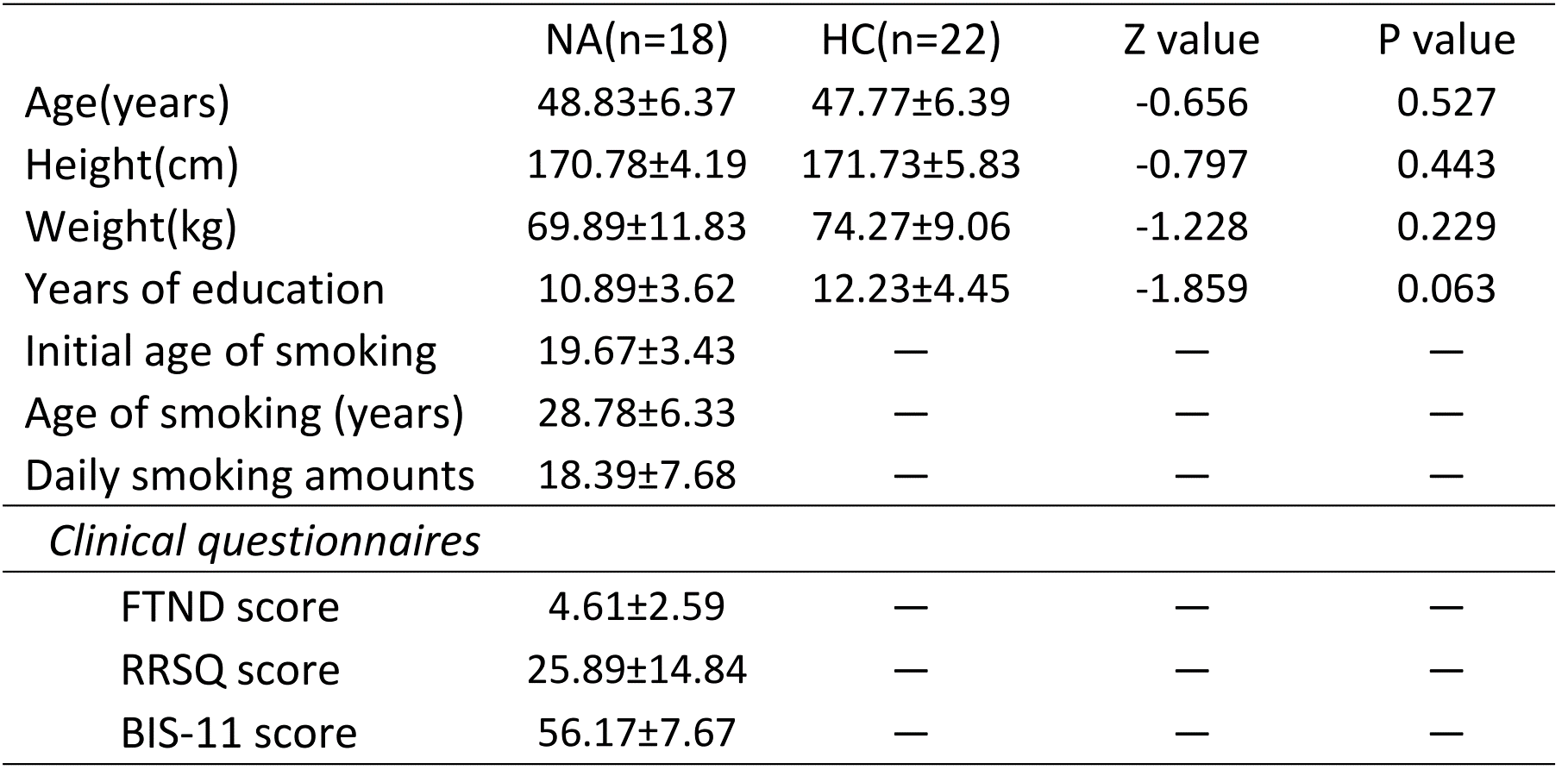
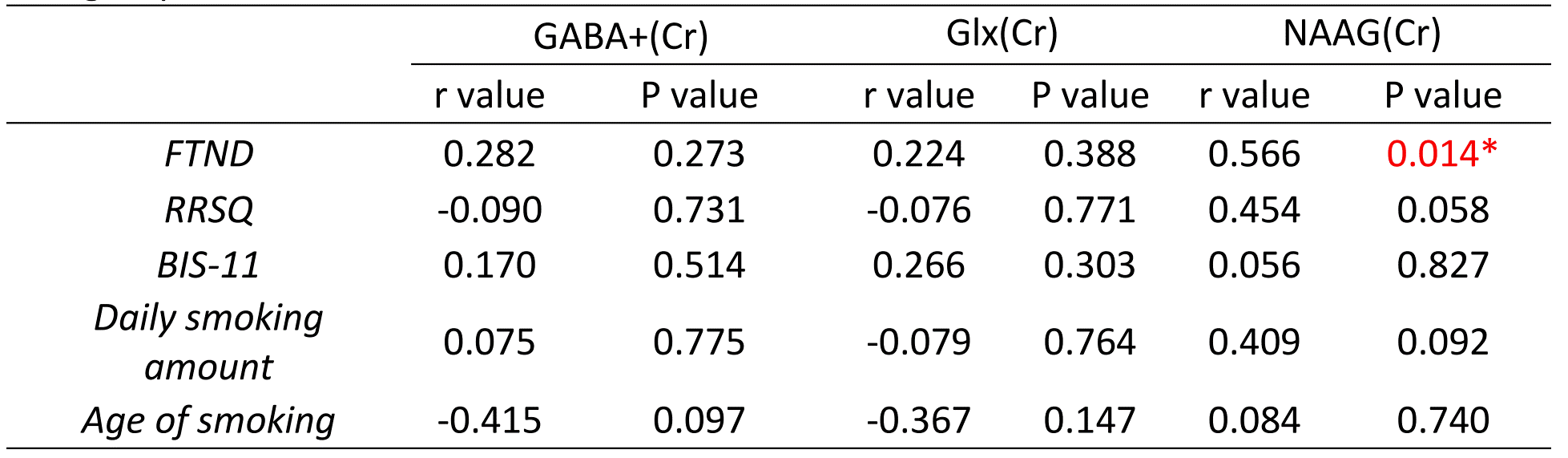
The demographic data are shown in Table 1. No significant difference was observed in the GABA, Glx and NAAG levels between the NA and HC groups (Table 2). The NAAG level in mPFC shown a significant correlation with the score of Fagerstrom Test for Nicotine Dependence (FTND) in NA patients (Table 3).Discussion and Conclusion
J-edited MRS enables separation of overlapped metabolite signals, which allows us to directly and accurately detect the isolated metabolite signal in specific brain regions. NAAG is the third-most-prevalent neurotransmitter in the human nervous system, and it may play import roles in neuro disorders such as traumatic brain injury and amyotrophic lateral sclerosis[6]. Previous studies showed that the medial prefrontal lobe of function and structure were altered in nicotine addicts[2, 3]. In this work, the NAAG level in the medial prefrontal lobe of NA patients was observed to be significantly correlated with nicotine dependence. This suggests that the metabolism of NAAG is changed in the pathogenesis of nicotine dependence patients, and the change of NAAG levels may be an important factor in the formation of addictive behaviors in nicotine addicts.Acknowledgements
No acknowledegments found.References
1. Reitsma, M.B., et al., Spatial, temporal, and demographic patterns in prevalence of smoking tobacco use and attributable disease burden in 204 countries and territories, 1990–2019: a systematic analysis from the Global Burden of Disease Study 2019. The Lancet, 2021. 397(10292): p. 2337-2360.
2. Weng, J.-C., et al., Association between functional brain alterations and neuropsychological scales in male chronic smokers using resting-state fMRI. Psychopharmacology, 2021. 238(5): p. 1387-1399.
3. Zhong, J., et al., Voxelwise meta-analysis of gray matter anomalies in chronic cigarette smokers. Behav Brain Res, 2016. 311: p. 39-45.
4. Yizhar, O., et al., Neocortical excitation/inhibition balance in information processing and social dysfunction. Nature, 2011. 477(7363): p. 171-178.
5. Harris, A.D., M.G. Saleh, and R.A. Edden, Edited (1) H magnetic resonance spectroscopy in vivo: Methods and metabolites. Magn Reson Med, 2017. 77(4): p. 1377-1389.
6. Neale, J.H., et al., The neurotransmitter N-acetylaspartylglutamate in models of pain, ALS, diabetic neuropathy, CNS injury and schizophrenia. Trends Pharmacol Sci, 2005. 26(9): p. 477-84.
Figures
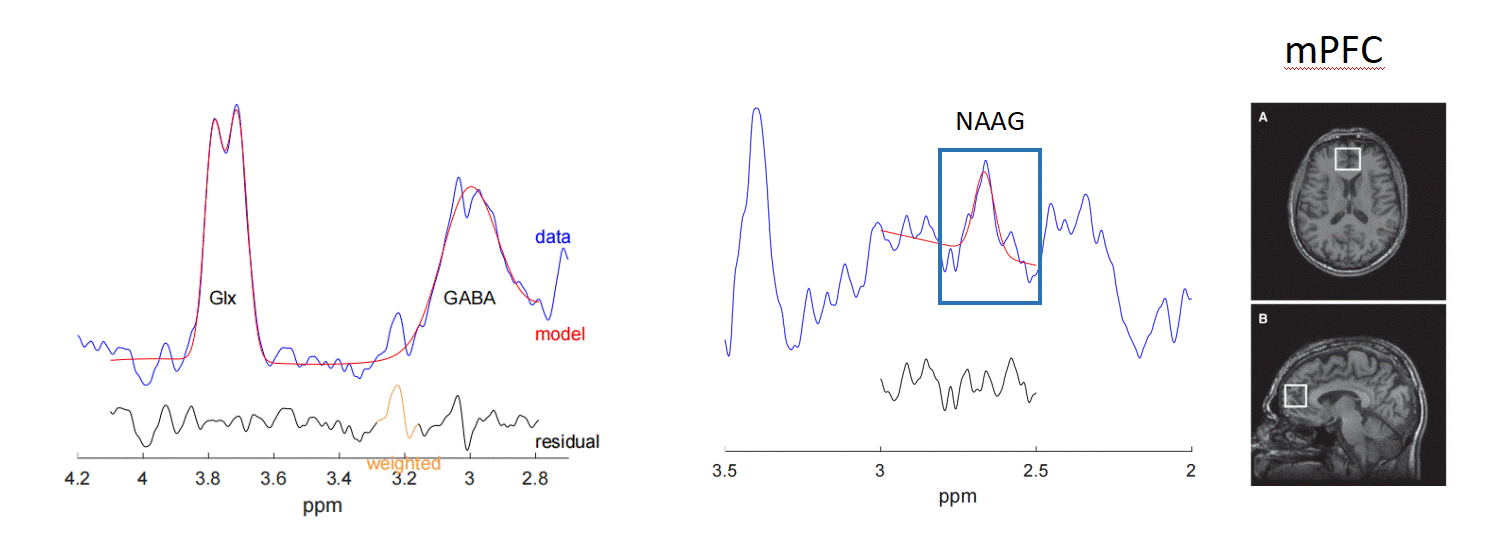
Figure 1. GABA+/Glx and NAAG signal fitting by Gannet tools
Note: mPFC: medial prefrontal cortex