3264
The value of APT combined with squamous cell carcinoma antigen in predicting parametrial invasion of stage IA to IIB cervical cancer1The Second Hospital of Jilin University, Jilin, China, 2Philips Healthcare, Beijing, China
Synopsis
Keywords: Uterus, Cancer, parametrial invasion、squamous cell carcinoma antigen
Cervical cancer is one of the most common gynecological malignancies. The accurate diagnosis of cervical cancer is of great significance for the selection of treatment plan. This study is to explore the diagnostic value of the new magnetic resonance technology of amide proton transfer-weighted(APTw) imaging combined with squamous cell carcinoma antigen (SCCA) for parametrial invasion(PMI).The results showed amide proton transfer-weighted(APTw) imaging could provide more valuable for diagnosis efficiency, which maybe an invasive alternative method for evaluating parametrial invasion.Synopsis:
Cervical cancer is one of the most common gynecological malignancies. The accurate diagnosis of cervical cancer is of great significance for the selection of treatment plan. This study is to explore the diagnostic value of the new magnetic resonance technology of amide proton transfer-weighted(APTw)imaging combined with squamous cell carcinoma antigen (SCCA)for parametrial invasion(PMI).The results showed amide proton transfer-weighted(APTw)imaging could provide more valuable for diagnosis efficiency, which maybe an invasive alternative method for evaluating parametrial invasion.Introduction:
Cervical cancer is one of the most ordinary gynecological malignancies, with its morbidity and mortality ranking the fourth in the world[1]. Parametrial invasion(PMI) plays a decisive role in the treatment. The initial clinical diagnosis of PMI of cervical cancer mainly relies on gynecological examination, its reliability and accuracy are lack of objective indicators. Magnetic resonance imaging (MRI) can be used for further diagnosis of cervical cancer due to its excellent contrast resolution of pelvic tissues and organs. However, the diagnostic accuracy of PMI is limited. Amide proton transfer-weighted(APTw) imaging is a noninvasive imaging technique used to detect endogenous free proteins and peptides in tissues to reflect cell metabolism and pathophysiology[2]. Researchers used amide proton transfer-weighted(APTw) imaging to evaluate the histological grade of cervical cancer, and they found that APT values of the three grades of cervical cancer were positively correlated[3]. Therefore, the purpose of this study was to investigate the predictive value of amide proton transfer-weighted(APTw) imaging combined with squamous cell carcinoma antigen (SCCA) for PMI of stage IA to IIB cervical cancer.Methods:
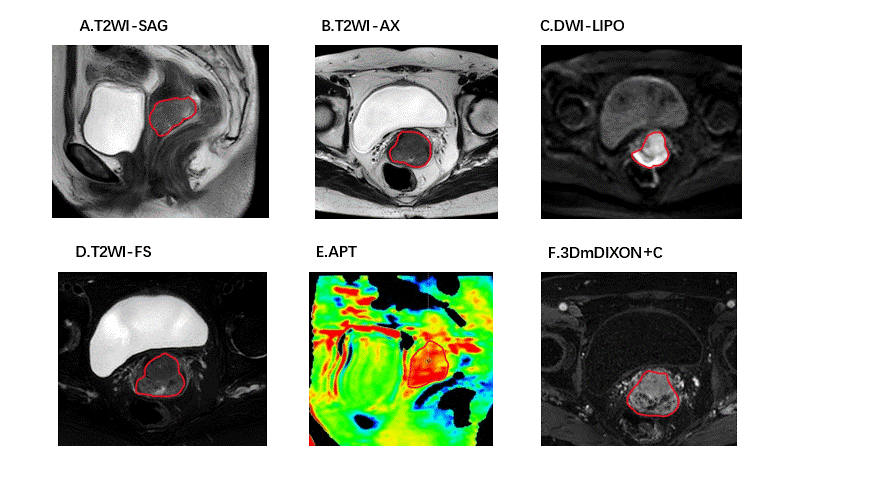
A total of 71 patients with pathologically confirmed cervical cancer were collected. According to clinicopathological stages, the patients were divided into PMI group (15 cases) and non-PMI group (56 cases). All patients underwent pelvic MRI on a 3.0T scanner (Ingenia CX, Philips Healthcare, Netherlands), including axial T1WI and T2WI, sagittal T2WI, adipose-suppressed T2WI, diffusion-weighted imaging (DWI), and amide proton transfer weighted (APTw) imaging sequences. Detailed MRI protocols are shown in Table 1. Use ISP software (Intellispace Portal; Version 10.1; Philips Healthcare, Best, Netherlands), two radiologists with over 15 years of experience in gynecological imaging diagnosis independently reviewed and mapped areas of interest (ROI) to avoid cystic degeneration, necrosis, and tumor margins without knowledge of the patient's clinical and pathological information. The APT value of cervical cancer tissue was determined according to the corresponding anatomical area, and the squamous cell carcinoma antigen (SCCA) value was collected. Independent sample t test was used to compare the differences between the two groups. Receiver operating characteristic curve (ROC) was calculated to evaluate the diagnostic effect of each parameter and determine the corresponding sensitivity and specificity of each parameter. SPSS 22.0, MedCalc 20.0 and DeLong test were used to verify whether there were significant differences in AUC of different parameters between the two groups. P <0.05 was statistically significant.Results:
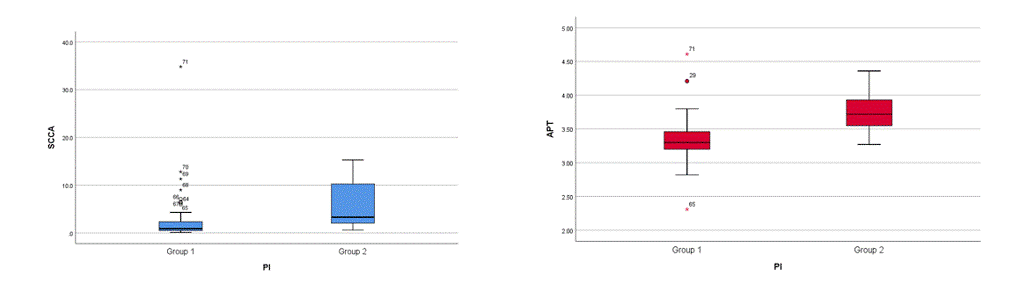
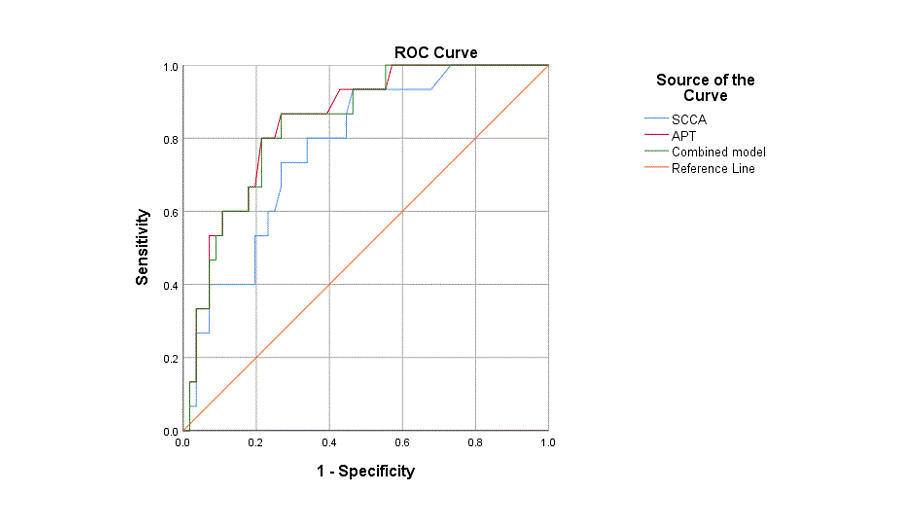
In this study, 71 patients were divided into two groups, 15 patients (mean age 52 years) in the PMI group and 56 patients (mean age 48 years) in the Non-PMI group. Table 2 showed the value of APT and SCCA in the PMI and Non-PMI groups. The APT values in PMI group (3.75 ± 0.33%) was higher than that in Non-PMI group (3.33 ± 0.32%), and the difference was statistically significant (P<0.001). The SCCA values in PMI group (5.85 ± 5.03%) was higher than that in Non-PMI group (2.74 ± 5.14%), and the difference was statistically significant (P < 0.05). ROC curve analysis results showed that area under curve (AUC) of APT values in the diagnosis of cervical cancer PMI was the highest (0.848) with the sensitivity and specificity was 86.7% and 73.2%, respectively. The AUC of SCCA values was 0.776, sensitivity and specificity were 93.3% and 53.6%, respectively. The AUC of APT values combined with SCCA values was 0.842, sensitivity and specificity were 86.7% and 73.2%, respectively. There were statistically differences in AUC between APT values and SCCA values (P<0.001) (Table 3,Figure2-3).Discussion:
In this study, the values of APT and SCCA in the evaluation of cervical cancer PMI was discussed, and the results showed that APT values and SCCA values were significantly in PMI group and Non-PMI groups. Compared with squamous cell carcinoma antigen (SCCA), amide proton transfer-weighted(APTw) imaging is more valuable in preoperative prediction of cervical cancer PMI, which can provide reference for quantitative diagnosis of cervical cancer PMI and further assist in the formulation of clinical treatment plan. Previous studied found that two subtypes of SCCA are elevated in cervical cancer [4]. Researchers found that amide proton transfer-weighted (APTw) imaging can diagnose and predict the grade of cervical cancer[5]. In this study, amide proton transfer-weighted (APTw) imaging was combined with SCCA for the first time to predict PMI.In the future, the sample size should be expanded for further verification. Compared with squamous cell carcinoma antigen (SCCA), amide proton transfer-weighted (APTw) imaging has the potential value in predicting PMI of cervical cancer before surgery, which is helpful to provide a reference for the qualitative diagnosis of PMI of cervical cancer and further assist in the development of clinical treatment plans.Acknowledgements
No acknowledgement found.References
[1] Sung H, Ferlay J, Jemal A, et al. Global Cancer Statistics 2020: GLOBOCAN Estimates of Incidence and Mortality Worldwide for 36 Cancers in 185 Countries. CA Cancer J Clin, 2021. 71(3): 209-249.
[2] Kamitani T, Sagiyama K, Togao O, et al. Amide proton transfer (APT) imaging of parotid tumors: Differentiation of malignant and benign tumors. Eur J Radiol, 2020. 129: 109047.
[3] Li B, Sun H, Zhang S, et al. Amide proton transfer imaging to evaluate the grading of squamous cell carcinoma of the cervix: A comparative study using (18) F FDG PET. J Magn Reson Imaging, 2019. 50(1): 261-268.
[4] Cataltepe S, et al. Co-expression of the squamous cell carcinoma antigens 1 and 2 in normal adult human tissues and squamous cell carcinomas. J Histochem Cytochem, 2000. 48(1): 113-22.
[5] Li B, Sun H, Zhang S, et al. The utility of APT and IVIM in the diagnosis and differentiation of squamous cell carcinoma of the cervix: A pilot study. Magn Reson Imaging, 2019. 63: 105-113.
Figures
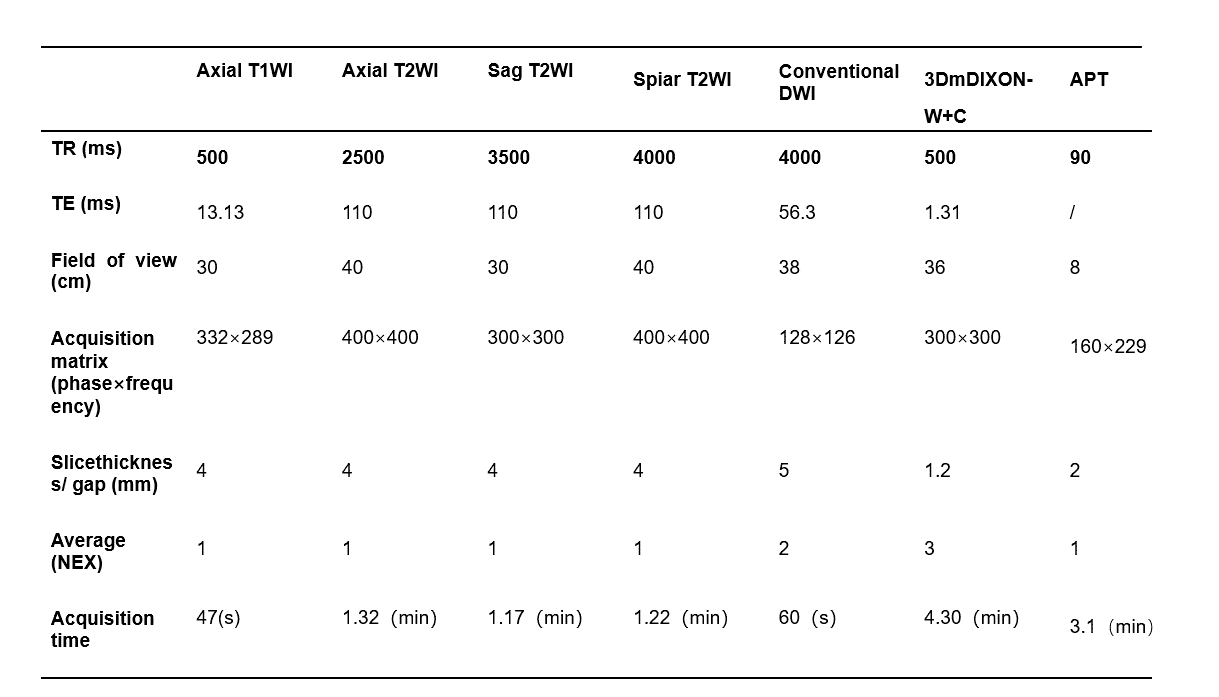
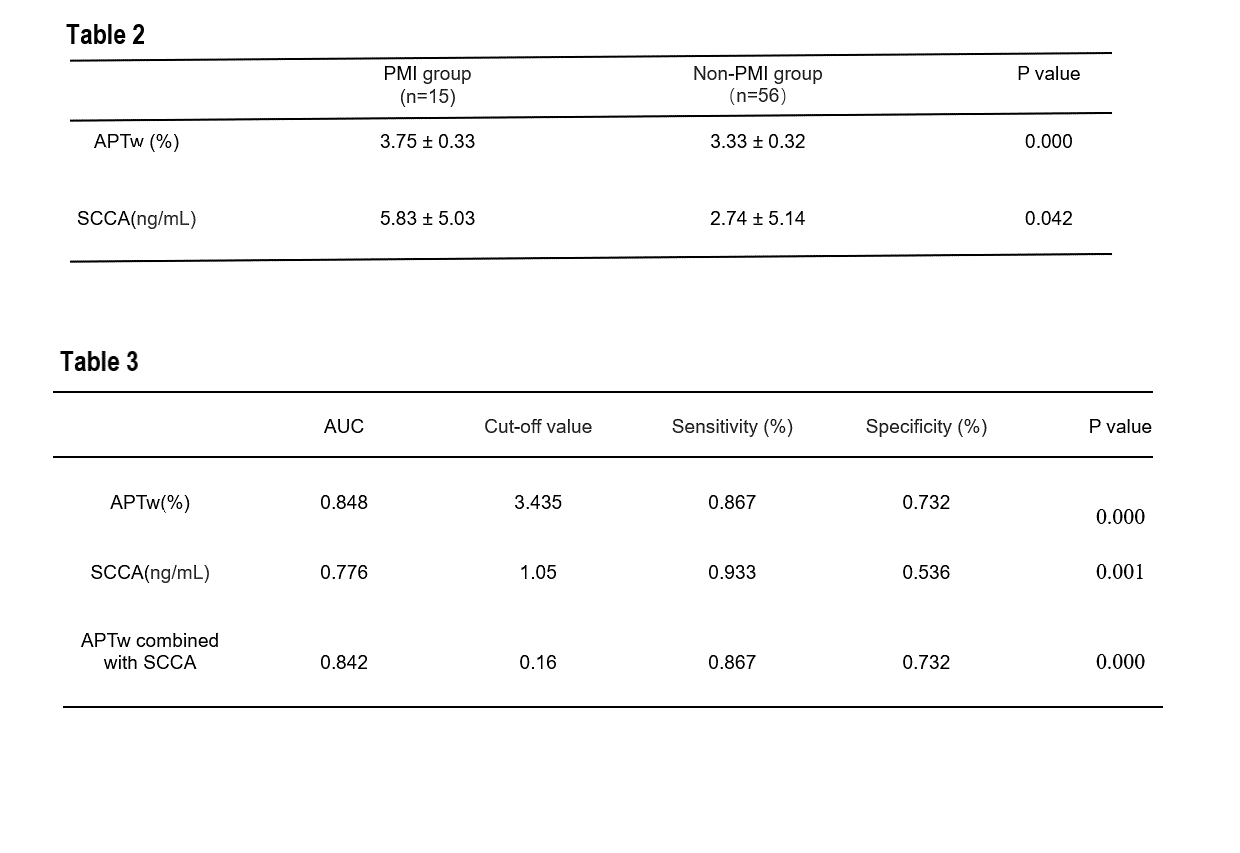
Table 2 Comparison of parameter values of cervical cancer PMI group and Non-PMI group
Table 3 ROC analysis of APT combined with SCCA in the identification of cervical cancer PMI group and Non-PMI group