3199
The evaluation of relationship between motor cortex GABA levels and Gyrification Pattern in Patients With early-onset Parkinson Disease1The First Affiliated Hospital of Harbin Medical University, Harbin, China, 2Philips Healthcare, Beijing, China
Synopsis
Keywords: Parkinson's Disease, Neurodegeneration
Stimulation of the motor cortex (MC) significantly reduce akinesia and bradykinesia in Parkinson Disease (PD), indicating a key role of motor cortex abnormalities in the pathogenesis of PD. Early-onset Parkinson disease (EOPD) , varying between 40 and 55 years of age, it carries additional societal and personal consequences and psychosocial disruption. Thus we aim to explore the cortical gyrification changes as well as their relationships with r-aminobutyric acid (GABA) in the motor cortex(MC) of patients with early-onset Parkinson disease (EOPD). Results showed that decreased in LGI and GABA+/Cr ratios in the motor cortex were found to be slightly coupled.
Introduction
Motor cortex, as a major source of descending motor commands for voluntary movement has been shown to be essential for various motor functions and movement. Previous studies have shown that although it is not significant, the frequent of the number of cases reporting bradykinesia or rigidity at any time in early-onset Parkinson disease (EOPD) was around 90%. In addition, men are prone to have rigidity, asymmetry and impaired postural reflexes when compared with women. Mescher-Garwood point-resolved spectroscopy sequence (MEGA-PRESS) technology has been proved to detect the concentration of GABA, which could provide rapid and stable quantitative information. GABA is the predominant inhibitory neurotransmitter and GABA abnormalities have been implicated in a range of neuropsychiatric disorders. Thus, the aim of this study is to explore the cortical gyrification changes of motor cortex in EOPD and further investigate the correlation between GABA and local gyrification index (LGI) of motor cortex for the pathogenesis of EOPD.Methods
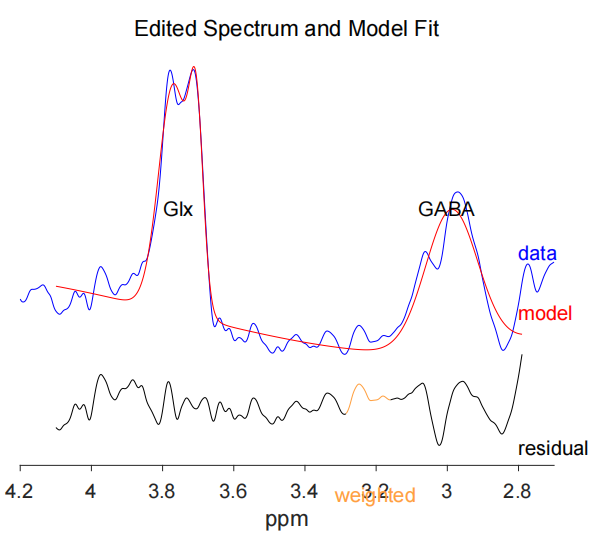
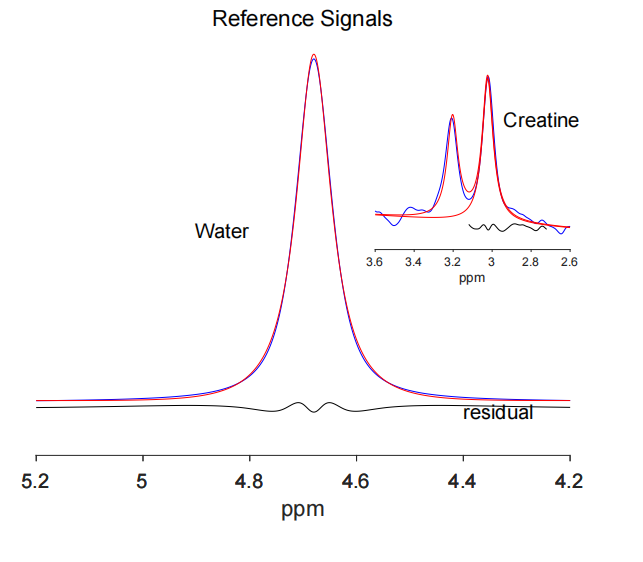
Thirty patients with EOPD and 22 age- and gender-matched healthy controls underwent MRI examination by 3.0T platform (Ingenia Elition, Philips Healthcare, the Netherlands). Scan sequences included high-resolution 3D T1-weighted image and the MEGA-Point Resolved Spectroscopy Sequence (MEGA-PRESS) on motor cortex(MC). The scan parameters were shown as follows:1)MEGA-PRESS:voxel:3.0 × 3.0 × 3.0 cm3 (AP × LR × HF).TR/ TE = 2000/68 ms; 320 averages; 2 kHz spectral width; 2048 data points. 2) T1-weighted three-dimensional Magnetization-Prepared Rapid-acquisition Gradient Echo (MPRAGE) sequence with sagittal acquisition, resolution 1.0 × 1.0 × 1.0 mm3 ; TR/TE 8.2/3.7 ms; fip angle = 8°, matrix = 256 × 256; feld of view = 24 × 24 cm2 LGI and GABA data of MC processed by Gannet program to identify the cortical gyrification and GABAergic in the EOPD.Results
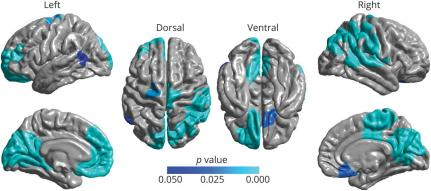
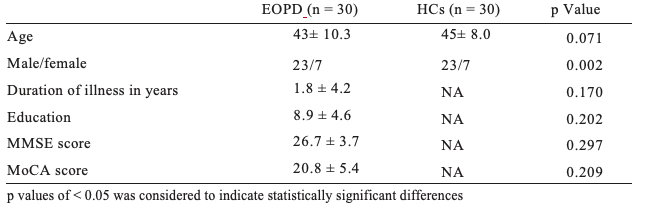
The study involved 44 participants: 22 Parkinson’s disease (PD) patients and 22 healthy control (HC) volunteers. The demographic and clinical data summarized in Table 1 show that the PD patients and the HC group did not difer signifcantly in age or sex. Using covariance analysis, lower GABA+/Cr ratios were found in the motor cortex of EOPD patients compared with control subjects .Compared with HCs, patients with EOPD showed decreased LGI in the precentral, postcentral, middle and superior frontal/temporal, anterior and posterior cingulate, orbitofrontal, and some visual cortices. Decreases in LGI and GABA+/Cr ratios were found to be slightly coupled.Discussion
There were several findings in this study: the concentration of brain neurometabolites was detected, especially inhibitory GABA could change according to the different extent of brain damage and LGI levels. Moreover, EOPD is associated with different patterns of cortical gyrification changes. The motor cortex receives information about sensory input, motor intention, decisions, body status, and generates motor commands that descend to the spinal cord and other subcortical areas. An approach to casting the motor cortex as a dynamical system is to regard the nervous system as a machine that generates an appropriate neural response pattern to trigger the holistic movement. Thus, the decresed LGI of motor cortex is relative to EOPD movement disorder. In principle, if the neural dynamical machine in the motor cortex autonomously generates motor commands, a cohesive motor program could be decoded from preparatory activity to rapidly drive an external actuator. Although previous MEGA-PRESS studies proved the link between neural dynamics and the muscle/arm ,but evidence was limitied.Conclusion
Our results suggest that abnormalities of the GABAergic system may be presented in the pathogenesis of EOPD, with motor phenotype-specific cortical gyrification changes.Key words
early-onset Parkinson Disease; Motor cortex; GABA; LGI; MEGA-PRESSAcknowledgements
NoneReferences
1.Drouot X, Oshino S, Jarraya B, et al. Functional recovery in a primate model of Parkinson’s disease following motor cortex stimulation. Neuron 2004;44:769–778.2.
2.Cameruccia, Cole D. Stanga, Mania Hajeba, Pierpaolo Turcanoc , Aidan F. Mullanb,1, Peter Martinb. Early-Onset Parkinsonism and Early-Onset Parkinson’s Disease: A Population-Based Study (2010-2015) Journal of Parkinson’s Disease 11 (2021) 1197–12073.
3.Firbank MJ, Parikh J, Murphy N, Killen A, Allan CL, Coller- ton D, Blamire AM, Taylor JP (2018) Reduced occipital GABA in Parkinson disease with visual hallucinations. Neurology 91(7):e675–e6854.
4.Gorman Tuura RL, Baumann CR, Baumann-Vogel H (2018) Neurotransmitter activity is linked to outcome following subthalamic deep brain stimulation in Parkinson’s disease. Parkin Relat Disord 50:54–605.
5.Tritsch NX, Granger AJ, Sabatini BL (2016) Mechanisms and functions of GABA co-release. Nat Rev Neurosci 17(3):139– 1456.
6.Delli Pizzi S, Franciotti R, Chiacchiaretta P, et al. Altered Medial Prefrontal Connectivity in Parkinson's Disease Patients with Somatic Symptoms. Mov Disord. 2022.
Figures