2863
Use of Magnetic Materials to Mitigate RF-induced Heating in Active Implantable Medical Devices with 1.5T MRI
Md Zahidul Islam1, Ananda Kumar2, Jianfeng Zheng1, and Ji Chen1
1Univ of Houston, Houston, TX, United States, 2FDA, Silver Spring, MD, United States
1Univ of Houston, Houston, TX, United States, 2FDA, Silver Spring, MD, United States
Synopsis
Keywords: Safety, Safety
The effect of ferrite magnetic beads to suppress the induced currents on a straight wire active implantable medical devices (AIMDs) lead was investigated. Leads with one, two and no ferrite beads were studied experimentally and using numerical simulations. The application of ferrite beads on the leads significantly reduced induced currents, and thus heating on experiments outside the MRI scanner. In the MRI magnet no significant reduction in heating was observed due to magnetic saturation of the ferrite beads. Suitable magnetic material for current suppression needs to be developed for application in MRI scanners.Introduction
Radiofrequency (RF)-induced heating is a safety concern when patients with AIMDs undergo magnetic resonance imaging (MRI). The leads used with AIMDs mainly consist of metallic wires covered by exterior insulating materials. During MRI, the interaction between the metallic lead and the radiated RF field from the MRI scanner may lead to an antenna effect, which could induce a strong current along the lead body. The induced energy propagates towards the tip electrodes and dissipates into tissues near tip electrodes, leading to potential thermal injury1. An approach of using ferromagnetic materials is studied here to reduce the current along the lead and mitigate RF-induced heating.Methods
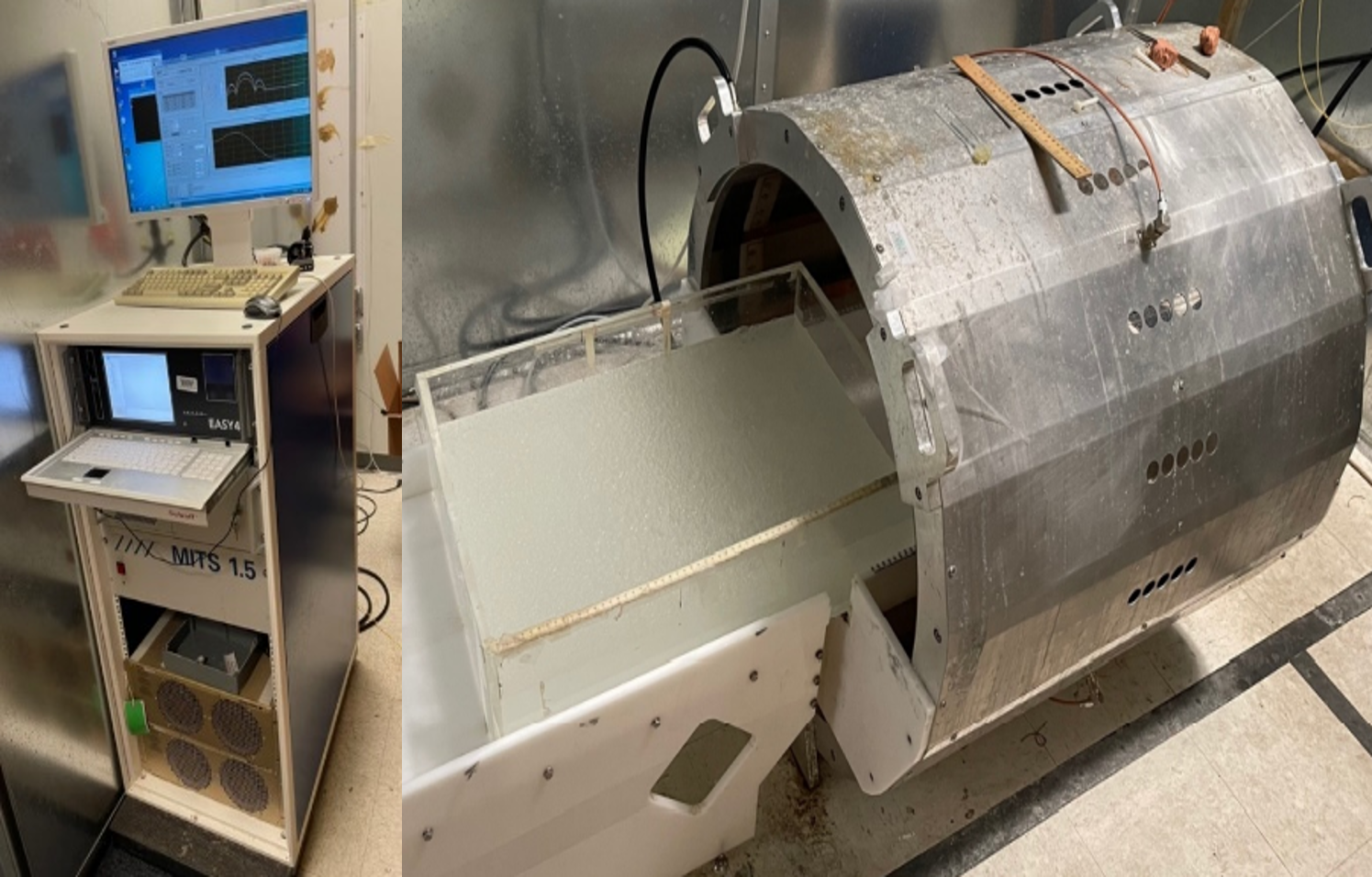
Manganese Zinc ferromagnetic beads were applied in a solid straight insulated wire with a diameter of 1.58 mm. Due to the high permeability of the ferrite bead, the induced current along the lead is reduced, and consequently the reduction of the RF-induced heating near the electrodes. Three different cases have been studied, as shown in Figure 1. A numerical simulation was performed to evaluate the transfer functions (TF) with and without ferrite beads using the method of moments using surface equivalence principles (FEKO, Altair, USA). Transfer functions were also measured inside the ASTM phantom to understand the ferrite beads effect; the TF measurement system is shown in Figure 2. To measure the RF-induced heating inside the ASTM phantom, the solid wire with or without ferrite beads was placed inside the gel (0.47S/m) filled ASTM phantom under 1.5T RF birdcage coil manufactured by Zurich Med Tech (ZMT), shown in Figure 3. Fiber optic probes were used to read the temperate at the tip of the solid wire.Results
The results of both numerical modeling and experimental studies are given in the figures below.Discussion
Figure 4 (a) shows the measured transfer functions inside the ASTM phantom with and without ferrite beads. The amplitude of the current through the solid wire was reduced with the use of single ferrite bead at 15 cm distance from the tip. The current amplitude was further reduced by usi6.40ng another ferrite bead at 30 cm distance from the tip. Electromagnetic model of the straight solid wire was developed with and without ferrite beads, and numerical simulation was performed to get the transfer functions. The transfer functions from the simulation are shown in Figure 4 (b), and similar effects due to the magnetic beads are observed. The measured RF-induced heating results show a significant reduction due to ferrite beads, as shown in Figure 5 (b). The force due to the magnetic beads were measured in a 1.5T MRI scanner, as shown in Figure 5(c). With one bead and two beads, the deflection angle was 21 degrees and 35 degrees, and the pulling force was 9.31 g and 23.67 g (equivalent mass), respectively.Conclusion
This study has demonstrated the possibility of using ferromagnetic materials in the lead to reduce RF-induced heating. The measured and simulated transfer functions agree and show the amplitude of the current reduction through the lead by the application of the ferrite beads. Measured RF heating under the RF body coil was also reduced significantly due to the application of ferrite beads in the wire. The effect of the ferrite magnetic beads was reduced once used inside the MR scanner due to saturation of the ferrite material by the static magnetic field of the scanner. More suitable materials should be used in the future.Disclaimer
The mention of commercial products, their sources, or their use in connection with material reported herein is not to be construed as either an actual or implied endorsement of such products by the Department of Health and Human Services.Acknowledgements
No acknowledgement found.References
J. Liu, J. Zheng, Q. Wang, W. Kainz, and J. Chen, "A Transmission Line Model for the Evaluation of MRI RF-induced Fields on AIMDs," IEEE Transactions Microwave Theory and Techniques, 2018.Figures

Figure 1. Studied cases include (top to bottom): without ferrite bead,
with one ferrite bead, and with two ferrite beads.
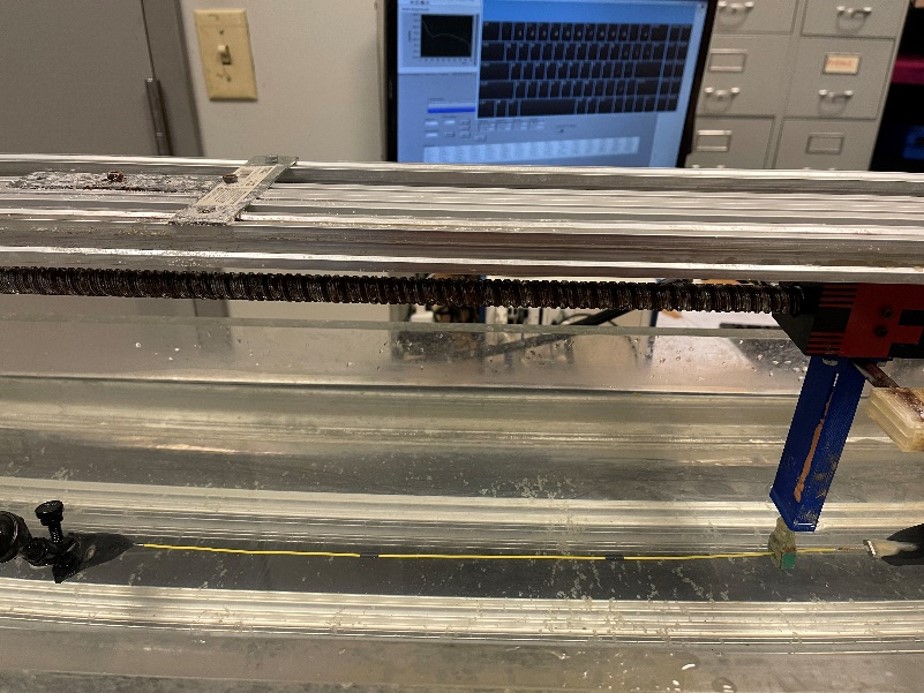
Figure 2. Illustration of the transfer function measurement system.
Figure
3. MITS RF coil operating at 1.5T.
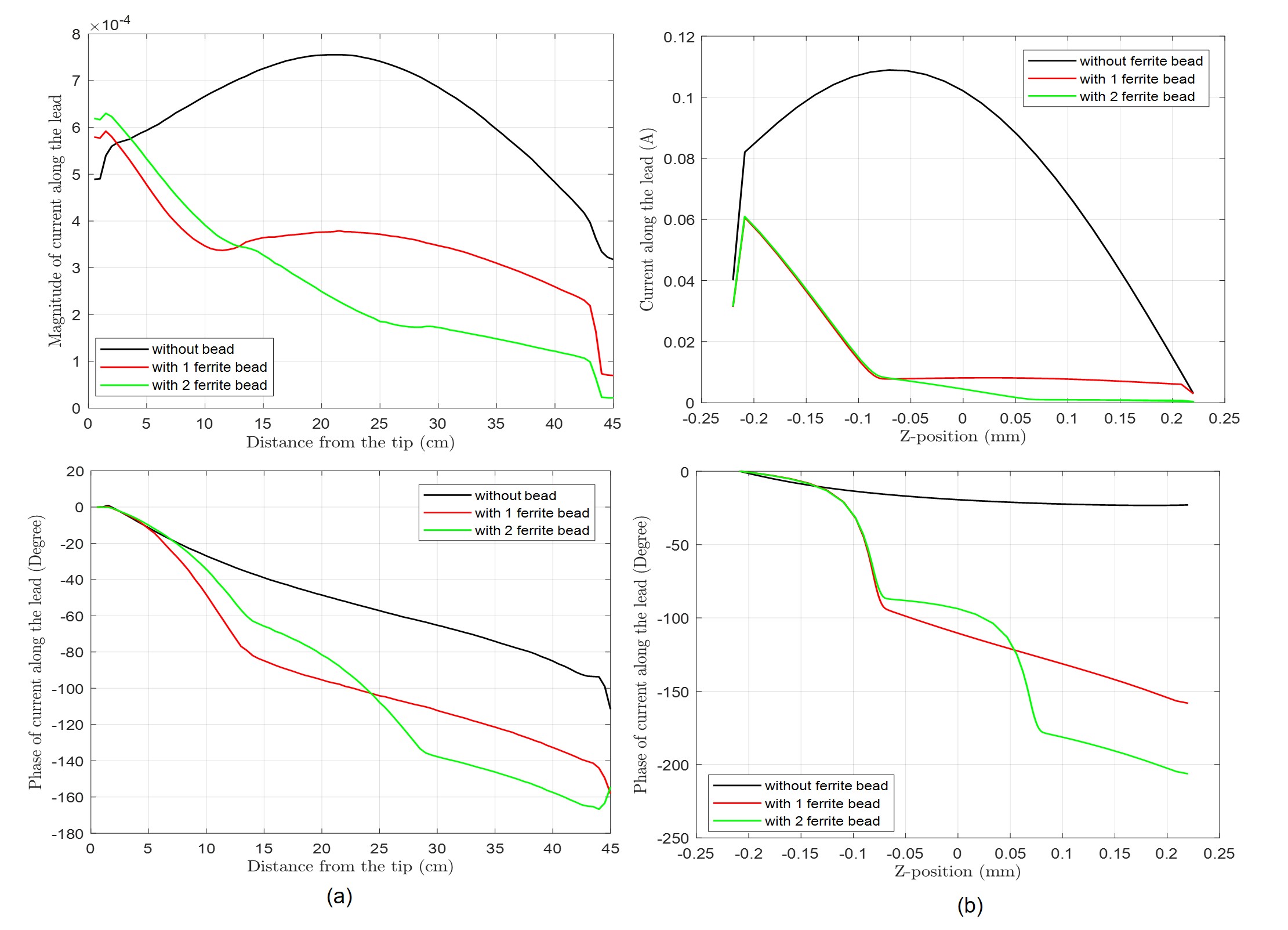
Figure 4. (a)
Measured transfer function inside the ASTM phantom (0.47S/m) (b) Transfer
function from the numerical simulation (0.47S/m)
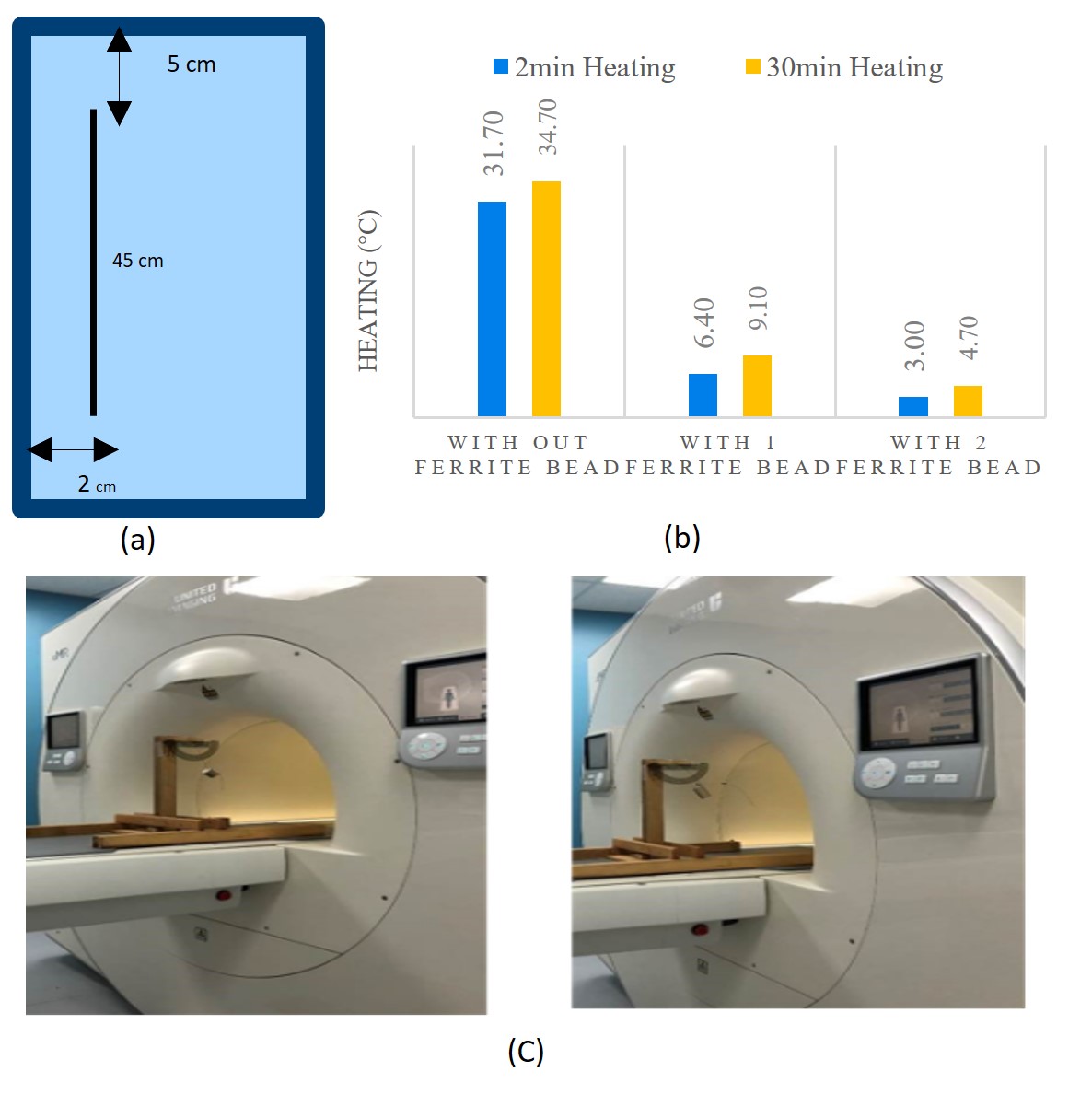
Figure
5. (a) A schematic diagram showing the placement of the wire inside the ASTM
phantom under 1.5T RF coil (b) Measured heating under the 1.5T RF coil (c)
Magnetic force measurement setup
DOI: https://doi.org/10.58530/2023/2863