2237
Magnetic Resonance Diffusion Imaging for Colorectal Liver Metastases: A Prospective Study for Model Comparison and Early Response Biomarker1Department of Radiology, Fudan University Shanghai Cancer Center, Shanghai, China, 2MR Application Development, Siemens Shenzhen Magnetic Resonance Ltd, Shenzhen, China, Shenzhen, China, 3MR Applications Predevelopment, Siemens Healthineers Ltd., Erlangen, Germany, Erlangen, Germany, 4Fudan University Shanghai Cancer Center, Shanghai, China
Synopsis
Keywords: Liver, Diffusion/other diffusion imaging techniques
This study investigated and compared the feasibility of whole tumor based texture analysis of various magnetic resonance diffusion imaging as early predictors of the clinical response to chemotherapy in patients with colorectal liver metastases (CRLM). The results showed that baseline DWI parameters and the follow-up changes of IVIM and DKI parameters can be conductive to predict the chemotherapeutic response of patients with CRLM. And Changes in D-parameters (Δ% DMean, Δ% D5th percentile, and Δ% DDiff-entropy) are superior to other diffusion related parameters. This suggests that DKI-related parameters could effectively predict the response in short period after treatment (2-3 weeks).Introduction
Accurate biomarkers in the early response to therapy are essential for patients with colorectal liver metastases (CRLM) so that patients are not exposed to potentially toxic side effects without any therapeutic benefit. And non-responding patients can be readily switched instead to alternative lines of treatment, as appropriate.The Response Evaluation Criteria in Solid Tumors (RECIST) criteria cannot accurately reveal antitumor activity, and the measurement is lagging. It does not truly reflect the early changes in tumor tissues, particularly those treated with target drugs that lack a prompt reduction in lesion size1-3. Several recent studies shows that DWI and IVIM parameters are promising tools for assessing the response in CRLM to chemotherapy with or without target drugs4-6.
However, most of these studies were retrospective and had small sample sizes, primarily focused on the preliminary correlation between parameters and efficacy after the whole treatment. Except for our team’s previously published articles7, which focused on the correlation between parameters and response with relatively small samples, few studies have focused on the assessment value of DKI sequences in CRLM. Furthermore, there is a lack of consensus regarding which imaging sequences or parameters are most informative for efficacy evaluation in CRLM.
This prospective study investigated the potential parameters from various magnetic resonance diffusion imaging modalities in combination with whole tumor histogram and texture analysis and assessed whether these multiparameter models were effective in the timely and accurate assessment of response in CRLM.
Method
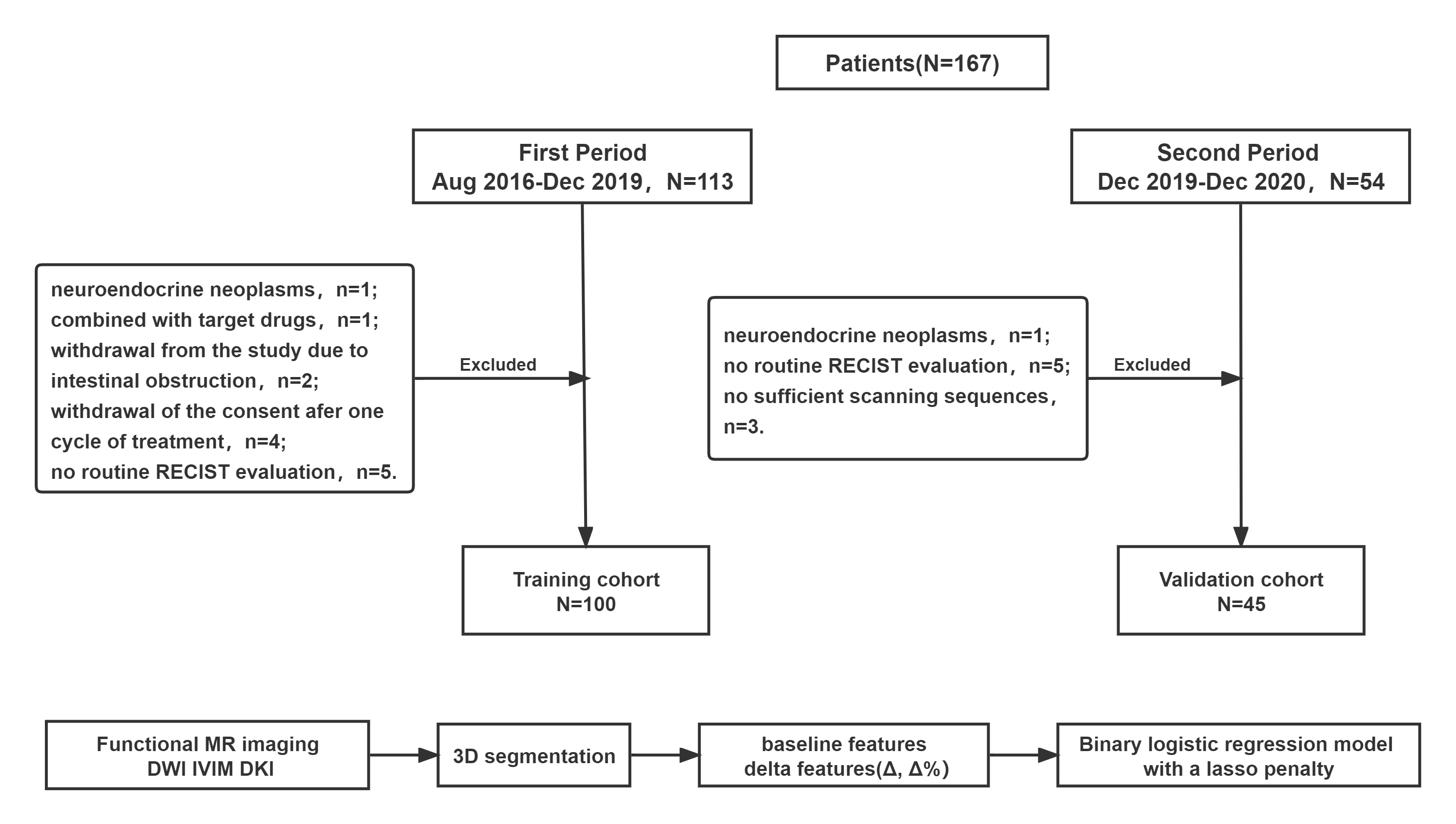
A total of 145 patients with CRLM were prospectively and consecutively enrolled in the study (Figure 1), and all underwent fMRI scans on a 3T scanner (MAGNETOM Skyra; Siemens Healthcare, Erlangen, Germany) within one week prior to chemotherapy (baseline) and two to three weeks after the treatment (follow-up). The therapy response was evaluated based on RECIST (Version 1.1) criteria.The original DWI, IVIM, and DKI images were imported into a prototype post-processing research application (MR Body Diffusion Toolbox; Siemens Healthcare, Erlangen, Germany), and the quantification parametric maps were generated by the software (DWI derived ADC maps; IVIM derived Dslow, D*, and f maps; and DKI derived D and K maps). The above parameter maps were imported into the prototype MR Multiparametric Analysis research application (Siemens Healthcare, Erlangen, Germany). The histogram and texture features of each parameter map from the whole-volume tumor were extracted by the software after semi-automatic lesion segmentation.
The above parameters were analyzed between responding and non-responding groups at baseline and follow-up, screening them by Lasso and fitting them with binary logistic regression models. The diagnostic efficacy of each model in the early prediction of CRLM efficacy was analyzed, and the corresponding ROC was drawn. The corresponding AUC and 95% CI were calculated.
Result
Of the 145 patients analyzed, 69 were in the responding group and 76 in the non-responding group. Among all models, the difference value based on the histogram and texture features of the DKI-derived parameters performed best for the early prediction of the efficacy of CRLM. The composition parameters of this DKI model included Δ% DMean, Δ% D5th percentile, and Δ% DDiff-entropy. Figure 2 shows parameter composition of each model.The AUC of the DKI model in the validation set reached 0.795 (95% CI 0.652-0.938). In the IVIM-derived parameters, the difference model based on D and D* performed best, and the AUC in the validation set reached 0.737 (95% CI 0.586-0.889). Finally, in the DWI sequence, the model comprising baseline features performed best, with an AUC of 0.699 (95% CI 0.537-0.86) in the validation set. Figure 3,4 shows the AUROC scores and ROC curves for each model.
Disscusion
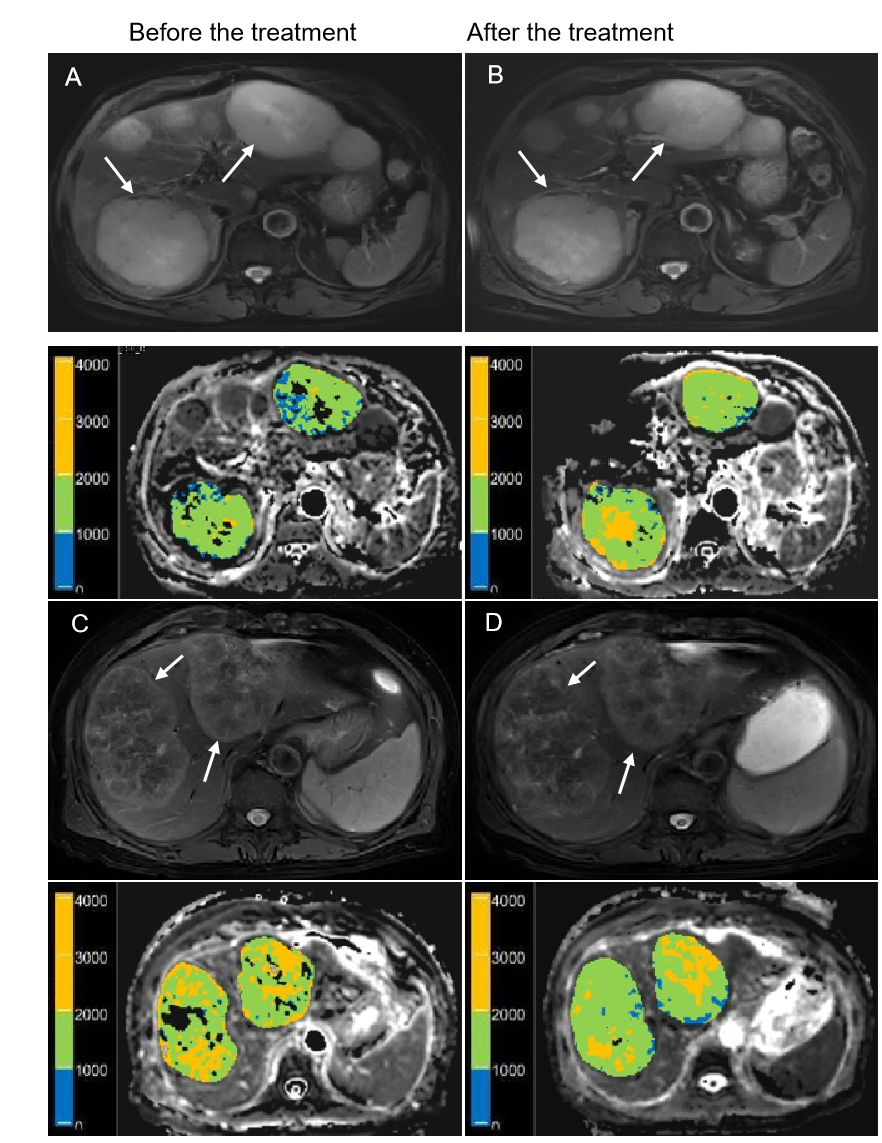
To the authors' knowledge, this is the first prospective study that investigated and compared multiparametric models based on 3D-segmented ROI acquired from various magnetic resonance diffusion imaging technologies aimed at examining the tumor response for CRLM in a sample size of more than 100, enabling accurate identification of progressive disease following two to three weeks of chemotherapy.Based on the results, the risk score for each patient was calculated: risk score= (-0.29758 * Δ% DMean) + (-0.25112 * Δ% D5th percentile) + (-0.25338 * Δ% DDiff-entropy). In addition, based on the median value of the risk score (0.104), patients were divided into a high- or low-risk group. The high-risk group is recommended for switching the regime. Figure 5 shows corresponding DKI-D parameter maps of a responding and non-responding patient. This factor provides more meaningful results and supports medical oncologists’ decision-making for better therapeutic efficiency at an early evaluation stage.
The early identification of non-responding patients could allow switching to alternative therapies, including target drugs, and participation in clinical trials; thus, clinical practice could become personalized to an individual’s tumor, and the prognosis could be improved8. In addition, a follow-up study is underway to modify regimens for better outcomes in those with poor outcomes based on the parameter model results.
Conclusion
Baseline DWI parameters and the follow-up changes of IVIM and DKI parameters are promising biomarkers for predicting the chemotherapeutic response of patients with CRLM. And changes in D-parameters (Δ% DMean, Δ% D5th percentile, and Δ% DDiff-entropy) performed best. This suggests that the application of DKI sequences could benefit the clinical management of CRLM.Acknowledgements
No acknowledgement found.References
1. Eisenhauer EA, Therasse P, Bogaerts J, et al. New response evaluation criteria in solid tumours: revised RECIST guideline (version 1.1). Eur J Cancer. 2009;45(2):228-247.
2. Tirkes T, Hollar MA, Tann M, Kohli MD, Akisik F, Sandrasegaran K. Response criteria in oncologic imaging: review of traditional and new criteria. Radiographics. 2013;33(5):1323-1341.
3. Gerwing M, Herrmann K, Helfen A, et al. The beginning of the end for conventional RECIST - novel therapies require novel imaging approaches. Nat Rev Clin Oncol. 2019;16(7):442-458.
4. Koh DM, Scurr E, Collins D, et al. Predicting response of colorectal hepatic metastasis: value of pretreatment apparent diffusion coefficients. AJR Am J Roentgenol. 2007;188(4):1001-1008.
5. Uutela A, Ovissi A, Hakkarainen A, et al. Treatment response of colorectal cancer liver metastases to neoadjuvant or conversion therapy: a prospective multicentre follow-up study using MRI, diffusion-weighted imaging and 1H-MR spectroscopy compared with histology (subgroup in the RAXO trial). ESMO Open. 2021;6(4):100208.
6. Zhu HB, Xu D, Zhang XY, Li XT, Xing BC, Sun YS. Prediction of Therapeutic Effect to Treatment in Patients with Colorectal Liver Metastases Using Functional Magnetic Resonance Imaging and RECIST Criteria: A Pilot Study in Comparison between Bevacizumab-Containing Chemotherapy and Standard Chemotherapy. Ann Surg Oncol. 2022;29(6):3938-3949.
7. Zhang H, Li W, Fu C, et al. Comparison of intravoxel incoherent motion imaging, diffusion kurtosis imaging, and conventional DWI in predicting the chemotherapeutic response of colorectal liver metastases. Eur J Radiol. 2020;130:109149.
8. Cao Y, Tseng CL, Balter JM, Teng F, Parmar HA, Sahgal A. MR-guided radiation therapy: transformative technology and its role in the central nervous system. Neuro Oncol. 2017;19(suppl_2):ii16-ii29.
Figures
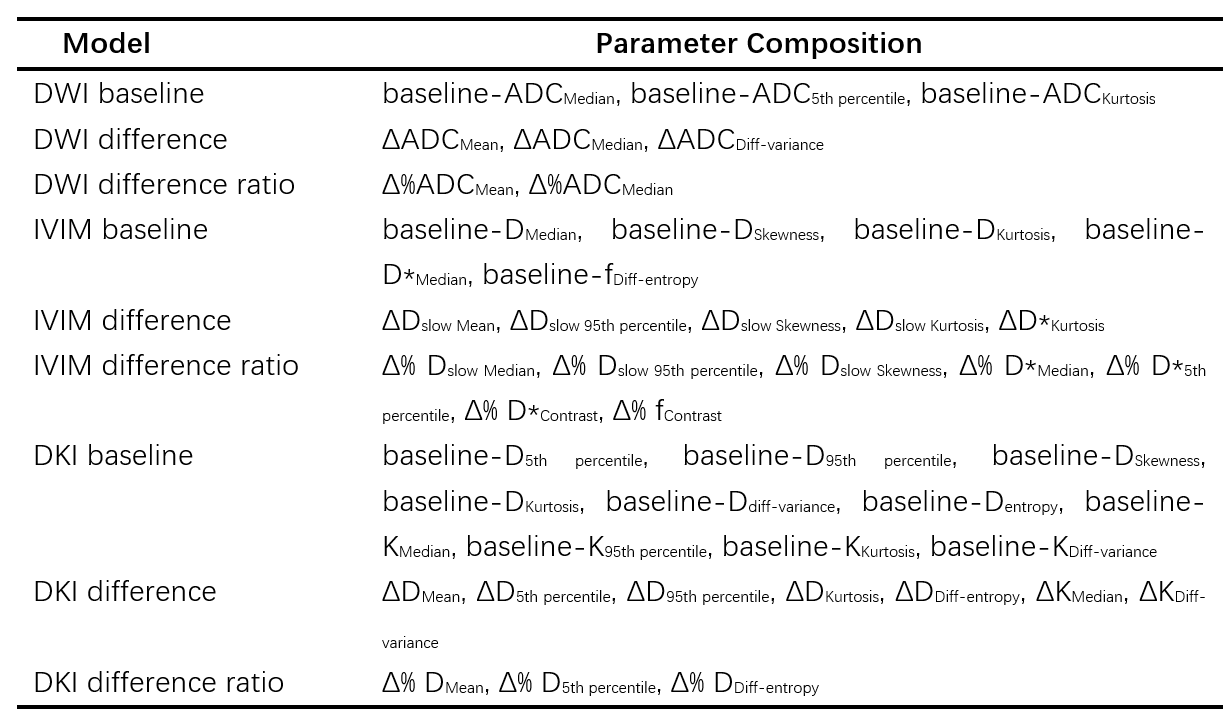
Parameter composition of different models based on baseline and follow-up analysis of various diffusion-related functional sequences.
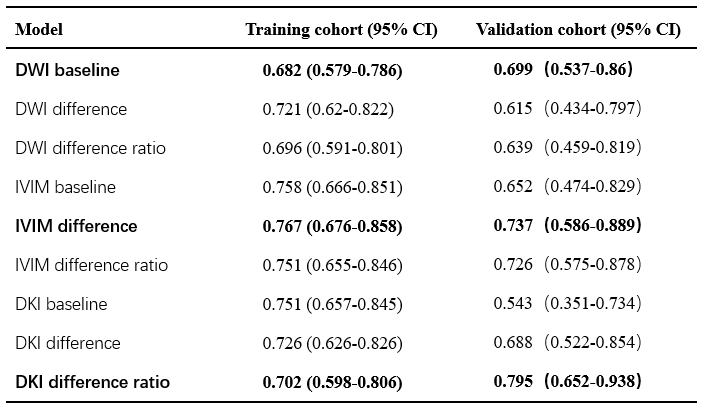
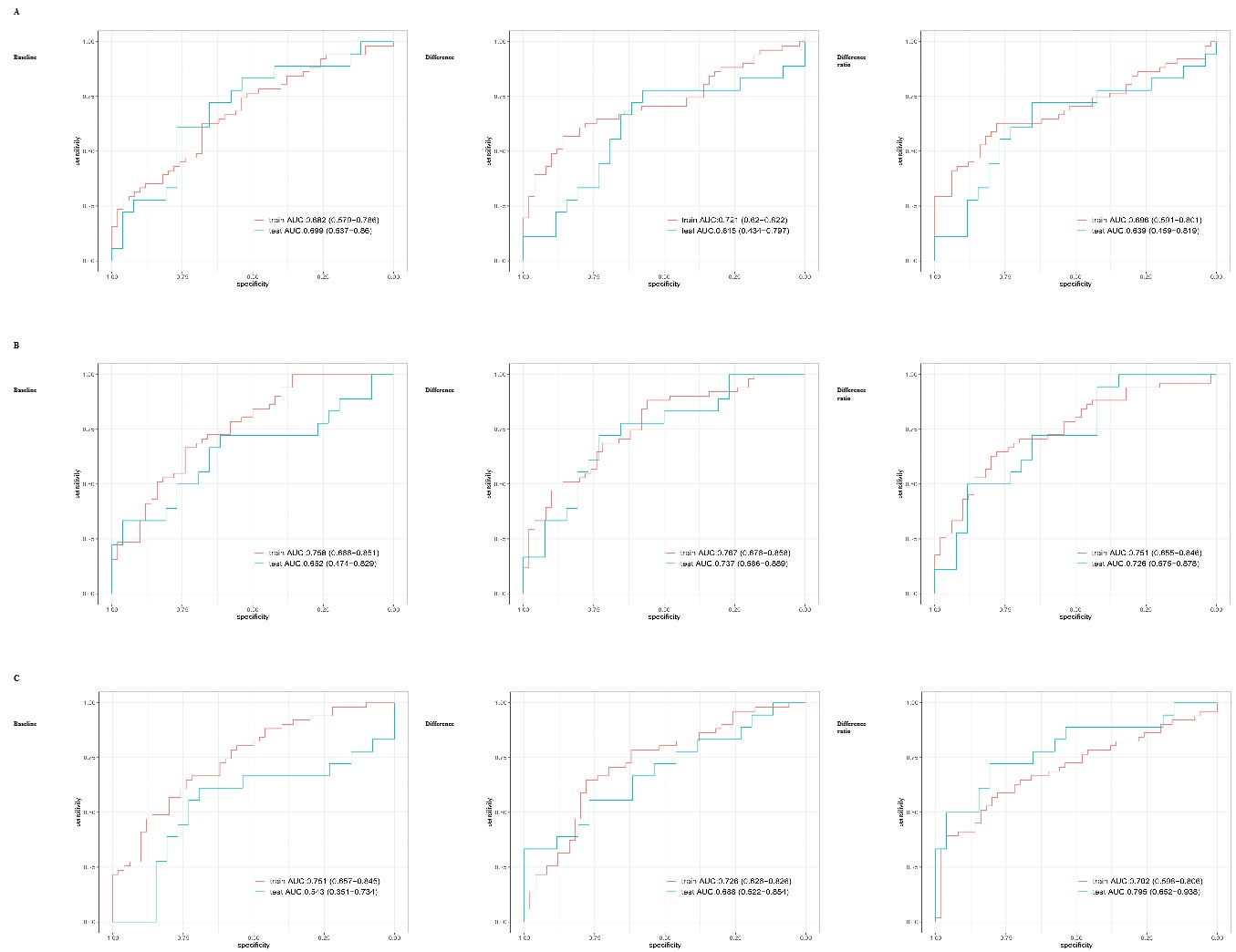
ROC curves of MRI signature from different models. The green line denotes the ROC curve based on the training cohort, and the red line denotes the ROC curve based on the validation cohort. (A) ROC curves of DWI-based models; (B) ROC curves of IVIM-based models; (C) ROC curves of DKI-based models.