2223
A Frequency Modulation HArd Pulse ENcoding Sequence for Ultra-Short Echo Time High-Resolution Three-Dimensional MR Imaging1Key Laboratory of Biological Effects and Safety, National Center for Nanoscience and Technology, beijing, China, 2School of Future Technology, University of Chinese Academy of Sciences, Beijing, China, 3Wandong Medical Inc, Beijing, China, Beijing, China, 4Department of Radiology, Wenzhou Central Hospital, Affiliated Dingli Clinical Institute of Wenzhou Medical University, Wenzhou, China
Synopsis
Keywords: Pulse Sequence Design, Lung, hard pulse encoding, variable TE, frequency modulation, spiral
Due to its short T2* value and low proton density, MR imaging of the lung is quite challenging. Recently, ultra-short echo time (UTE) techniques, such as stack-of-spiral, were used to conduct lung MRI with good image quality. Here, based on stack-of-spiral, a frequency modulation hard pulse encoding (HAPEN) 3D UTE was proposed to optimize the echo time of different phase encoding steps in the slice direction. As a result, HAPEN can achieve shorter TE and get better SNR in human lung MRI compared to the traditional stack-of-spiral UTE sequence.Introduction
Because of its free of ionizing radiation, MRI was thought to be a good technique for lung imaging of patients required longitudinal follow-ups [1]. However, due to its short T2* value and low proton density, MR imaging of the lung is still challenging. Recently, new techniques have been developed to improve image quality and reduce scan time. Several studies have demonstrated that the 3D UTE technique with the stack-of-spiral acquisition enabled high-resolution morphological lung imaging and was less sensitive to motion effect than typical radial acquisition [2]. However, the time efficiency of the stack-of-spiral acquisition was still limited due to a large number of phase encoding steps in the slice direction [3]. In addition, a refocusing gradient was required if a slice-selective rf pulse was used, which needed a longer RF pulse than non-selective excitation [4]. Those properties limited the echo time of this technique. Here, a frequency modulation hard pulse encoding (HAPEN) 3D stack-of-spiral technique was proposed to optimize the echo time of different phase encoding steps in the slice direction. The optimization of TE was implemented in the following ways. First, a hard pulse was used for signal excitation, and the hard pulse will move step by step during a fixed maximum Gz to speed up slice encoding and minimize T2* decay. Second, the in-plane spiral trajectories were sampled immediately after the end of each hard pulse excitation. Third, frequency modulations are used to broaden the excitation range in the case of a large gradient. Both simulation and in-vivo imaging were performed to compare the HAPEN and traditional stack-of-spiral technique [5].Methods
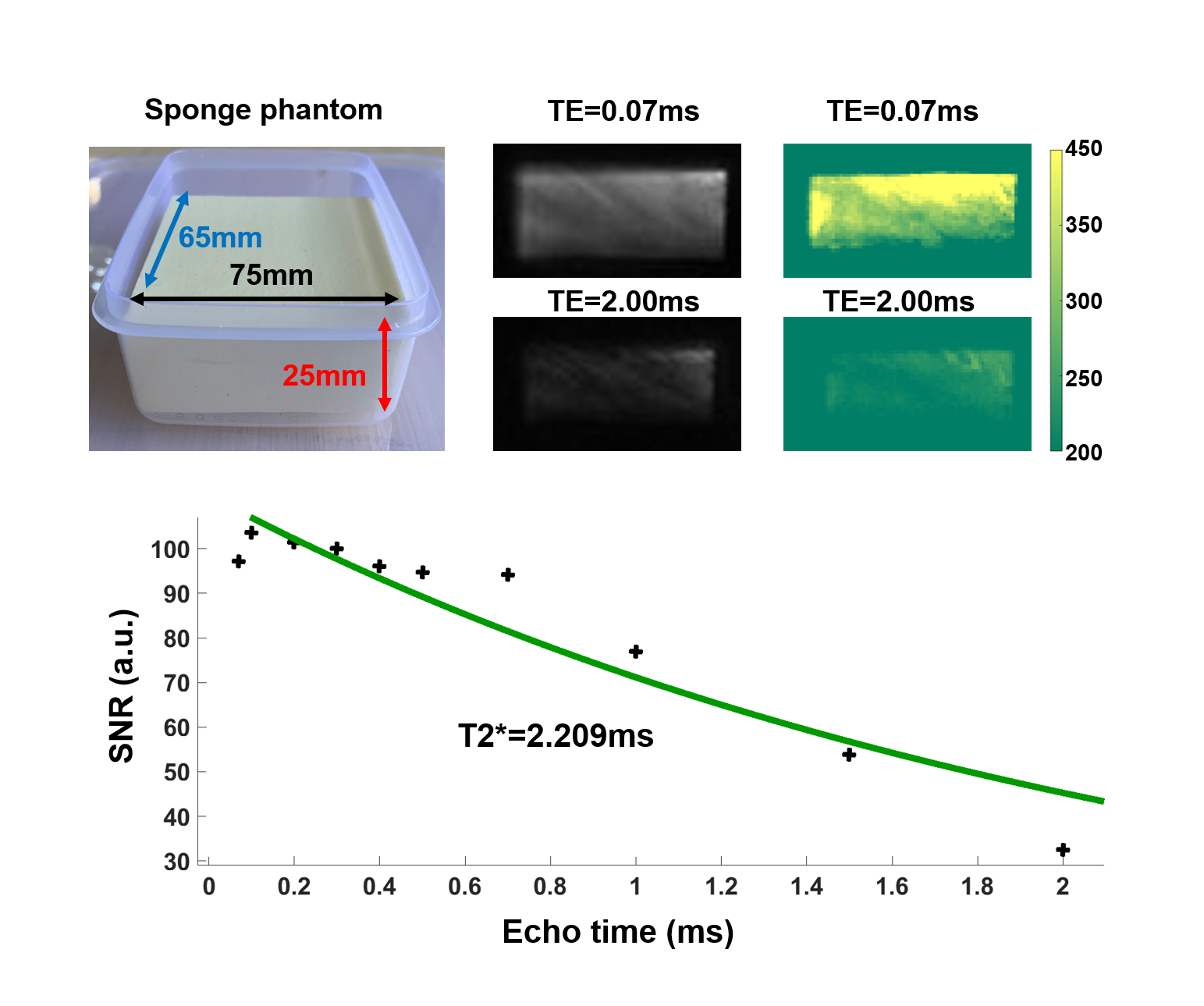
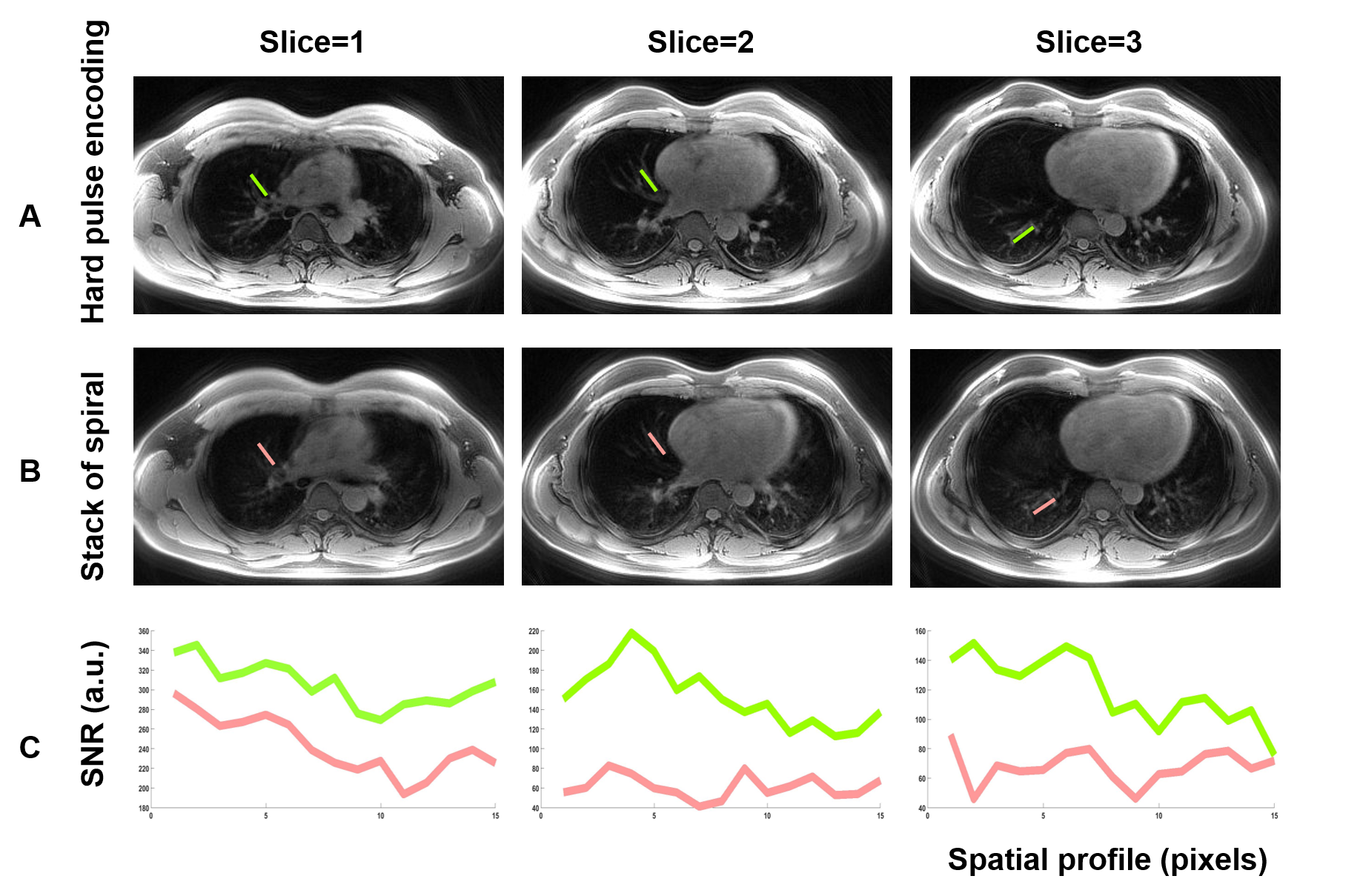
This study was approved by the National Center for Nanoscience and Technology Ethics Board, and written informed consent was given by all study participants. All studies were performed on an i_Space 1.5 T MRI scanner (Wandong Medical Inc, Beijing, China) with an 8-channel anterior body coil in combination with an 8-channel posterior spine coil. A sponge phantom was used to verify the ability to image the short T2 component of the HAPEN sequence. The cleaning sponge was cut to a dimension of 75 x 65 x 25mm3 and filled with water volumes varying from about 30%. One healthy volunteer was imaged with a HAPEN sequence and traditional stack-of-spiral. The echo time was 0.07ms and 0.2ms, respectively. The spatial resolution for both sequences was 1.2x1.2x7.0mm3. HAPEN for the human study was acquired for FOV=160 x 160mm2, TR = 50ms TE = 0.07ms, flip angle = 8°, slice thickness=7mm, spiral arms = 96, duration of readouts = 3.5ms. All images were processed using MATLAB.Results
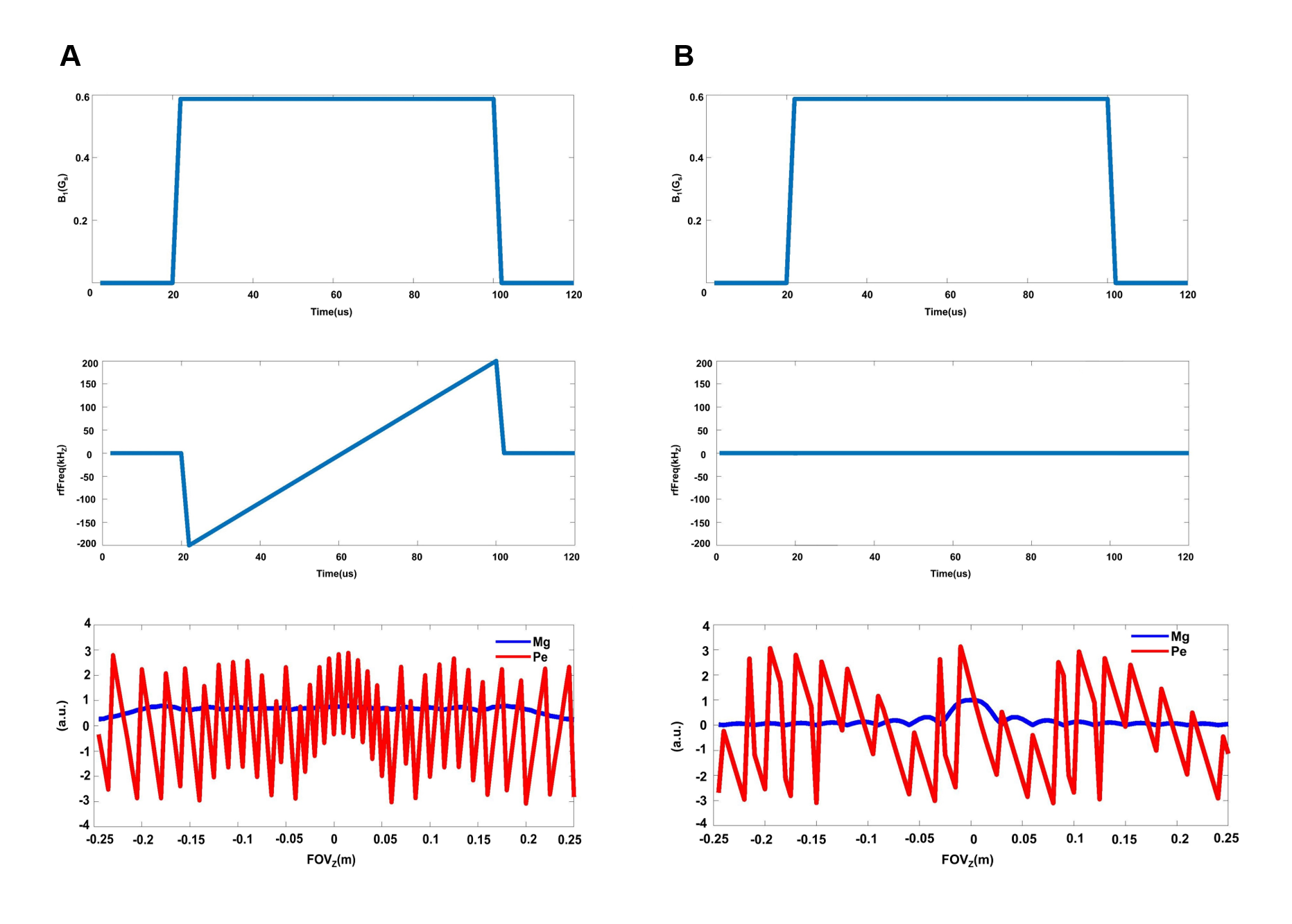
The details of the HAPEN 3D UTE sequence are illustrated in Figure 1. Under the same hardware conditions, the HAPEN sequence has a faster slice encoding speed and shorter echo time than the traditional stack-of-spiral sequence. Figure 2 shows that the excitation range is more extensive and uniform after adding frequency modulation. The results of sponge phantom imaging are demonstrated in Figure 3. As it was shown, the capability of the proposed HAPEN sequence to image short T2 component was verified. The fitted T2* value of the sponge was 2.209ms. As depicted in Figure 4, higher SNR and better image quality of HAPEN sequence were shown in in-vivo lung imaging compared to the traditional stack-of-spiral.Discussion and conclusion
This study proposed a HAPEN sequence for a rapid encoding technique of high-resolution UTE lung imaging using clinical MRI scanners. The major advantage of the HAPEN sequence over traditional stack-of-spiral acquisition is its time-efficient slice encoding to optimize the echo time of different phase encoding. These features make the HAPEN sequence suitable for imaging tissues with short T2 relaxation times. Future studies will focus on the clinical application of this new technique in patients with pulmonary disease.Acknowledgements
This work was supported by National Natural Science Foundation of China (NO.61971151) and Wandong Medical.References
1. Wild JM, Marshall H, Bock M, et al. MRI of the lung (1/3): methods. Insights Imaging. 2012; 3: 345–53. 2. Willmering MM, Robison RK, Wang H, Pipe JG, Woods JC. Implementation of the FLORET UTE sequence for lung imaging. Magn Reson Med. 2019; 82: 1091-1100.
3. Gai ND, Malayeri A, Agarwal H, Evers R, Bluemke D (2016) Evaluation of optimized breath-hold and free-breathing 3D ultrashort echo time contrast agent-free MRI of the human lung. J Magn Reson Imaging 43:1230–1238.
4. Qian Y, Boada FE. Acquisition-weighted stack of spirals for fast high-resolution three-dimensional ultra-short echo time MR imaging. Magn Reson Med. 2008; 60: 135-145.
5. F. Liu, J.V. Velikina, W.F. Block, R. Kijowski, A.A. Samsonov. Fast Realistic MRI Simulations Based on Generalized Multi-Pool Exchange Tissue Model. IEEE Transactions on Medical Imaging. 2016; 36(2): 527-537.
Figures
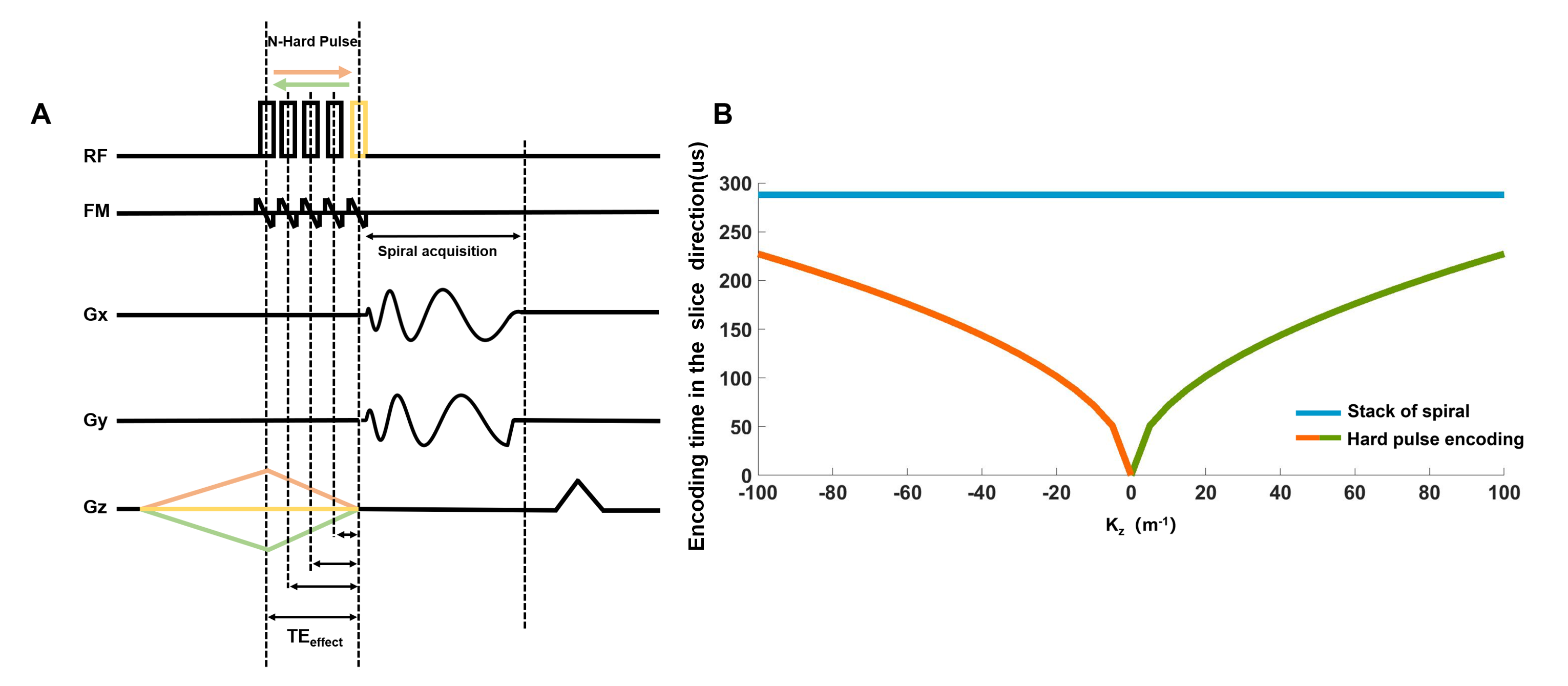
Figure 1: A. Conceptual scheme of frequency modulation hard pulse encoding (HAPEN) 3D UTE sequence. A movable hard pulse excited the whole slab, which will move step by step during the slice encodings to minimize T2* decay. Spiral gradients, Gx and Gy, are played out immediately after the slice encodings. B. Comparison of echo times between HAPEN sequence and traditional stack-of-spiral 3D UTE sequence under the same hardware conditions.