2050
Simulation of Short Breath-hold Steady State MultiParameter MRS in Liver.
Gavin Hamilton1, Walter C Henderson1, Danielle N Batakis1, Lael Ceriani1, Ashley L Louie1, Yesenia Covarrubias1, Celene Gonzalez1, Michael S Middleton1, Scott B Reeder2, Kathryn J Fowler1, and Claude B Sirlin1
1Liver Imaging Group, Department of Radiology, University of California San Diego, San Diego, CA, United States, 2Department of Radiology, University of Wisconsin, Madison, Madison, WI, United States
1Liver Imaging Group, Department of Radiology, University of California San Diego, San Diego, CA, United States, 2Department of Radiology, University of Wisconsin, Madison, Madison, WI, United States
Synopsis
Keywords: Liver, Spectroscopy
To permit simultaneous T1w, T1f, T2w, T2f and proton density fat fraction (PDFF) estimation, we developed a single-average, 21 s, single-breath-hold, Steady-state, Multi-Parameter MRS (SMP MRS) sequence. However, a 21 s breath-hold may be challenging especially children, such as pediatric subjects, so we simulated a shorter 12 s breath-hold sequence by removing the longer TR and TE values. We found good agreement for T1w, T2w and PDFF between the full 21 s SMP and simulated 21 s sequences, suggesting the shorter 12 s SMP MRS can be run instead of the full 21 s sequence.Introduction
To permit simultaneous T1w, T1f, T2w, T2f and proton density fat fraction (PDFF) estimation, a single-average, 21 second single-breath-hold, Steady-state, Multi-Parameter MRS (SMP MRS) sequence (SMP-MRS) was developed, which in a single acquisition acquires both variable TR spectra at fixed TE, and variable TE spectra at fixed TR (1) (Table 1). However, a 21 s breath-hold can prove challenging for some subjects, especially children, and a shorter breath-hold would be preferable. In this study to simulate a shorter 12 second breath-hold sequence, we remove the longer TR and TE values from the calculation of T1w, T2w and PDFF, and compare the full SMP and simulated short breath-hold SMP (sSMP) MRS sequences.Methods
36 exams were acquired at our site in 18 adult subjects (mean age 42 yrs, range 26-62 yrs, 1 male, 17 female) undergoing weight loss surgery. Subjects provided written informed consent in this IRB-approved, HIPAA-compliant study and underwent MRS at 3 Tesla (GE Signa EXCITE HD, GE Healthcare, Waukesha, WI). After conventional imaging, a 20x20x20 mm voxel was selected within the liver that avoided liver edges as well as large biliary or vascular structures and an SMP MRS sequence (timings in Table 1), was acquired in a single 21 s breath-hold. Spectra from individual channels were combined using singular value decomposition (2). A single experienced observer analyzed the spectra using the AMARES algorithm (3) included in the MRUI software package (4). The results of the MRUI analysis were saved in a text file and analyzed using custom Matlab routines. The multi-TR-TE results were analyzed with a custom Matlab routine that non--linearly fitted the measured peaks area to the standard equation [S = S0(1-exp(-TR/T1)).exp(-TE/T2)] to give values of T1w, T1f, T2w and T2f and PDFF (1). To simulate the sSMP MRS sequence, the Matlab routines had TR 2000, 1500, 1250 ms and TE 50, 70, 90 and 110 ms were removed from the calculation to give a simulated 12 s breath-hold. The T1w, T2w and PDFF values from the simulated sSMP sequence were compared to the full breath-hold MRS sequence.Results
Mean PDFF was not different and was strongly correlated for the full and simulated short MRS sequences (PDFF: mean SMP 6.2%, sSMP 6.2%, p = 0.66; sSMP PDFF = 0.97 SMP PDFF + 0.24%). The relationships between the two sequences for T1w and T2w are shown in Figures 1 and 2. There was no difference in the two sequences for T1w and the values were strongly correlated (T1w: mean SMP 1,037 ms, sSMP 1,038 ms, p = 0.67; sSMP T1w = 0.989 SMP T1w + 11.9 ms). For T2w, there was a small difference, when comparing SMP and estimated sSMP values and the level of agreement though still very high was slightly poorer than in the other quantities (T2w: mean SMP 27.2 ms, sSMP 27.7 ms, p < 0.001; sSMP T2w = 1.18 SMP T2w - 4.43 ms). However, this small difference is probably not clinical meaningful.Conclusion
The good agreement between the full SMP and simulated sSMP sequences suggests that the 12 s sSMP sequence can be run instead full 21 s SMP sequence allowing easier breath-holds and reducing breathing motion induced errors.Acknowledgements
No acknowledgement found.References
1) Hamilton G, Middleton MS, Hooker JC, et al. In vivo breath-hold 1H MRS simultaneous estimation of liver proton density fat fraction, and T1 and T2 of water and fat, with a multi-TR, multi-TE sequence. J Magn Reson Imaging 2015;42:1538–43.
2) Bydder M, Hamilton G, Yokoo T, Sirlin CB. Optimal phased-array combination for spectroscopy. Magn Reson Imaging 2008;26:847-850.
3) Vanhamme L, van den Boogaart A, Van Huffel S. Improved Method for Accurate and Efficient Quantification of MRS Data with Use of Prior Knowledge. J Magn Reson 1997;129:35-43.
4) Naressi A, Couturier C, Devos JM, et al. Java-based graphical user interface for the MRUI quantitation package. Magn Reson Mater Physics, Biol Med 2001;12:141-152.
Figures
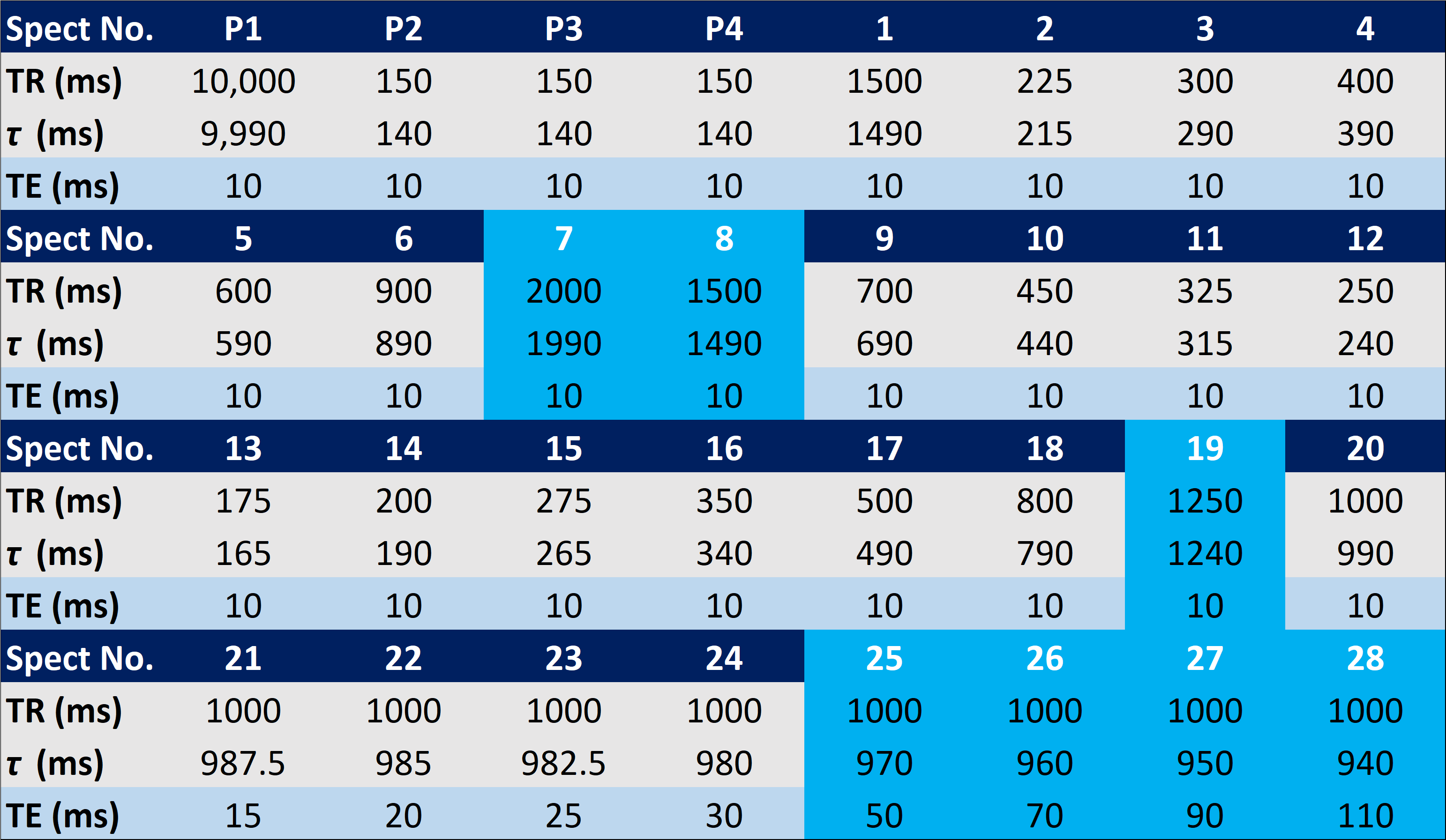
Table 1 Timings of the Steady-state, Multi-Parameter MRS (SMP MRS)
sequence. The values removed to simulate
the shorter 12 s breath-hold sSMP sequence are highlighted.
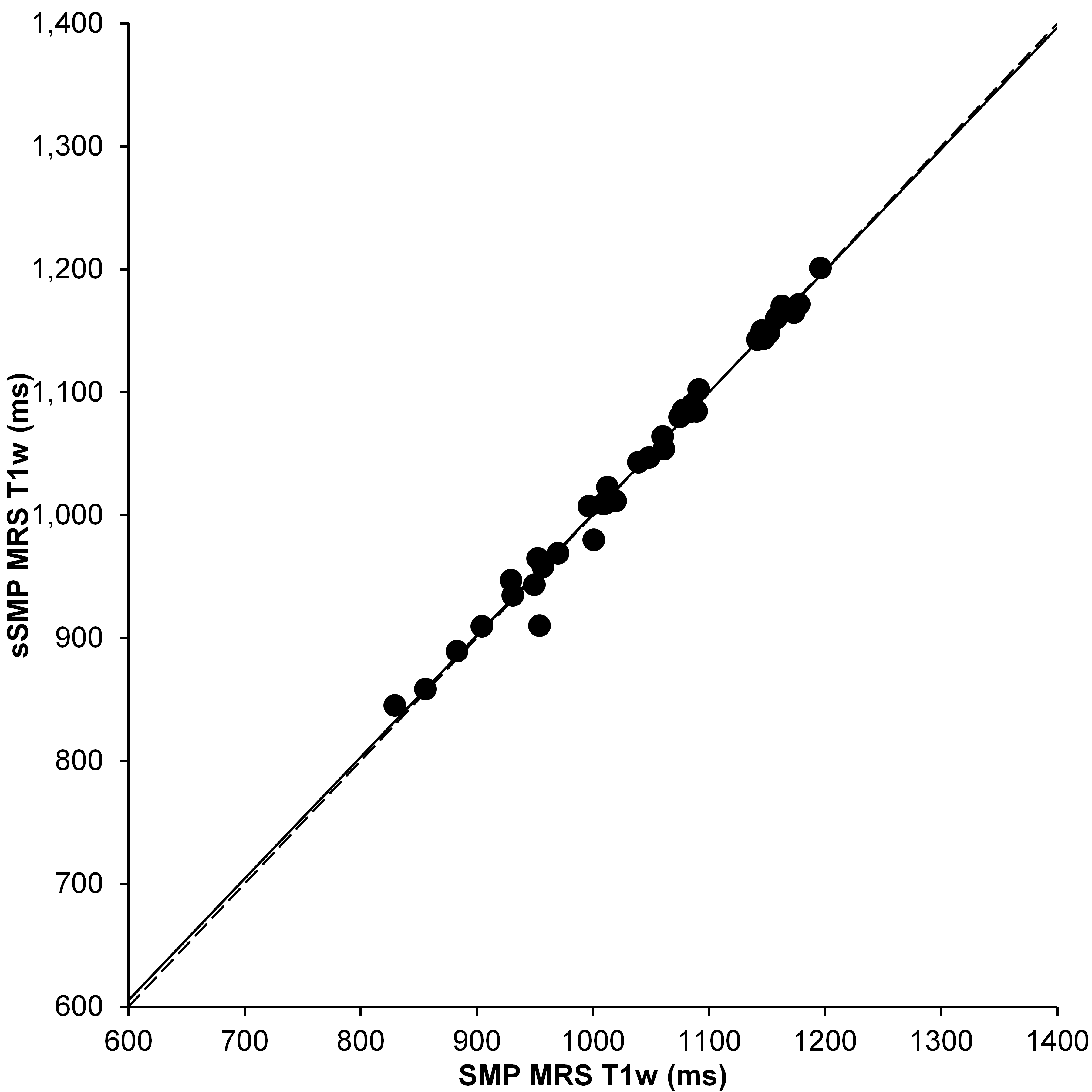
Figure 2 Comparison of the T1w
estimated by the SMP MRS and simulated sSMP MRS sequences. Dotted line indicates unity.
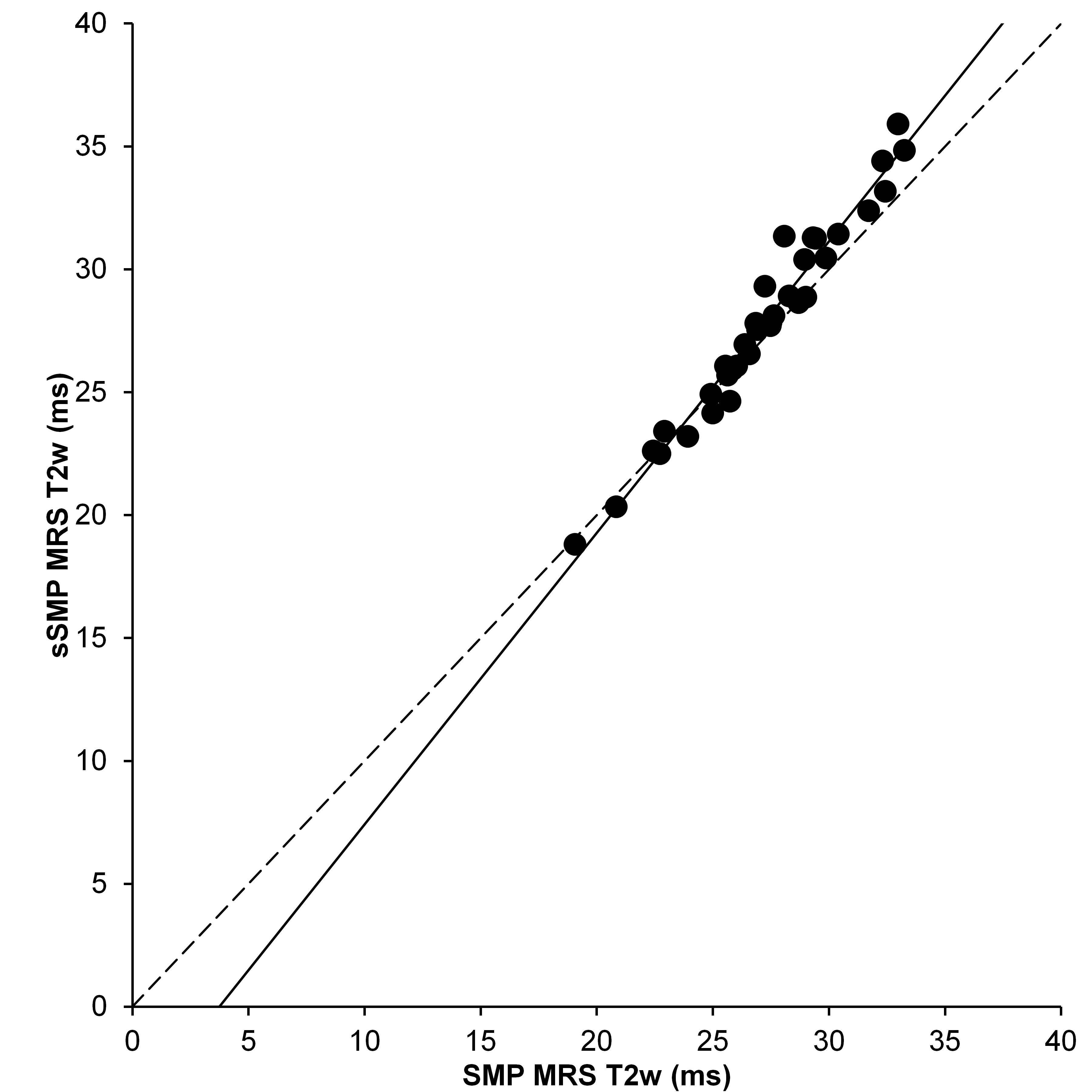
Figure 2 Comparison
of the T2w estimated by the SMP MRS and simulated sSMP MRS sequences. Dotted line indicates unity.
DOI: https://doi.org/10.58530/2023/2050