1184
Hybrid multi-delay PCASL of time-encoded and variable-TR schemes for the assessment of cerebral perfusion in Moyamoya disease1Department of Molecular Imaging & Diagnosis, Graduate School of Medical Sciences, Kyushu University, Fukuoka, Japan, 2Philips Japan, Tokyo, Japan, 3Departments of Radiology Informatics and Network, Graduate School of Medical Sciences, Kyushu University, Fukuoka, Japan, 4Department of Clinical Radiology, Graduate School of Medical Sciences, Kyushu University, Fukuoka, Japan, 5Division of Radiology, Department of Medical Technology, Graduate School of Medical Sciences, Kyushu University, Fukuoka, Japan, 6Department of Radiological Technology, Faculty of medical sciences, Kyoto College of Medical Science, Kyoto, Japan, 7C.J. Gorter MRI Center, Department of Radiology, Leiden University Medical Center, Leiden, Netherlands, 8Philips Healthcare, Best, Netherlands
Synopsis
Keywords: Stroke, Perfusion, Arterial Spin Labeling
We have developed a multi-delay PCASL acquisition with a hybrid scheme, combining time-encoded and variable-TR schemes. This hybrid scheme combines the advantage of high SNR obtained with the time-encoded scheme with the timing flexibility of the variable-TR scheme. We investigated the abilities for CBF (cerebral blood flow) and ATT (arterial transit time) quantification in Moyamoya disease. The hybrid scheme provided a higher temporal SNR than the other two schemes. Although slight differences in the CBF and ATT measurements were found between the hybrid and the other two schemes, the differences were acceptable, considering the strong correlations and excellent agreements.Introduction
Moyamoya disease is a cerebrovascular occlusive disease characterized by progressive steno-occlusion of the circle of Willis, together with the formation of Moyamoya vessels. The indication for revascularization surgery is clinically determined by cerebral perfusion status measured by SPECT or PET1. Assessment of the cerebral perfusion status can also be obtained non-invasively, with ASL-MRI, but given the long arterial transit time (ATT) in Moyamoya disease, a multi-delay ASL approach is necessary2. Multi-delay ASL can be acquired using a time-encoded PCASL, which is time-efficient and can provide a high SNR. However, timing flexibility is limited due to the sub-bolus concept that doesn’t allow overlap and this can hamper the quantification accuracy as insufficient late time-points are acquired to reliably fit the Buxton curve. We previously reported a variable-TR PCASL as an alternative to time-encoded PCASL, allowing arbitrary label duration (LD) and post-labeling delay (PLD) combinations, which is useful in assessing cerebral perfusion in this disease3, 4. In this abstract we present the hybrid scheme, which is a combination of time-encoded and variable-TR schemes. This hybrid approach is expected to exploit both the advantages of high SNR timing flexibility. The present study aims to investigate the quantitative ability of the hybrid scheme by comparing to the two established multi-delay PCASL techniques in assessing cerebral perfusion in Moyamoya disease.Methods
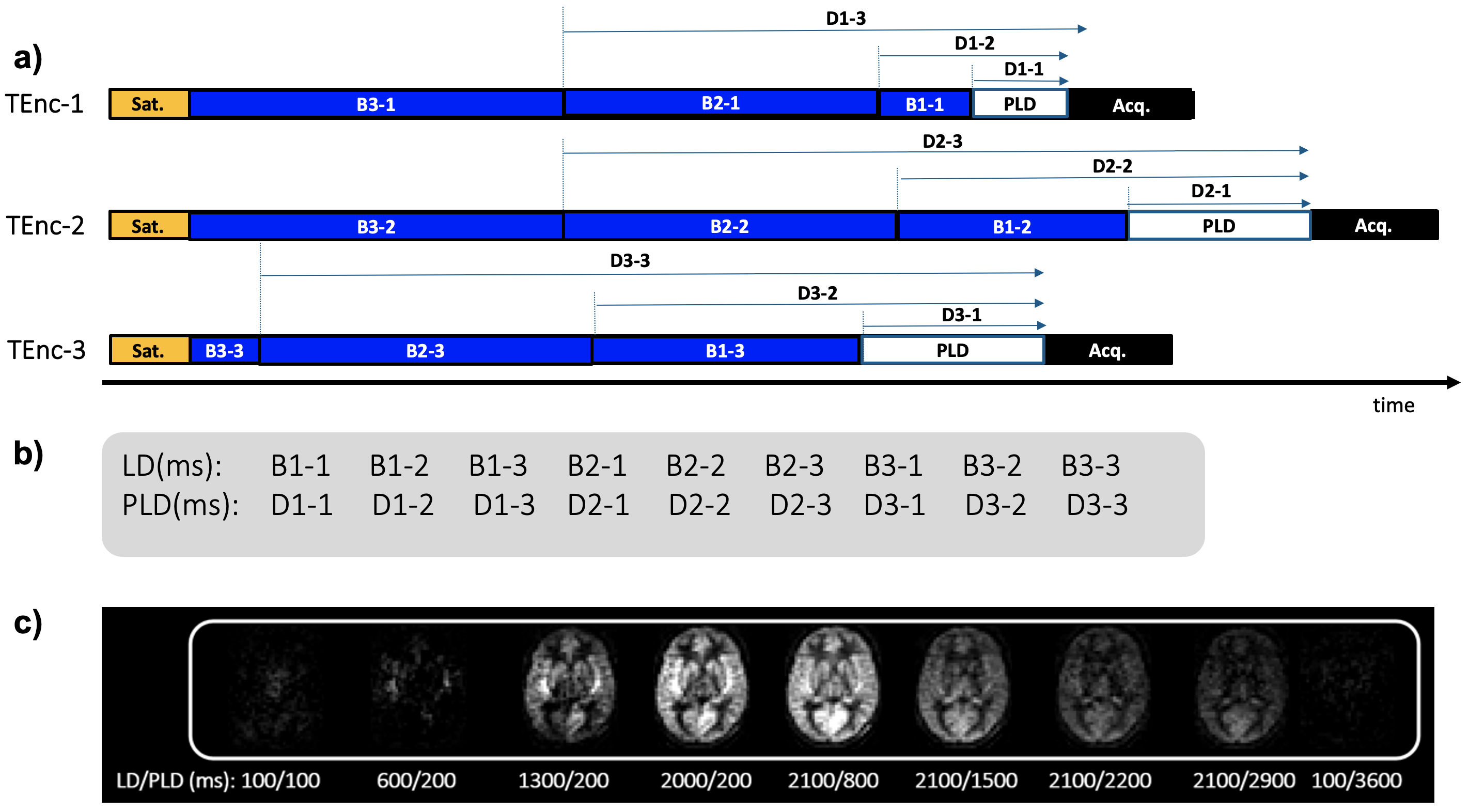
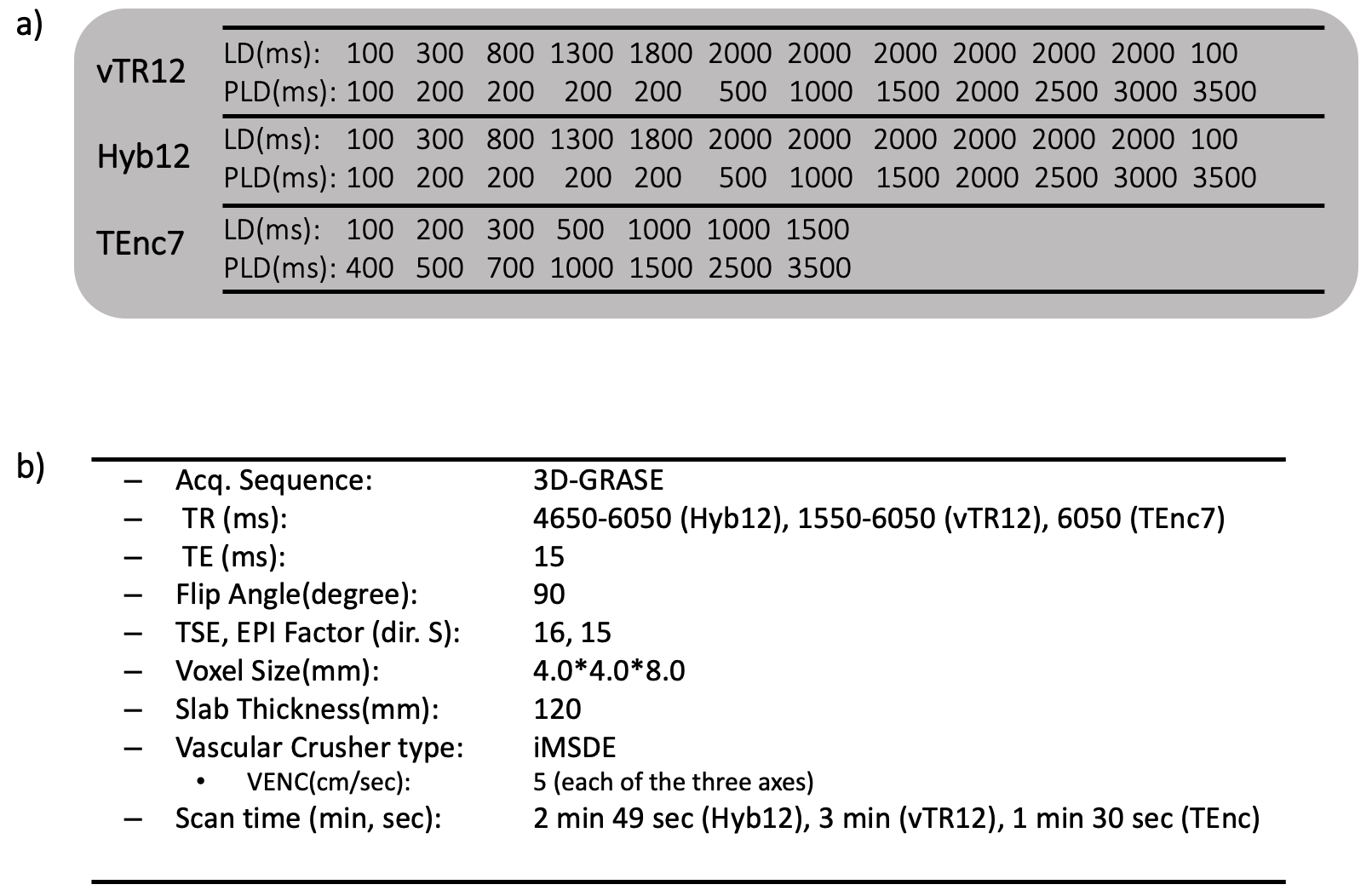
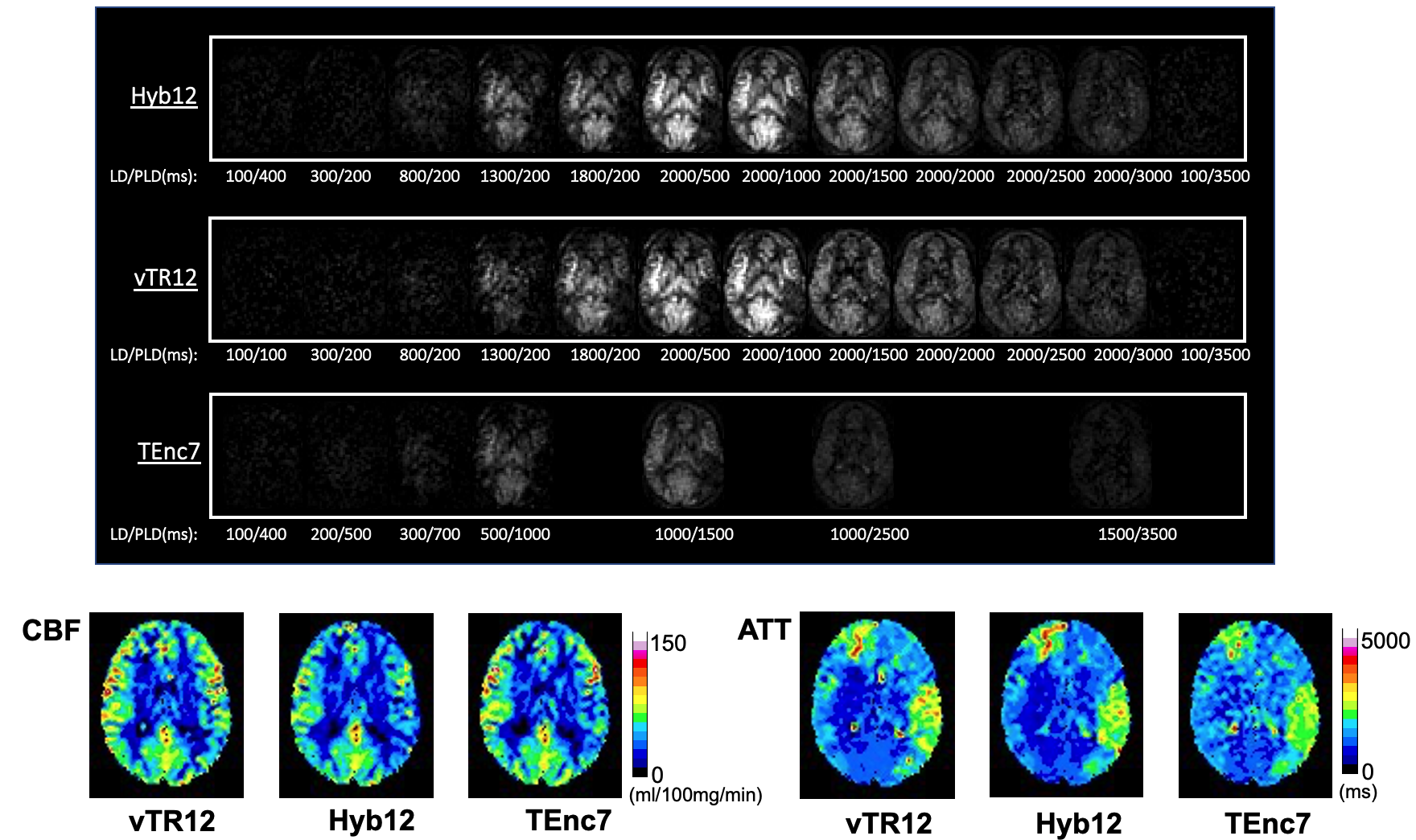
Subjects: Thirteen consecutive inpatients with Moyamoya disease (28.0±25.4-year-old, six male and seven female) were included.Hybrid PCASL Scheme: The schematic drawings of the hybrid scheme are shown in Figure 1. The hybrid scheme comprises three or four time-encoded schemes with three LD blocks (Figure 1a). For displaying purpose, the ASL maps are rearranged (Figure 1b). In the first half, the LD is lengthened while the PLD is shortened and fixed, and in the second, the LD is fixed at the maximum, and the PLD is lengthened. The final phase is a super-delay phase obtained for noise measurements.MRI: A 3T scanner (Ingenia Elition, Philips) with a 32-channel head coil was used. The MRI-protocol included: variable-TR scheme with 12 delays (vTR12), time-encoded scheme with seven delays (TEnc7), and hybrid scheme with 4×3(12) delays (Hyb12). The actual LDs, PLDs, and other imaging parameters are summarized in Figure 2.
SNR, ATT, and CBF Quantification: In the multi-delay series, the highest three ASL signals along the time axis were selected and averaged voxel by voxel. The SD of the residual signal in gray matter in the super-delay phase was calculated for the variable-TR and hybrid schemes. The SNR was calculated by dividing the averaged ASL signal by the SD. CBF and ATT were calculated using a Buxton general kinetic model.
Image Analysis: All maps were normalized to the Montreal Neurological Institute space template. The averaged SNR, CBF, and ATT in the gray matter region were compared among the three schemes. Temporal-SNR (tSNR), the SNR divided by the square root of the scan time, was used for fair comparisons. Volumes-of-interest obtained from a vascular territory atlas template. The measurements were performed in the anterior cerebral artery (ACA), middle cerebral artery (MCA), and posterior cerebral artery (PCA) territories—with subdivision into proximal, middle, and distal regions—for both left and right.
Results
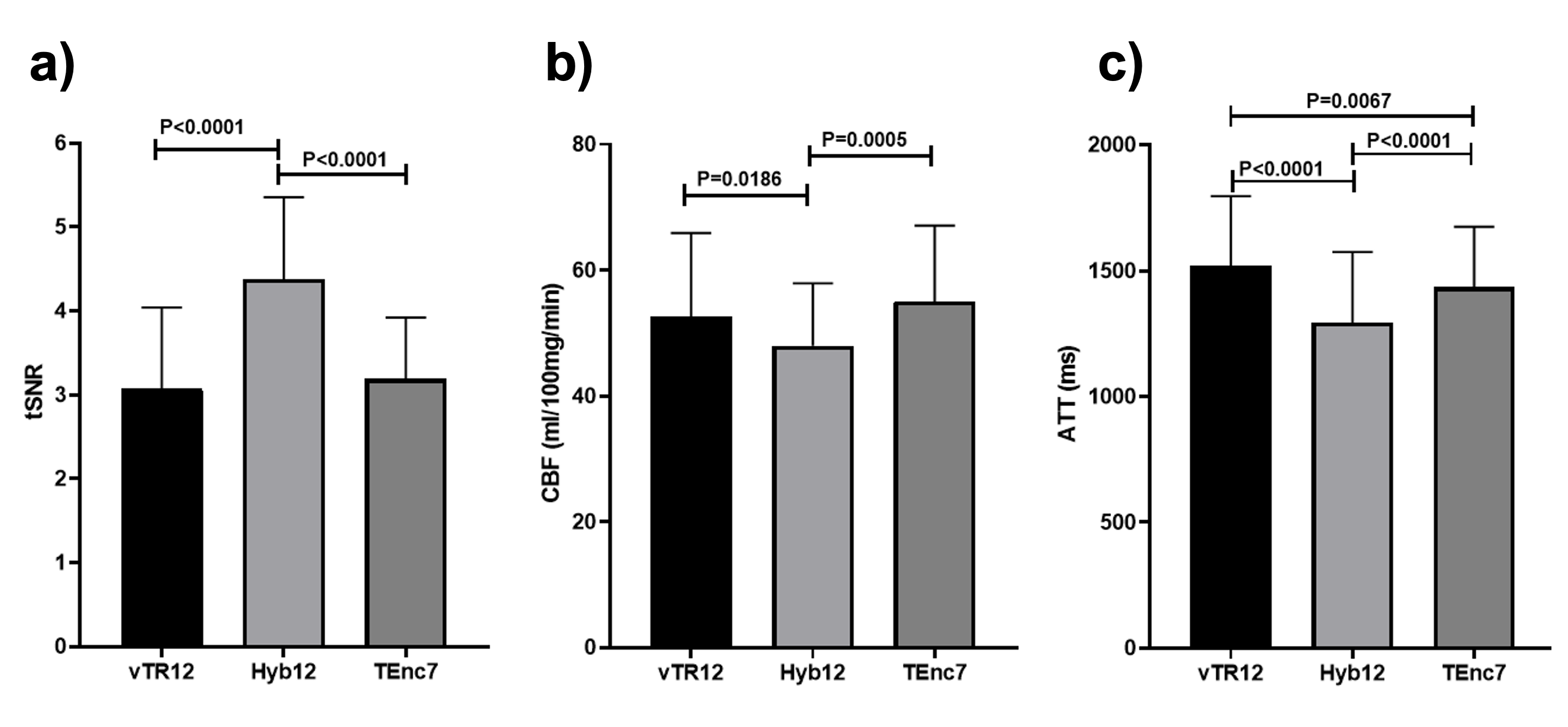
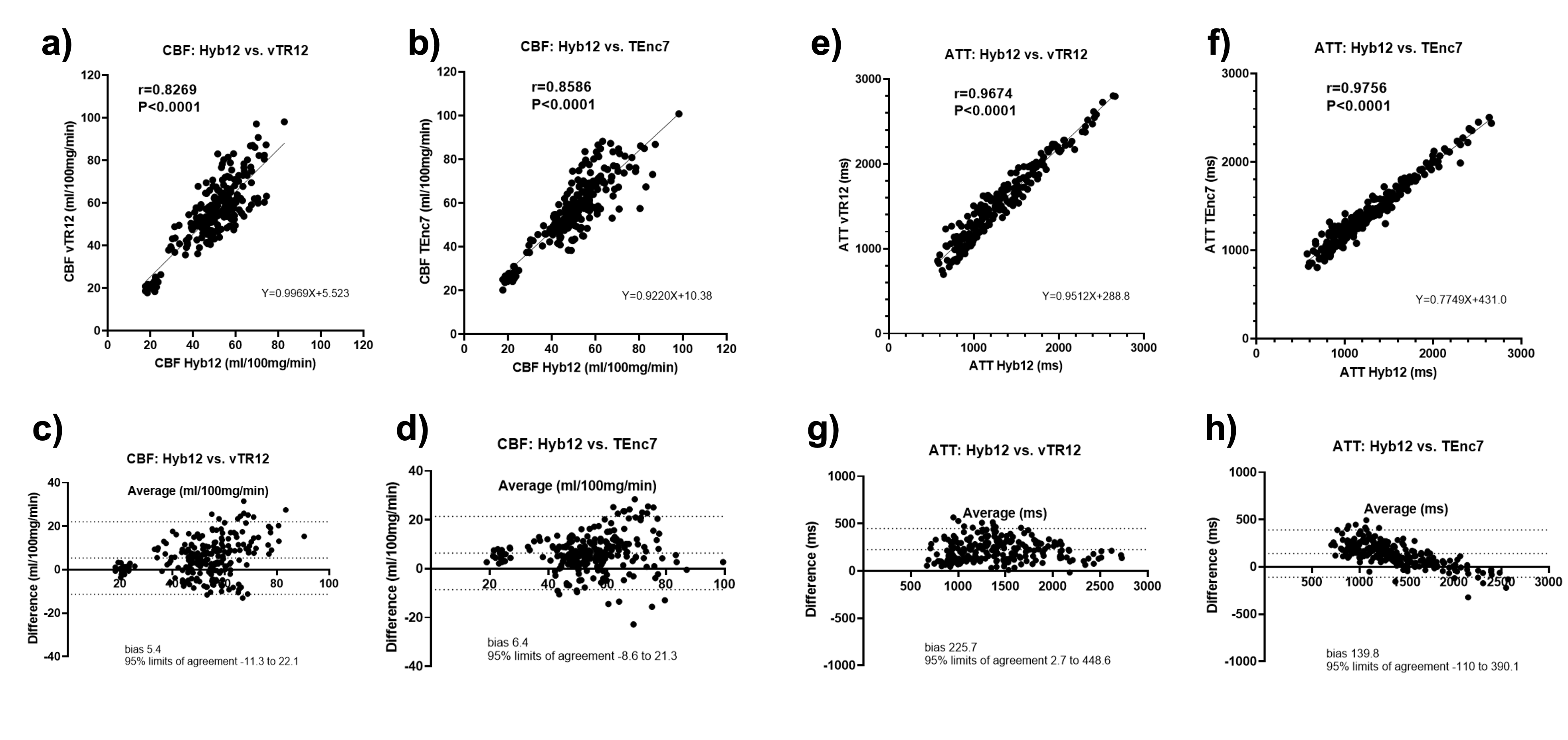
Figure 3 demonstrates the comparisons of tSNR, CBF, and ATT measured in all volumes-of-interest among the three schemes. The tSNR of Hyb12 was significantly higher than that of vTR12 (P<0.0001) and TEnc7 (P<0.0001). The CBF of Hyb12 was significantly lower than that of vTR12 (P=0.0186) and TEnc7 (P=0.0005). The ATT of Hyb12 was significantly shorter than that of vTR12 (P<0.0001) and TEnc7 (P<0.0001). Figure 4 shows the correlations and Bland-Altman plots for CBF and ATT. The CBF measured with Hyb12 shows significant correlations and excellent agreements with those measured with vTR12 (r=0.8269, ICC=0.8966) and TEnc7 (r=0.8586, ICC=0.9585). The Bland-Altman plot analysis for CBF shows a small bias without proportional errors for both comparisons. The ATT measured with Hyb12 shows significant correlations and excellent agreements with those measured with vTR12 (r=0.9674, ICC=0.9834) and TEnc7 (r=0.9756, ICC=0.9745). The Bland-Altman plot analysis for ATT shows a bias without proportional error for the comparison between Hyb12 and vTR12, while a bias and proportional error are observed between Hyb12 and TEnc7. Figure 5 shows a representative case of Moyamoya disease in which CBF is maintained throughout the bilateral cerebral hemispheres, while ATT is prolonged in the right ACA and left posterior MCA territories, as observed with all three schemes. Note that CBF observed with Hyb12 is slightly lower than those obtained with the other two schemes.Discussion
The hybrid scheme provided a higher tSNR than the other two schemes. Although slight differences in the CBF and ATT measurements were found between the hybrid and the other two schemes, the differences were acceptable, considering the strong correlations and excellent agreements. These differences may be attributed to the interruption of labeling by inserting background suppression pulses in the variable-TR scheme, which might cause labeling loss.Conclusion
The hybrid scheme combines the advantages of the high SNR obtained with the time-encoded scheme and the timing flexibility of the variable TR scheme, which is required in assessing cerebral perfusion in the presence of prolonged ATT, as present in Moyamoya disease.Acknowledgements
No acknowledgement found.References
1. Tominaga T, Suzuki N, Miyamoto S, et al. Recommendations for the management of Moyamoya disease: a statement from research committee on spontaneous occlusion of the circle of Willis (Moyamoya Disease) [2nd Edition]. Surgery for Cerebral Stroke 2018;46:1-242.
2. Setta K, Matsuda T, Sasaki M, et al. Diagnostic Accuracy of Screening Arterial Spin-Labeling MRI Using Hadamard Encoding for the Detection of Reduced CBF in Adult Patients with Ischemic Moyamoya Disease. AJNR Am J Neuroradiol 2021;42:1403-14093.
3. Obara M, Togao O, Wada T, et al. Pseudo-continuous arterial spin labeling using multiple label- and post-label duration with dynamically optimized background suppression. Proc Int Soc Magn Reson Med 2021:8704.
4. Togao O, Obara M, Kikuchi K, et al. Assessment of cerebral perfusion in Moyamoya disease with dynamic pCASL using a variable-TR scheme with optimized background suppression. Proc Int Soc Magn Reson Med 2022:4606
Figures