0793
Corona Enhancement Combined with Microvascular Invasion for Identification / Prognosis of Macrotrabecular-Massive Hepatocellular Carcinoma1Radiology, The First Affiliated Hospital, Zhejiang University School of Medicine, Hangzhou, China, 2Pathology, The First Affiliated Hospital, Zhejiang University School of Medicine, Hangzhou, China, 3Radiology, Hangzhou Third Hospital, Hangzhou, China
Synopsis
Keywords: Liver, Cancer
The macrotrabecular-massive (MTM) subtype of hepatocellular carcinoma (HCC) is aggressive and associated with an unfavorable prognosis. This study aimed to characterize MTM-HCC features based on contrast‑enhanced MRI and to evaluate the prognosis of imaging characteristics combined with pathology for predicting early recurrence and overall survival after surgery. This retrospective study included 123 and 59 patients with HCC that underwent preoperative contrast‑enhanced MRI and surgery, respectively. The multivariate analysis and multiple Cox regression analysis identified that corona enhancement combined with MVI risk was significantly associated with poor outcomes after surgery.Objectives
The macrotrabecular-massive (MTM) subtype of hepatocellular carcinoma (HCC) is aggressive and associated with an unfavorable prognosis. This study aimed to characterize MTM-HCC features based on contrast‑enhanced MRI and to evaluate the prognosis of imaging characteristics combined with pathology for predicting early recurrence and overall survival after surgery.Methods
This retrospective study included 123 patients with HCC that underwent preoperative contrast‑enhanced MRI and surgery, between July 2020 and October 2021. Multivariable logistic regression was performed to investigate factors associated with MTM-HCC. Predictors of early recurrence were determined with a Cox proportional hazards model and validated in a separate retrospective cohort.Results
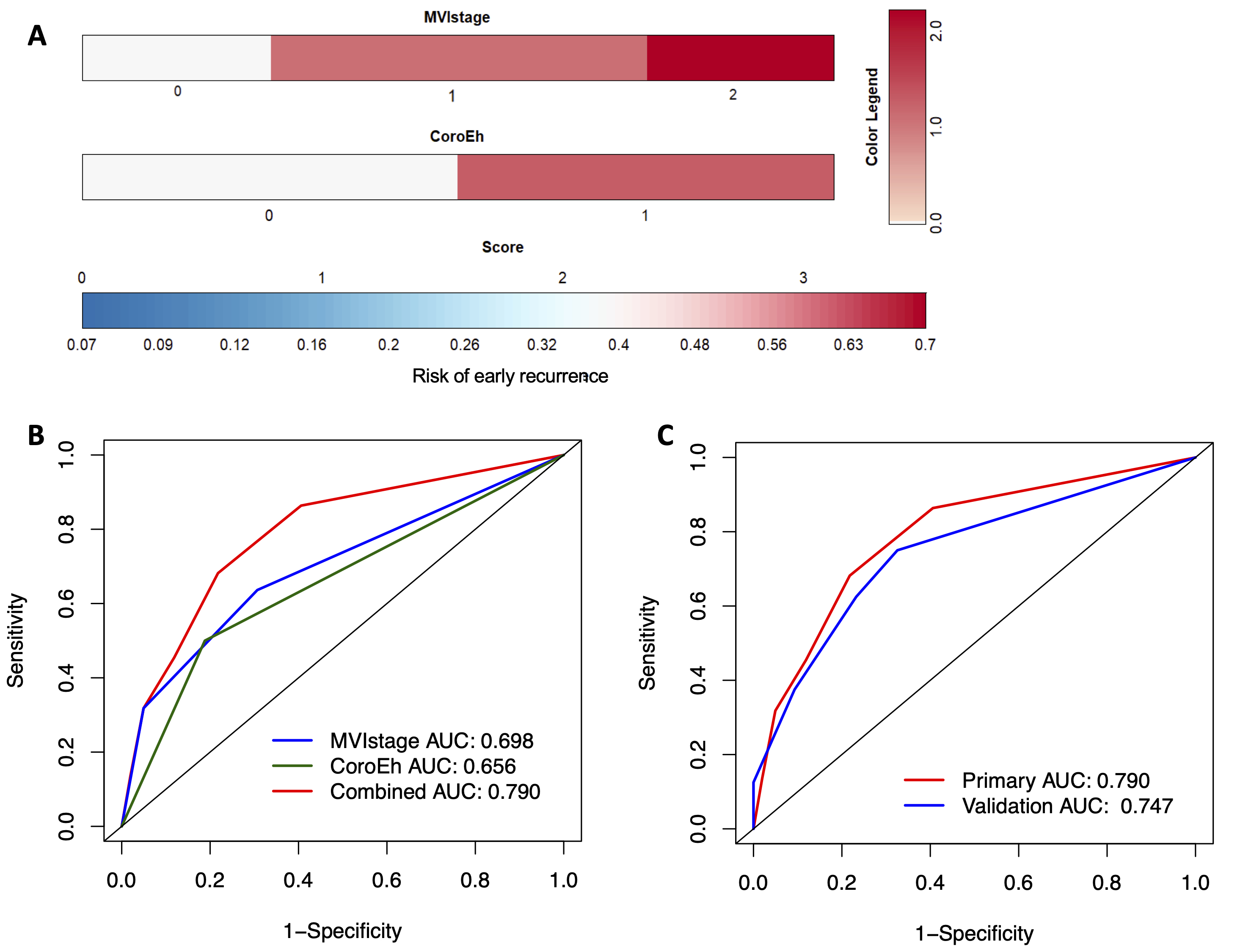
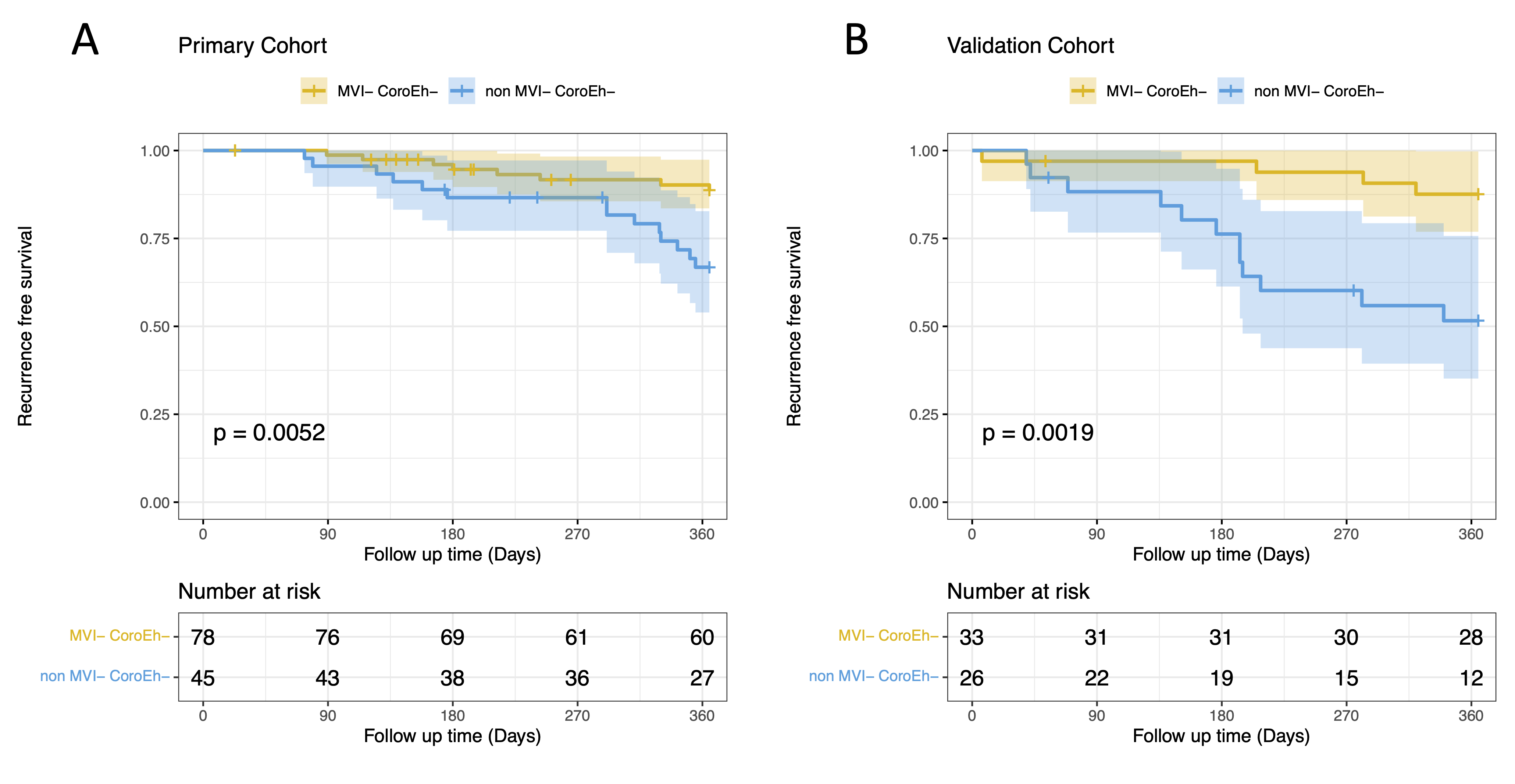
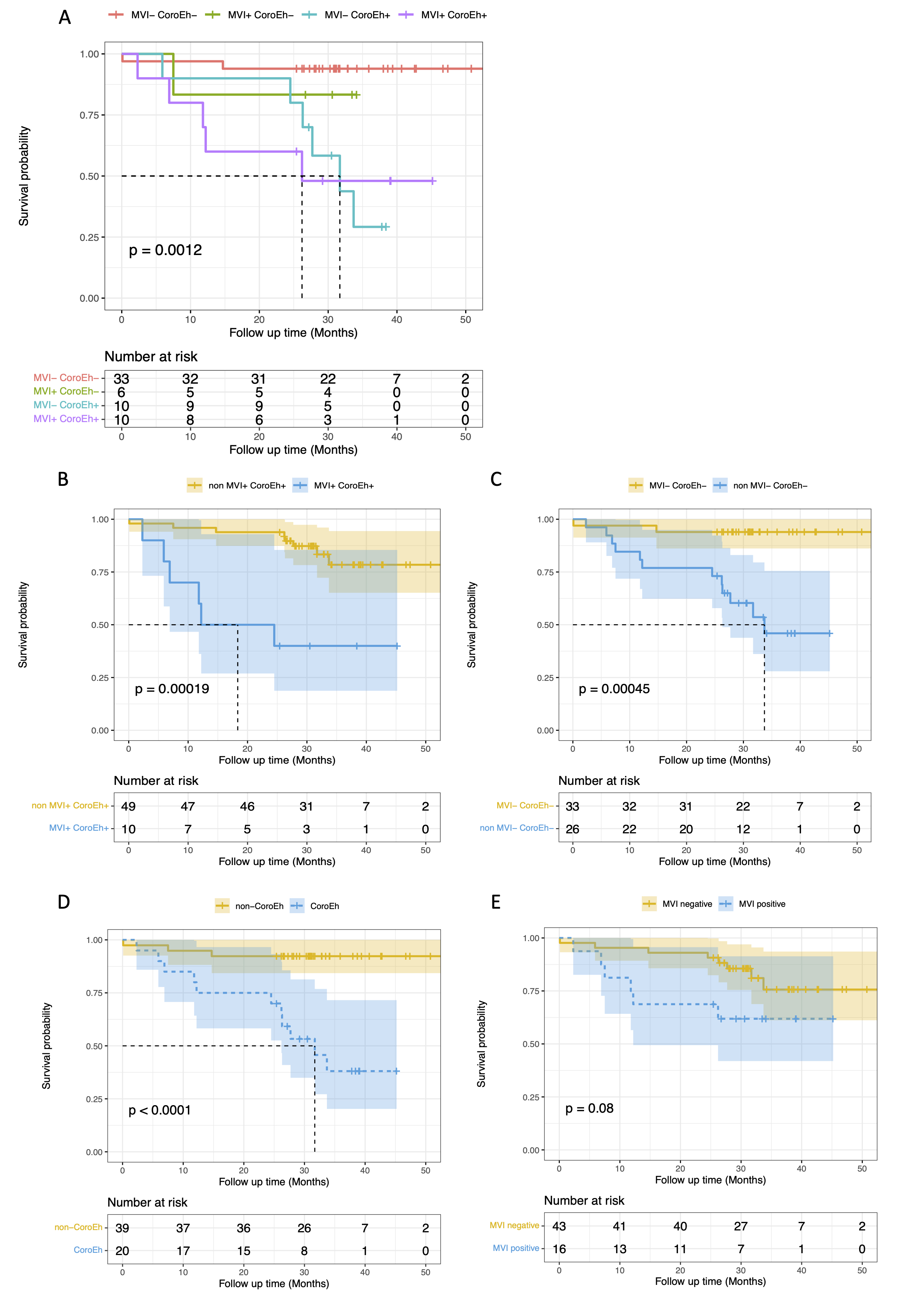
The primary cohort included 53 patients with MTM-HCC, and age-BMI-matched 70 subjects with non-MTM HCC. The multivariate analysis identified corona enhancement (odds ratio [OR]=2.52, 95% CI: 1.02–6.24; P=0.045) and microvascular invasion (MVI) risk (OR=2.26, 95% CI: 1.04–4.91; P=0.039) as independent predictors of the MTM-HCC subtype. The multiple Cox regression analysis identified corona enhancement (hazard ratio [HR]=2.56, 95% CI: 1.08–6.08; P=0.033) and MVI risk (HR=2.45, 95% CI: 1.40–4.30; P=0.002) as independent predictors of early recurrence (area under the curve=0.790, P<0.001). The prognostic significance of these markers was confirmed by comparing results in the validation cohort to those from the primary cohort. Corona enhancement combined with MVI risk was significantly associated with early recurrence and short overall survival after surgery.Discussion
Corona enhancement is an ancillary feature of the LI-RADS that favors malignancy; it is typically observed with high arterial input and high venous output around the tumor (1). To date, few studies have analyzed the sensitivity or specificity of corona enhancement for diagnosing or predicting the clinical outcome of MTM-HCC. The present study showed that corona enhancement was an independent factor for identifying MTM-HCC and an independent preoperative predictor of early HCC recurrence. Corona enhancement was associated with an increased incidence of micrometastases (2); furthermore, it was both a sensitive predictor of high-grade HCC and associated with poor clinical outcomes after resection (3).Thus, it was not surprising that MTM-HCC showed highly aggressive characteristics and significantly more corona enhancement, compared to non-MTM HCC.Cell growth, migration, and angiogenesis activation were previously identified as markers of MVI in HCC (4). Accordingly, MVI was identified as an independent postoperative factor for predicting early recurrence and OS in HCC (5). Similarly, in this study, MTM-HCC was associated with significantly higher MVI risk, compared to non-MTM HCC.
Corona enhancement and MVI risk were positively correlated previously. Lee and colleagues showed that corona enhancement was an imaging biomarker for predicting MVI (6). Rhee et al. showed that corona enhancement was part of a combined identifying factor for MTM-HCC, and MVI was an independent prognostic factor for both early recurrence and poor OS (7). Furthermore, in the present study, corona enhancement and MVI were first demonstrated as separate independent preoperative and postoperative risk factors for identifying MTM-HCC and for predicting prognosis, respectively. The combined model showed AUCs of 0.790 and 0.747 for predicting early recurrence of MTM-HCC in the primary and validation cohorts, respectively.
Conclusions
A nomogram for predicting early recurrence based on corona enhancement and MVI risk could be used to characterize patients with MTM-HCC and predict their prognosis for early recurrence and overall survival after surgery.Keywords
Magnetic resonance imaging (MRI); Hepatocellular Carcinoma; Prognosis; NomogramsAcknowledgements
None.References
1. Ham JH, Yu J-S, Choi JM, et al (2021) Corona enhancement can substitute enhancing capsule in the imaging diagnosis of small (≤ 3 cm) HCCs on gadoxetic acid-enhanced MRI. Eur Radiol 31:8628–8637. https://doi.org/10.1007/s00330-021-07911-z
2. Cerny M, Chernyak V, Olivié D, et al (2018) LI-RADS Version 2018 Ancillary Features at MRI. Radiogr Rev Publ Radiol Soc N Am Inc 38:1973–2001. https://doi.org/10.1148/rg.2018180052
3. Wei H, Jiang H, Liu X, et al (2020) Can LI-RADS imaging features at gadoxetic acid-enhanced MRI predict aggressive features on pathology of single hepatocellular carcinoma? Eur J Radiol 132:109312. https://doi.org/10.1016/j.ejrad.2020.109312
4. Calderaro J, Meunier L, Nguyen CT, et al (2019) ESM1 as a Marker of Macrotrabecular-Massive Hepatocellular Carcinoma. Clin Cancer Res Off J Am Assoc Cancer Res 25:5859–5865. https://doi.org/10.1158/1078-0432.CCR-19-0859
5. Chan AWH, Zhong J, Berhane S, et al (2018) Development of pre and post-operative models to predict early recurrence of hepatocellular carcinoma after surgical resection. J Hepatol 69:1284–1293. https://doi.org/10.1016/j.jhep.2018.08.027
6. Lee S, Kim SH, Lee JE, et al (2017) Preoperative gadoxetic acid–enhanced MRI for predicting microvascular invasion in patients with single hepatocellular carcinoma. J Hepatol 67:526–534. https://doi.org/10.1016/j.jhep.2017.04.024
7. Rhee H, Cho E-S, Nahm JH, et al (2021) Gadoxetic acid-enhanced MRI of macrotrabecular-massive hepatocellular carcinoma and its prognostic implications. J Hepatol 74:109–121. https://doi.org/10.1016/j.jhep.2020.08.013
Figures